18 nations condemn Nasser hospital strike in Gaza
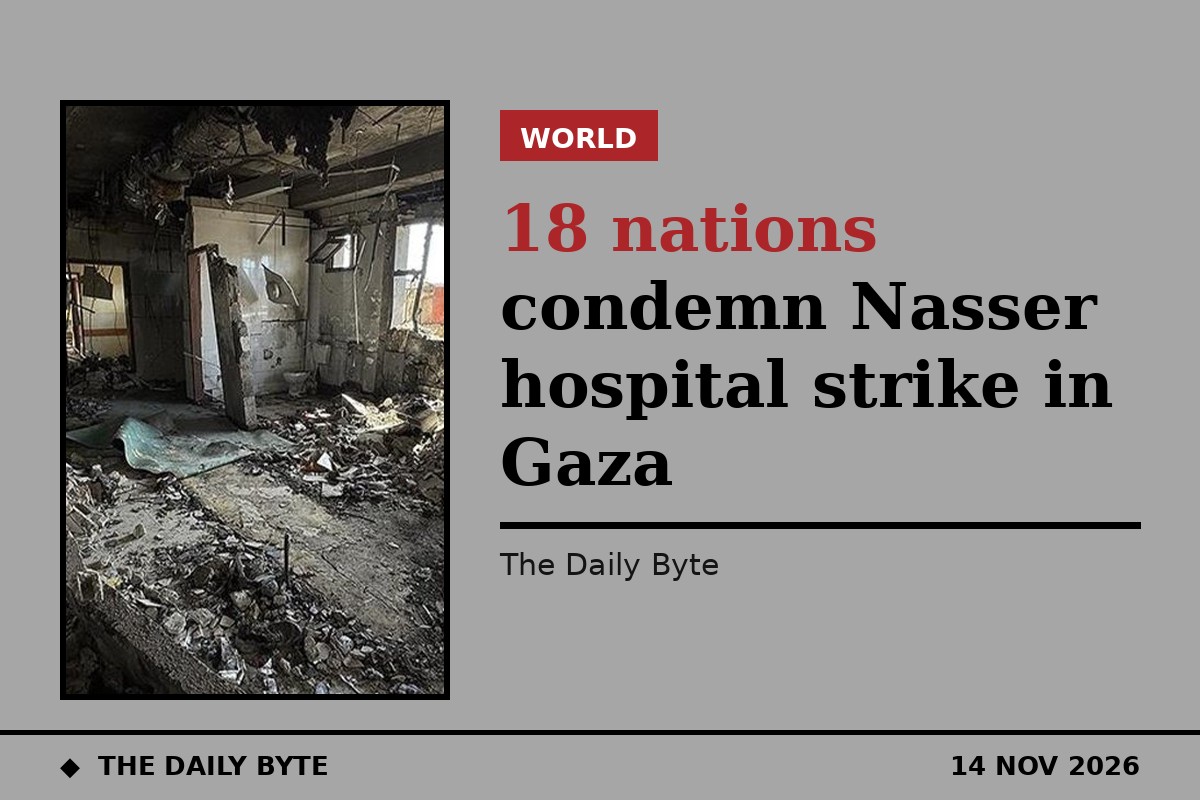
The foreign ministers of 18 Arab and Islamic countries have condemned in the strongest terms the Israeli airstrike on the Nasser Medical Complex in Khan Younis, and warned that continued attacks on civilians are putting the Gaza ceasefire at risk.
In a joint statement issued on Saturday 14 November 2026, the ministers said the strike caused casualties among patients and medical personnel, in violation of international humanitarian law, which gives special protection to medical facilities and healthcare workers.
The statement was signed by the foreign ministers of the United Arab Emirates, Saudi Arabia, Oman, Qatar, Kuwait, Jordan, Lebanon, Egypt, Algeria, Palestine, Libya, Mauritania, Djibouti, Somalia, Turkiye, Pakistan, Indonesia and Sudan.
Attacks on civilians and shelters condemned
The ministers also condemned continued Israeli attacks on Palestinian civilians, including strikes on tents and other sites sheltering displaced people. They said the attacks undermine the ceasefire and efforts to restore security and stability in Gaza, and are inconsistent with President Donald Trump’s Comprehensive Plan to end the war.
They expressed grave concern that continued Israeli restrictions on humanitarian aid, shelter materials — including tents, caravans and mobile homes — and medical supplies are deepening Gaza’s humanitarian catastrophe as winter approaches. Inadequate shelter and deteriorating water, sanitation and healthcare services put civilian lives at grave risk, particularly those of children and infants, who could once again die from exposure to freezing temperatures, the statement said.
Ministers demand aid access and ceasefire honoured
The ministers called on Israel to heed appeals from the international community and the Board of Peace, and to fulfil immediately and in full its obligations under the Sharm El-Sheikh Agreement, President Trump’s Comprehensive Plan and United Nations Security Council Resolution 2803 (2025).
Israel must uphold the ceasefire, protect civilians and medical facilities, and ensure the safe, sustained and unimpeded delivery of humanitarian aid in sufficient quantities, including shelter and early recovery supplies and equipment to restore essential infrastructure, the ministers said. United Nations agencies and humanitarian organisations must be allowed to carry out their mandates without obstruction.
The ministers said the first-phase commitments were due to take effect upon signature, and Israel must implement them without further delay or additional conditions, including political and security conditions that impede humanitarian access. Urgent humanitarian assistance must proceed independently of progress on later phases, they added.
They also called on the United States and the Board of Peace, within their respective roles, to intensify efforts to ensure Israel’s full implementation of the commitments and the lifting of all restrictions on the entry of humanitarian aid, to preserve the credibility of the agreements and consolidate the ceasefire.
Strike came amid a fragile truce
The airstrike on the Nasser Medical Complex took place on Thursday. According to Gaza’s Health Ministry, six people were killed, including a surgeon, and dozens were wounded when the strike hit the hospital’s surgical wing in Khan Younis, in southern Gaza.
The ceasefire in Gaza took effect in October 2025, but Israeli military operations have continued. Gaza’s Health Ministry says more than 1,600 Palestinians have been killed since the truce began.
The ministers reaffirmed their determination to work with regional and international partners to consolidate the ceasefire, implement all phases of the plan and scale up humanitarian assistance to alleviate the suffering of the Palestinian people.


