21 Illegal Schools Under Investigation in England
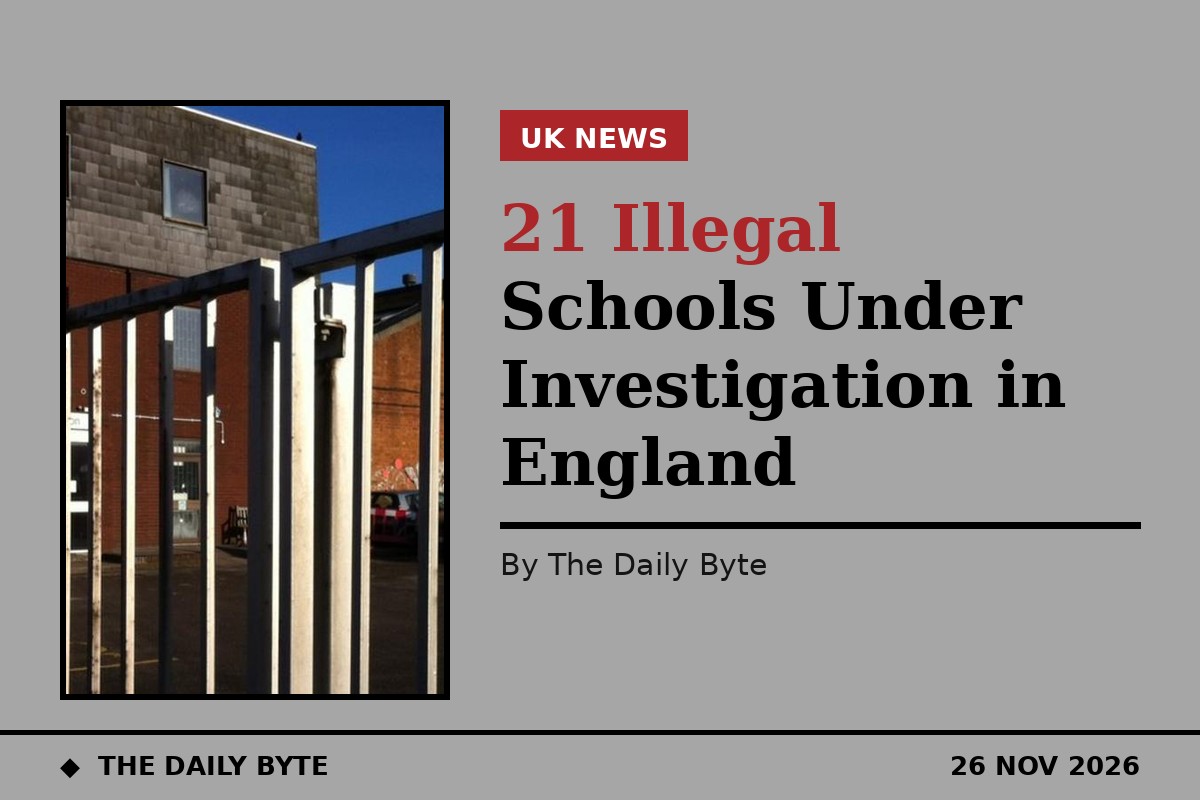
Twenty-one institutions in England are under investigation as suspected illegal schools, the BBC reported on Thursday, as the government faces accusations that it has been too slow to close unregistered settings where children may be at risk.
The figure was revealed as Ofsted continues to investigate schools operating without registration. Children in unregistered schools have no formal external oversight of their safeguarding, health and safety, or the quality of their education, according to Ofsted.
Labour's shadow education secretary, Lucy Powell, said ministers had “dragged their feet” on the issue. “Ministers have a basic responsibility to ensure that children are kept safe, and yet despite warning after warning, they have dragged their feet on this very serious issue, leaving children in unregistered schools where they could be in harm's way,” she said.
Powell added that it was “extremely worrying” that Ofsted remained concerned that the number of children being educated in unregistered provision in parts of the country “far exceeds the number that is currently known by the government”.
A spokesman for the Department for Education said steps had already been announced to “crack down” on what he called “illegal and unsafe” unregistered schools. “Last month we announced an escalation of Ofsted investigations into unregistered schools, with additional inspectors dedicated to rooting them out, a new tougher approach to prosecuting them and a call to local authorities to help identify any settings of concern,” he said.
“Our tougher stand against illegal schools will help prevent children from falling into the grasp of extremists,” the spokesman added.
Two convicted over Birmingham school
The disclosure came days after two people were convicted of running an illegal school in central Birmingham. Noor Laiba Imani and Maryam Bi ran Bright Sparks Home Schooling Ltd on Whitmore Road, which advertised itself as providing home schooling services. Investigators from Ofsted's unregistered schools team found it was in fact operating as a school.
The pair were convicted at Birmingham Magistrates' Court on 24 November 2026 of conducting an unregistered independent educational institution, under section 96 of the Education and Skills Act 2008. Evidence showed that 28 children of compulsory school age were attending the setting full time, were taught a range of school subjects and were set homework. The school had an Islamic faith ethos, and parents paid around £100 to £150 a month for each child to attend.
Imani and Bi were each sentenced to a 12-month community order with 100 hours of unpaid work, a victim surcharge of £140 and costs of £200. The company, Bright Sparks Home Schooling Ltd, was fined £1,000 and ordered to pay a victim surcharge.
His Majesty's Chief Inspector, Sir Martyn Oliver, said the outcome showed that “those operating illegal schools under the guise of home schooling can, and will, be brought to justice”. He said securing the convictions had been possible “despite the limited legal powers currently available to Ofsted, reflecting our determination to protect children from unsafe and unsuitable education”.
The law on unregistered schools
Under section 96 of the Education and Skills Act 2008, a person must not conduct an independent educational institution in England unless it is registered. Running an unregistered school is a criminal offence, carrying a maximum penalty of six months' imprisonment, an unlimited fine, or both.
Any setting that provides five or more children of compulsory school age with a full-time education must be registered as a school and inspected against the independent school standards.
Counting the Birmingham verdict, Ofsted's investigations into unregistered schools have now led to 24 convictions. The watchdog publishes management information about unregistered schools twice a year.
Stronger powers are on the way. Once the relevant clauses in the Children's Wellbeing and Schools Act 2026 are activated, Ofsted will be able to obtain warrants to search premises suspected of being illegal schools and seize evidence. Inspectors will also be able to investigate settings with a narrow curriculum, which are currently beyond their reach.
Anyone who suspects a setting is operating as an illegal school can report it using Ofsted's published guidance.


