Accessible Stadia Guide Sets New Disabled Fan Standards
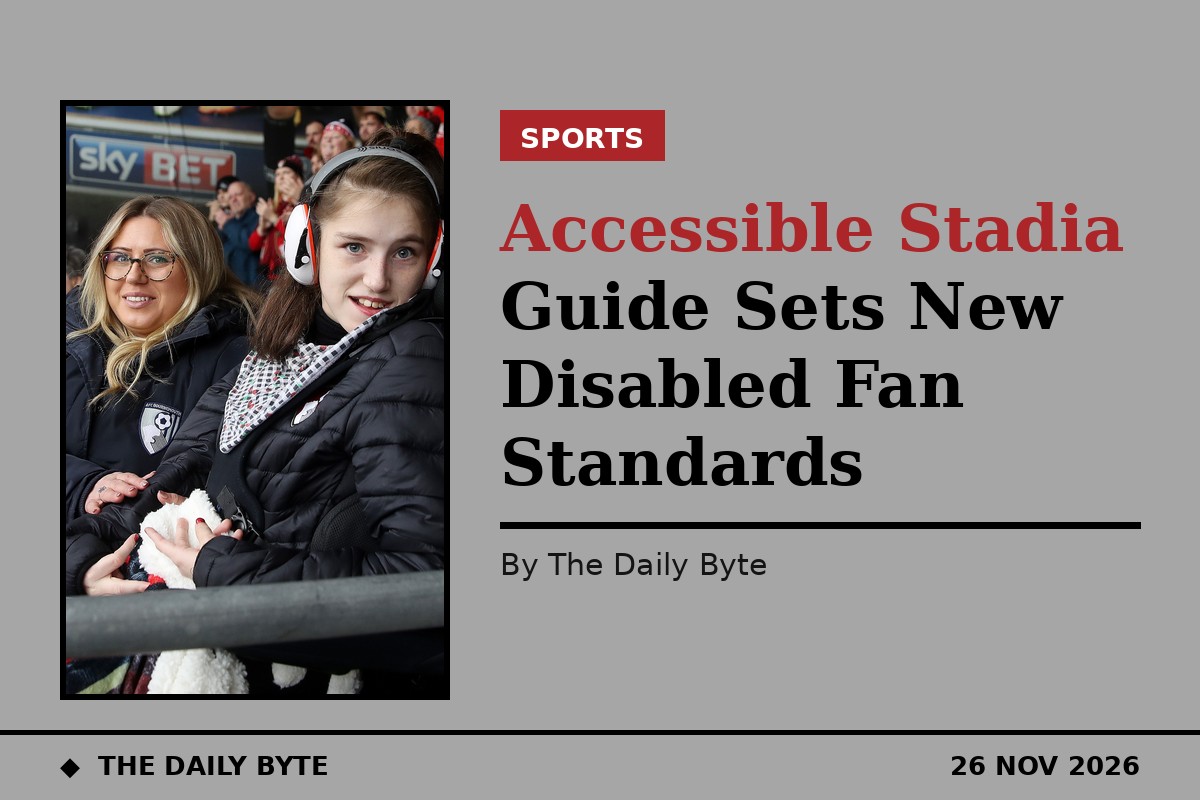
A new guide setting the standards for accessible experiences at live sport has been published, more than two decades after the original, with the Premier League welcoming it as an important step for disabled supporters.
Accessible Stadia Second Edition was launched on Wednesday 25 November at Everton’s Hill Dickinson Stadium, where more than 100 delegates gathered to celebrate progress and discuss how accessibility can continue to improve. The Premier League welcomed the publication and has supported its development, contributing alongside Level Playing Field and stakeholders from across sport.
Wider than bricks and mortar
While the first Accessible Stadia Guide, published in 2003, focused mainly on physical improvements to stadia, the second edition takes a wider approach to supporting people with a range of disabilities, including neurodivergent supporters.
It provides more detailed guidance on Changing Places facilities, sensory rooms, and wheelchair and ambulant disabled seating in hospitality areas. The guide also covers disabled supporters’ clubs, complaints procedures, media facilities and hotels, reflecting a broader understanding of accessibility across the whole matchday experience.
The guide sets out the legal requirements and offers principles and practical guidance for clubs, governing bodies and venue operators at every level, whether professional or grassroots, across all sports. It is aligned with Building Regulations Approved Document M and BS 8300, the British Standard for the design of accessible buildings.
A benchmark for every sporting event
Clare Sumner, the Premier League’s Chief Policy and Social Impact Officer, said: “We are committed to ensuring that disabled supporters have a great experience in our stadia. We welcome the new guidance as an important step to drive further improvements.”
John Kirkpatrick, chief executive of the Equality and Human Rights Commission, said: “Accessible Stadia Second Edition establishes the benchmark which all sporting events should meet.”
“Disabled people should never face barriers to cheering on their team at the stadium. Every club and venue has a legal duty to make that a reality. This guide gives the practical advice they need to achieve it,” he said.
Level Playing Field, which led the major rewrite of the guide, said it was keen to work alongside the Premier League, clubs, disabled supporters’ associations and disabled fans directly on putting its content into practice.
What clubs are already doing
The guide highlights examples from clubs that show how accessibility can be built into stadiums of different ages, designs and layouts.
Everton’s Hill Dickinson Stadium, the launch venue, demonstrates how accessibility can be incorporated into the design of a new stadium. It has three Changing Places facilities and 106 club-controlled accessible parking bays, and 53 wheelchair positions in hospitality areas, alongside wheelchair positions integrated into licensed standing areas.
Tottenham Hotspur Stadium, opened in 2019, provides more than 250 wheelchair bays and more than 500 easy-access seats across different levels, with accessible entrances, audio-descriptive commentary and a sensory suite.
Burnley shows how an older stadium can be improved: the redevelopment of Turf Moor included two accessible corner stands spanning three levels, with accessible toilets on each level and a Changing Places facility.
Manchester United’s £11 million accessibility development at Old Trafford more than doubled wheelchair capacity, creating 118 new wheelchair positions and 158 new amenity seats. The ground now provides 278 wheelchair positions across seven accessible sections.
Technology and services beyond the stands
Alongside improvements to stadium infrastructure, clubs have introduced new services and technology aimed at removing other barriers disabled supporters can face on matchdays.
This season, 80 per cent of Premier League clubs have sensory rooms, suites or comparable sensory and inclusion spaces. Sunderland introduced the first sensory viewing room in 2015.
Following a successful trial in April 2024, Newcastle United made haptic shirts a permanent part of the club’s accessibility offer, converting live stadium sound into touch sensations for deaf supporters. Crystal Palace introduced permanent GiveVision headsets at Selhurst Park in September 2024, enabling supporters to magnify the action and follow the game as it happens.
The work is supported by the Premier League Equality, Diversity and Inclusion Standard, a framework that helps 28 current or former Premier League clubs deliver an equality plan. More than 2,400 disabled participants have engaged with Premier League Fans Fund projects since 2023, across more than 147 funded projects.
The Premier League Stadium Fund has also provided more than £3 million to support 80 projects across 70 non-league clubs in England, funding accessible entrances, wheelchair viewing areas, accessible toilets, disabled parking and lifts.
The original guide was published in 2003, with a supplementary guide in 2015, when Premier League clubs agreed to prioritise investment in facilities for disabled supporters. More than 20 years on, the second edition is intended to turn that investment into a consistent standard, so that a disabled supporter’s experience depends on the guide being followed, not on which ground they happen to visit.