Experts blame faulty weld for deadly Adamuz crash
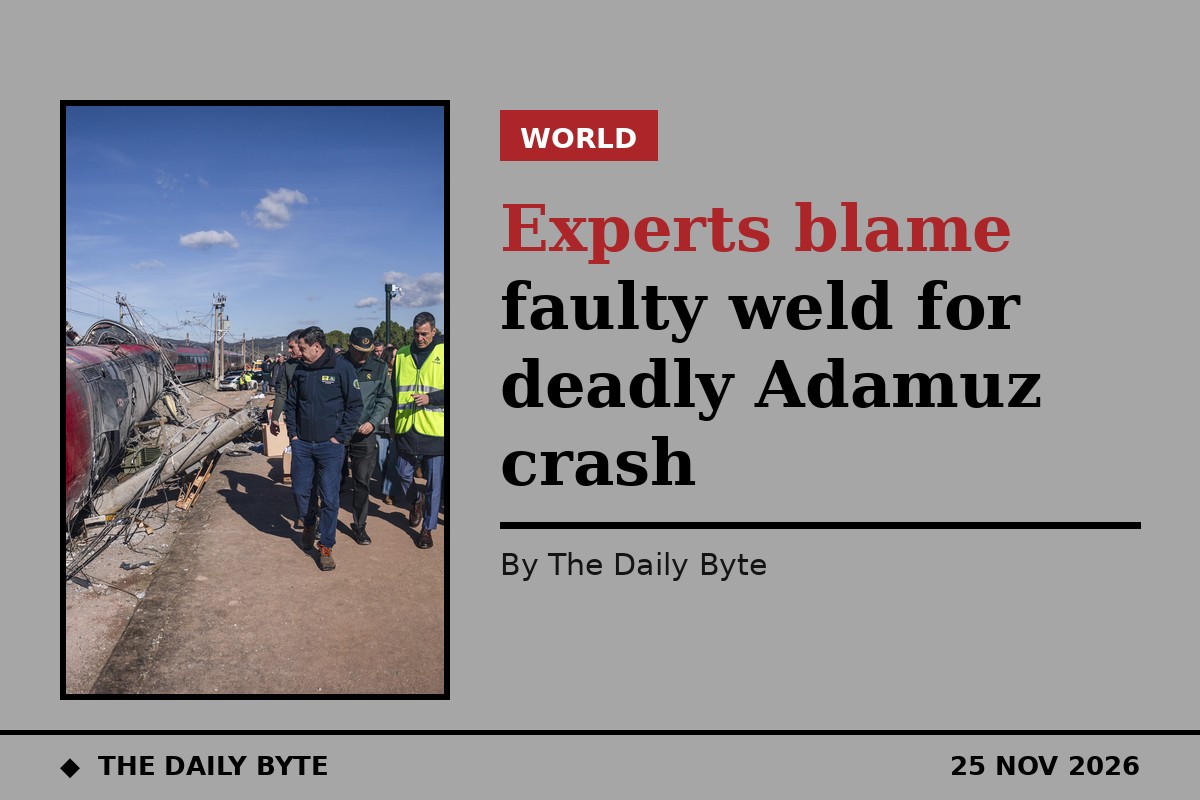
Court-appointed engineers say a badly executed rail weld and sinking ground most likely caused the high-speed derailment near Adamuz in southern Spain in January that killed 46 people.
The findings are set out in an 81-page expert report submitted to the court in Montoro, Cordoba, which is handling the case, and seen by Spanish public broadcaster RTVE. The experts identified three causes as the most probable: a rupture in the weld joining two rail sections because of faulty workmanship at the joint, a rupture in the weld caused by ground subsidence beneath the track, and a rupture caused by dynamic effects amplified by deflections in the neighbouring rail.
A weld between two rails of different ages
The weld at the centre of the investigation joined a rail dating from 1989 to one from 2023, laid during upgrade works on the Madrid-Seville high-speed line in May 2025. The experts say the sinking of one rail put repeated overload on the opposite rail's weld until it broke, a process they describe as a seesaw effect.
They also found that a 6.4-millimetre track irregularity, detected in October 2025, may have contributed to the fracture, and that there was no evidence the flagged defect was followed up with closer monitoring. Investigators have found inconsistencies in the welding records for the section.
The experts caution that their conclusions are preliminary. They note that considerable information is still unavailable or pending analysis, and that key laboratory tests on the rails, ballast and sleepers recovered from the site are still outstanding and could change the findings.
The crash
On 18 January 2026, an Iryo high-speed train travelling from Malaga to Madrid derailed near Adamuz at 19:43 local time. Its three rear carriages crossed into the opposite track and collided with an oncoming Renfe Alvia train travelling from Madrid to Huelva. The crash killed 46 people, including the Renfe train driver, and injured more than 150 others. It was Spain's worst railway disaster since the Santiago de Compostela derailment in 2013.
A preliminary report by Spain's rail accident investigation body, the CIAF, published days after the crash, found evidence that a fracture in the rail had occurred before the Iryo train derailed. A later Civil Guard report found that the track had in fact broken about 22 hours before the derailment, a period during which 47 trains passed over the section, without any alarm being triggered because the voltage drop in the track circuit stayed above the alert threshold.
Questions for the infrastructure manager
The report points toward possible responsibility at Adif, Spain's rail infrastructure manager, over maintenance follow-up and quality checks on the 2025 upgrade works, though no findings are final. The investigation, now in its tenth month, has already raised wider questions about the line: the judge has rebuked Adif after track fragments were removed from the scene without judicial authorisation, and experts have complained that Adif supplied documentation for ballast from a different province than the one where the crash happened.
The examining magistrate in Montoro, Cristina Pastor, has ordered laboratory analysis of the rail and weld samples, with Spain's National Research Council carrying out metallurgical tests to determine how the fracture began and spread. The judicial investigation is examining suspected offences of negligent homicide and negligent injury. The outcome of the outstanding lab tests, and any legal consequences they trigger, will determine whether the case leads to formal findings of liability in Spain's deadliest rail disaster in years.


