AfDB: 22 African Nations in Debt Distress
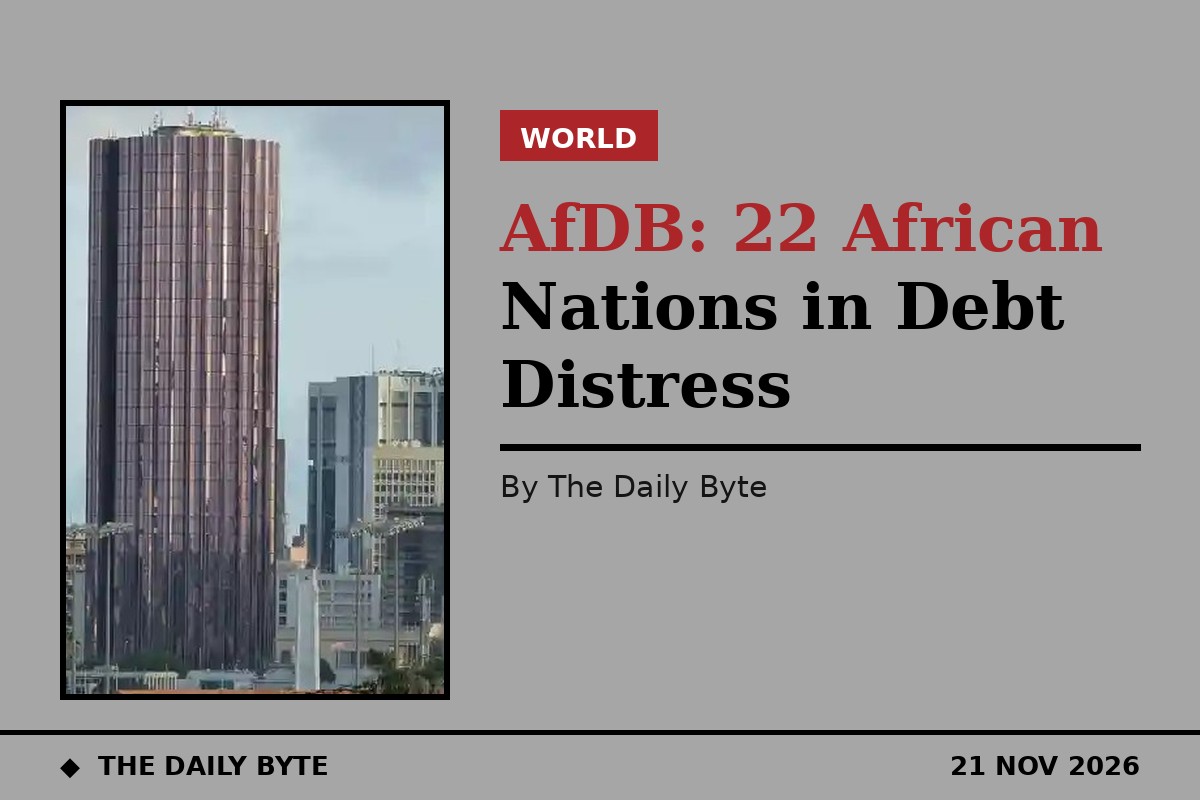
Twenty-two African countries are either in debt distress or at high risk of falling into it, the African Development Bank (AfDB) has warned, as the rising cost of servicing loans squeezes the money governments have left for health, education and infrastructure.
In the November 2026 edition of its Africa's Macroeconomic Performance and Outlook report, the bank said eight countries had already slipped into debt distress by July 2026, while another 14 were rated at high risk. The warning lands in the same report in which the AfDB raised its forecast for African economic growth in 2026 to 4.6 per cent, suggesting that stronger growth alone will not be enough to ease the strain on public finances in the most exposed economies.
Interest payments swallow budgets
The report puts a figure on how much borrowing is costing the continent. About 87 billion dollars left African economies in external interest payments between 2022 and 2024, equal to roughly 19 per cent of all debt service paid over that period. In 2024 alone, interest on external debt absorbed 6.3 per cent of government revenue.
The overall burden has climbed steadily. The share of government revenue used to service external debt rose from 23.7 per cent in 2017 to 31 per cent in 2024, the bank said, leaving finance ministries with less room to fund development priorities.
One of the starkest findings concerns health spending. Of the 51 countries with comparable figures, 25 paid more in interest than they spent on healthcare at some point between 2021 and 2023, according to the report.
Borrowing has become more expensive
The AfDB pointed to a change in where African governments borrow as a key source of risk. Many have moved away from cheaper concessional loans towards Eurobonds, commercial bank loans and syndicated facilities, and are borrowing more from creditors outside the Paris Club. Several have also leaned more heavily on domestic borrowing as spending pressures grow, revenue collection remains weak and access to international finance tightens.
Commercial debt from private creditors increased from 12 per cent of Africa's total debt in 2010 to 16.3 per cent in 2024, while the share of traditional bilateral creditors fell from 13 per cent to 8 per cent over the same period. Domestic borrowing has expanded sharply too, with Africa's domestic debt-to-GDP ratio rising from 17 per cent in 2000 to 40 per cent in 2024, accounting for 60 per cent of the continent's total debt.
The bank warned that greater dependence on commercial and domestic financing had increased debt-servicing costs and exposed governments to higher interest rates and tighter global financial conditions.
Restructuring moves slowly
To limit the damage, the AfDB called for better management of public debt, smarter investment of loan proceeds and quicker relief for countries already in distress. It noted that six African countries have restructured their debt since 2020, but described the pace of deals under the G20 Common Framework, the main channel for such restructurings, as generally slow.
Senegal was identified as the latest country seeking debt restructuring under the framework, joining Ethiopia, Ghana and Zambia. Restructuring had helped Ghana and Zambia move from debt distress to high risk of debt distress, the bank observed. The report also highlighted Zambia's 2026 debt-for-energy conversion, undertaken with AfDB support, as an initiative that significantly improved the country's debt profile.
Despite the pressures, the bank expects the average public debt-to-GDP ratio across the continent to ease from 62.6 per cent in 2025 to 60.7 per cent by 2030. It cautioned, however, that the outlook could worsen if growth slows, interest rates rise further or governments return to heavy commercial borrowing.


