AI in education: MPs hear evidence on exams and cheating
MPs have heard evidence on how artificial intelligence is changing further and higher education, with warnings that exam rules and teaching methods need to catch up with how students actually use the technology.
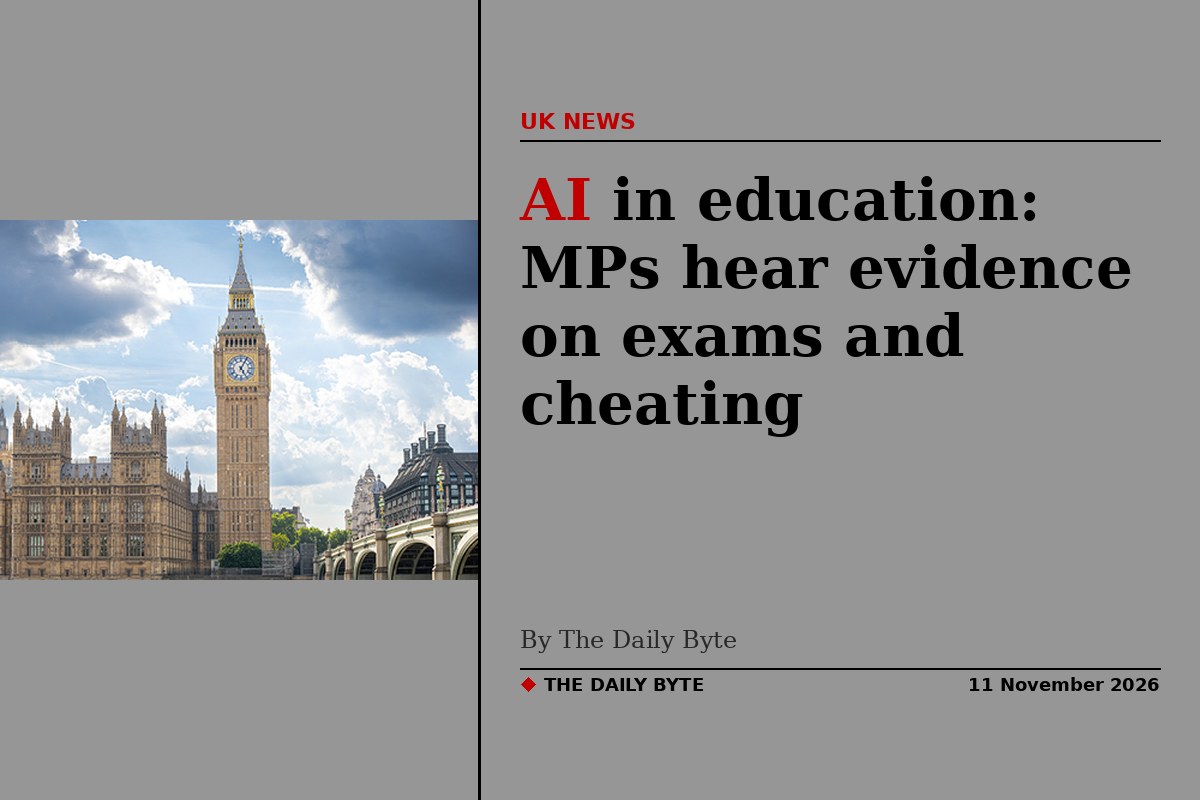
The House of Commons Education Committee held two oral evidence sessions on Tuesday 10 November as part of its inquiry into the use of AI and educational technology in education. The sessions brought together college leaders, trade unions, sector bodies, student representatives and academics.
According to UK Parliament, the committee is investigating how AI is reshaping learning, including its effect on critical thinking, problem solving and speaking skills, the risk that it deepens inequality between students, and whether students and staff are being supported to use it safely and responsibly.
Colleges warn over jobs and assessment
The first panel focused on further education. Witnesses included Chris Loveday, interim chief operating officer and deputy principal at City of Portsmouth College, Mary Meekings, head of equality and policy at the University and College Union, the chief executive of the Association of Employment and Learning Providers, and a senior policy manager at the Association of Colleges.
MPs explored the risk that AI could worsen the number of young people not in work, education or training, as well as how the technology is affecting teaching and assessment in colleges. The session also covered how staff are coping with the pace of change in classrooms and workshops.
Universities face questions on degrees
The second panel turned to higher education, with evidence from Charlotte Armstrong of the Higher Education Policy Institute, Michael Webb, director of AI at Jisc, Lewis Wilson, vice-president for higher education at the National Union of Students, and Professor Simon Banks, vice-dean for education at King's College London.
MPs raised the impact of AI on research, academic integrity, university staff and the value employers place on degrees. The discussion reflected a wider concern: if AI can produce essays and coursework, universities need to be able to show that a degree still certifies what a graduate can actually do.
Almost all students now use AI
Evidence submitted to the inquiry underlines how widespread the technology has become. In written evidence from techUK, the technology trade association, more than two-thirds of 13 to 18-year-olds said they used AI, with 61% using it for homework. Among higher education students, 94% said they used AI for assessment.
For many students, a key factor holding them back is fear of being accused of cheating, with AI detection tools often unreliable and at risk of flagging genuine work as machine-generated. techUK argues that assessment must evolve to capture not only end products, but learners' reasoning, application and problem-solving processes, pointing to greater use of practical tasks, vivas and collaborative projects.
The association also calls for clear, context-specific rules on AI use in assessment, noting that some institutions, such as the University of Exeter, have developed tiered models distinguishing between AI-integrated, AI-assisted, AI-minimal and AI-prohibited tasks.
Government consults on safer classroom tech
The committee session came on the same day the Department for Education launched a consultation on technology in the classroom. According to GOV.UK, the consultation will explore independent safety certification for educational technology, giving parents and schools confidence that new technology is safe while allowing responsible innovation to thrive.
The inquiry will continue to take evidence before the committee reports its findings and recommendations to the Government. For students, teachers and lecturers, the message from the sessions so far is clear: AI is already part of everyday learning, and the rules around it are still catching up.