AI Hedge Fund Lost 65% in Third Quarter
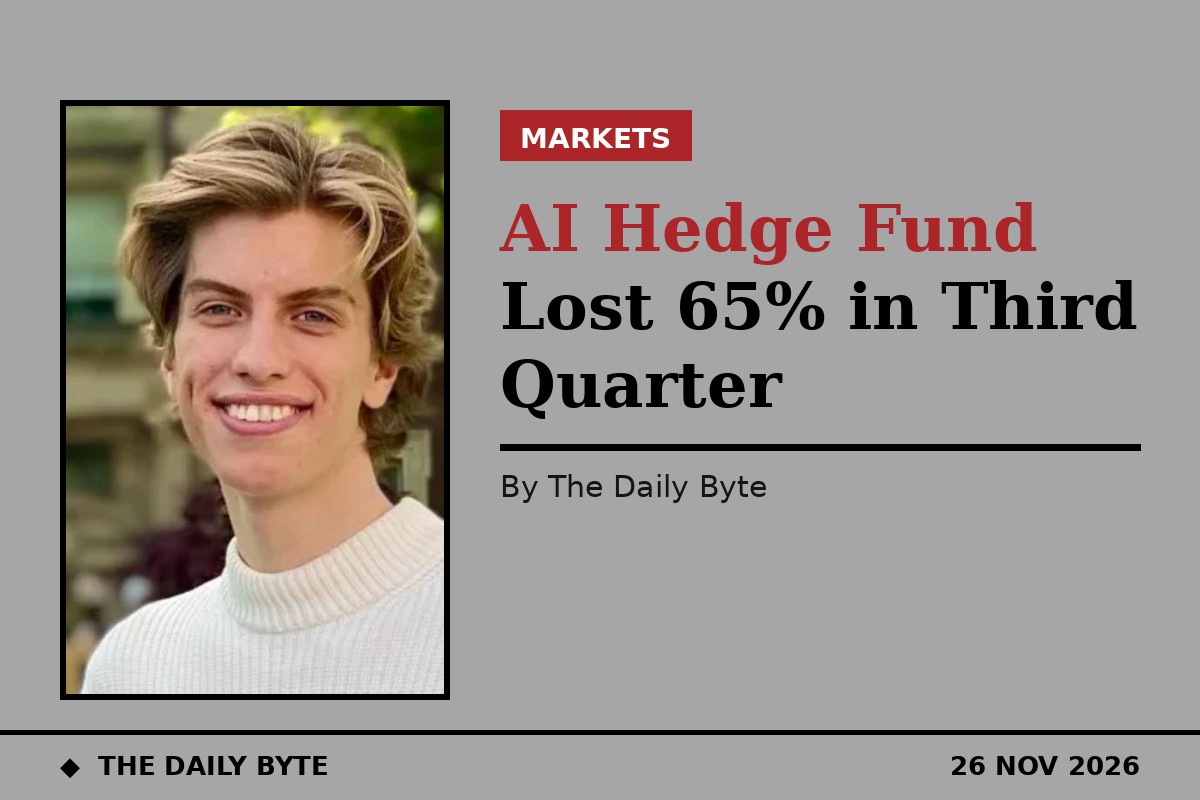
Leopold Aschenbrenner's hedge fund Situational Awareness lost 65 per cent after fees in the third quarter of 2026, the Wall Street Journal reported on Wednesday, citing an investor letter from the fund.
The loss puts a quarterly figure on the damage from the fund's summer crisis, when borrowing magnified losses in its bets on artificial intelligence stocks and forced a large sale of its public share portfolio. Yet the same letter said the fund was still up 88.5 per cent after fees for the year through 30 September, showing how large its earlier gains had been.
Aschenbrenner, a former OpenAI researcher who launched the fund in 2024, told investors the firm had worked to learn from its mistakes. Reuters, which reported the Journal's account on 26 November, said it could not immediately verify the report and that the fund did not immediately respond to its request for comment.
The summer crisis
The fund nearly unravelled over the summer after its borrowing-fuelled bets on artificial intelligence soured. Falling AI shares triggered margin calls from banks, and the fund sold a large part of its public-stock portfolio to Ken Griffin's Citadel to raise cash as its leveraged positions came under pressure.
The smaller portfolio that followed showed up in its September regulatory filing. The reported 13F total fell 92.2 per cent, to $1.58 billion from $20.24 billion in June. That figure measures disclosed holdings, including the value of shares underlying options, and is separate from the 65 per cent investment loss. It does not establish the fund's total assets.
Aschenbrenner has restructured the portfolio since the crisis and is recruiting a chief risk officer. He acknowledged the role of leverage in the summer losses and set out a new rule for the fund: "Volatility, yes; existential risk, even if we are totally wrong, never."
The AI bet continues
The fund has not abandoned its central bet. After the initial public offering of Anthropic, previously its largest private holding, the portfolio was about 70 per cent publicly traded stocks and 30 per cent positions in private companies, according to the letter.
Aschenbrenner also expects the firm to restart shorting stocks and possibly resume trading with borrowed money, though at lower levels than before. The overhaul therefore leaves room for leverage, but under a stated constraint: a mistaken investment thesis must no longer threaten the fund's survival.
Both reported returns stop at 30 September, before the renewed sell-off in AI shares in October and November. The arithmetic of the loss is stark: recovering from a 65 per cent fall requires a subsequent gain of about 186 per cent, which helps explain why a fund can still show a strong calendar-year return while facing a substantial task rebuilding the capital lost in a single quarter.


