AI server makers hike prices up to 45% after signing
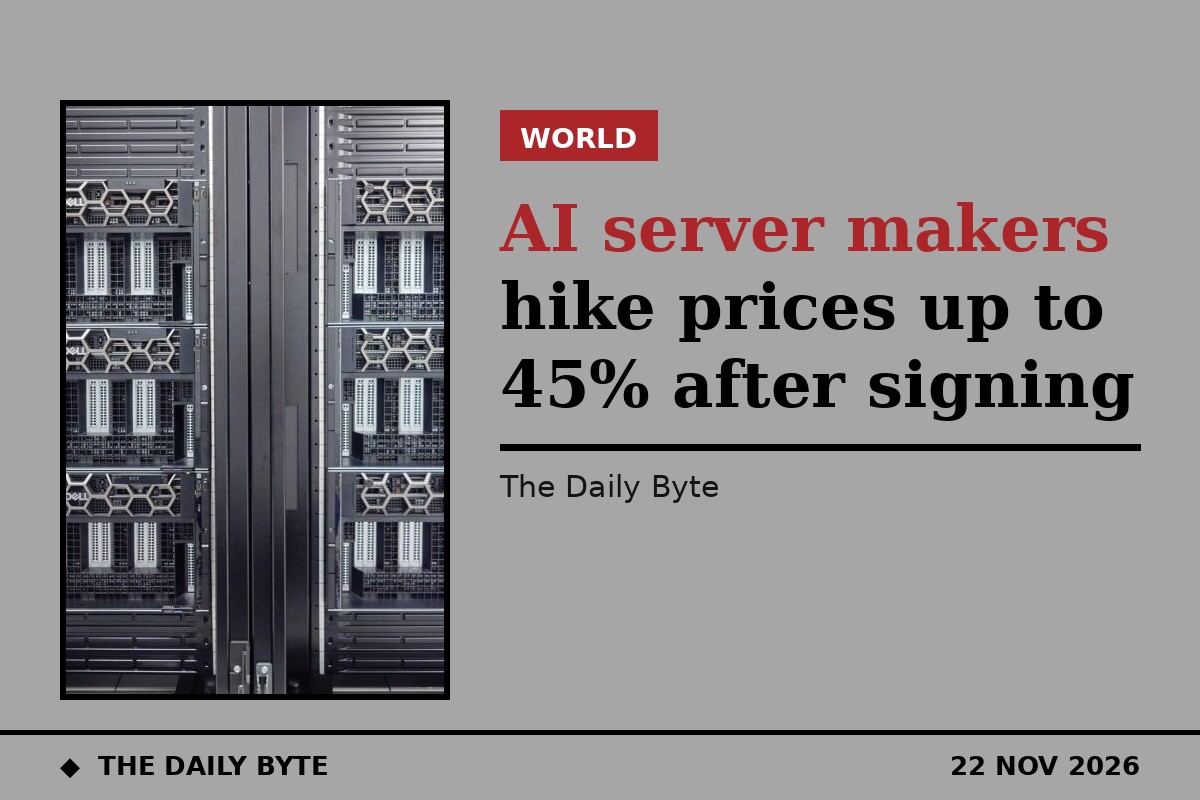
Dell, Hewlett Packard Enterprise, Lenovo and Supermicro are demanding up to 45 per cent more for artificial intelligence servers than the prices fixed in signed contracts, the Financial Times reported on 22 November, as soaring memory costs reshape the economics of the AI buildout.
The four suppliers are asking buyers for 25 to 45 per cent higher payments at delivery than the prices agreed when contracts were signed months earlier for Nvidia-based AI servers. The vendors blame shortages of memory chips and circuit boards.
Memory costs drive the squeeze
The underlying pressure is severe. Research from JPMorgan cited in the report puts memory cost inflation at more than 400 per cent since the start of 2024. Server DRAM contract prices climbed around 90 per cent in the first quarter of 2026 alone. People familiar with the deals said prices for GPU servers had risen at least 20 to 30 per cent, while CPU node prices had tripled or more.
HPE has gone further than most by writing the practice into its terms. Chief executive Antonio Neri told investors the company had amended its quoting terms to reserve a right to reprice existing orders for commodity cost increases between quoting and shipment. He said memory now accounts for more than half of a server's materials cost, and that HPE expects elevated memory and storage prices to persist well into 2027.
A lawsuit over a $549 million order
The clearest test case is already in court. Trading firm XTX Markets sued Dell in Ireland in June after a dispute over a server order. According to court filings, the two sides had agreed a fixed price of $549 million, and XTX had paid an additional $5 million to secure price certainty. Dell later told XTX the order would need another $62 million to $70 million to cover component cost increases, saying it was not able to absorb the higher memory prices.
The increases are also hitting financial trading firms, including Jane Street, Optiver and Hudson River Trading, as they build data centres to support their research. Some contracts start with an indicative price, meaning the figure quoted at signing serves only as an estimate, and buyers are accepting the higher charges because the computing capacity remains strategically valuable while demand outstrips supply.
The report underlines a new reality for AI buyers: in a market where memory is scarce and prices keep climbing, a signed contract is no longer a guarantee of the final bill.
Source: Financial Times, reported by AI Weekly, 22 November 2026


