airBaltic Offers Crew Exit, Demotion or PNG Move
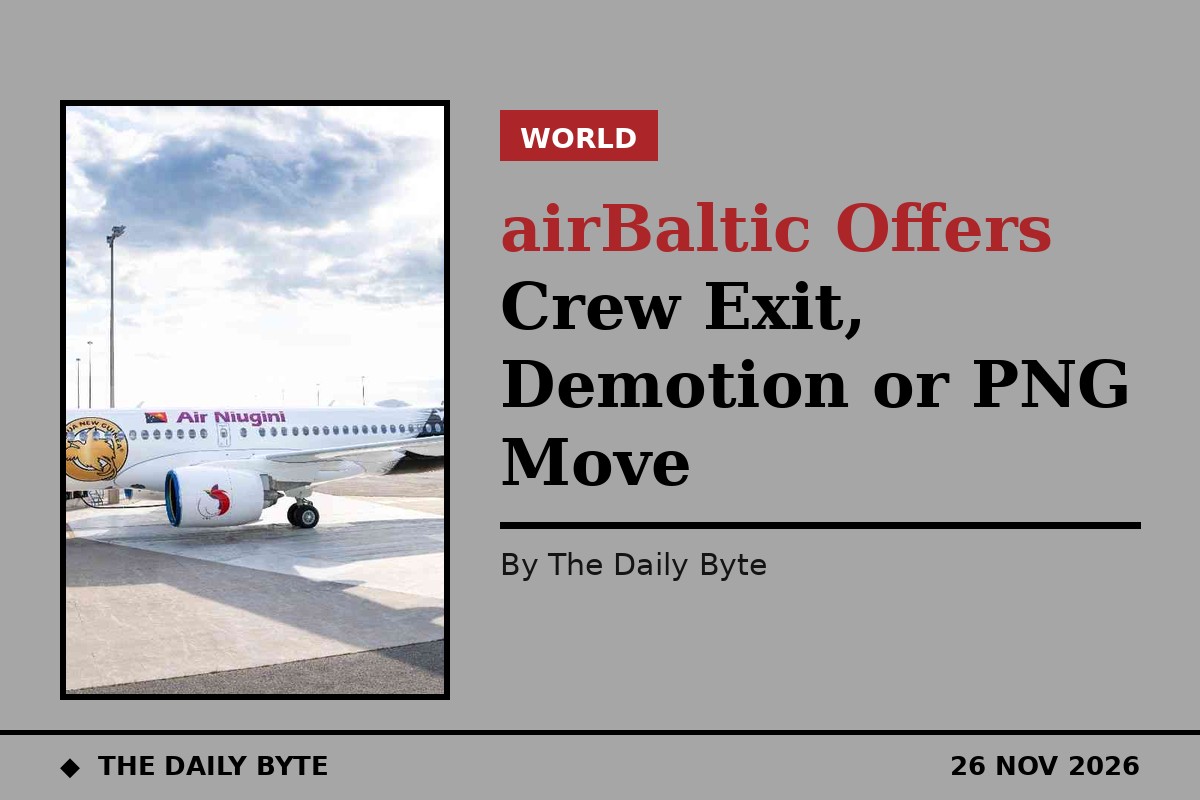
Latvia's airBaltic is offering some staff a choice between leaving the airline, accepting a demotion, or taking a secondment to Papua New Guinea's national carrier, as it cuts costs during Chapter 11 bankruptcy proceedings, according to internal emails seen by Reuters and two people with knowledge of the process.
The airline has been hit hard by soaring jet fuel prices in the wake of the US-Israeli war with Iran, after starting the year without the hedging agreements that would have insulated it from rising costs. It entered Chapter 11 proceedings in the United States in September and said in October that it planned to cut 500 to 700 jobs.
AirBaltic, which is majority-owned by the Latvian government, began contacting some cabin crew in October, the emails showed. Those staff were offered a choice between termination and a demotion, while other employees were offered incentives to leave voluntarily. The details of the moves were previously unreported.
Pilots were presented with similar options. The carrier, which once aimed to expand its fleet to 100 jets by 2030, now plans to reduce its 54 Airbus A220-300 aircraft to 36 by the end of this year, according to the emails and the two people.
Some pilots were told to choose between a secondment to Papua New Guinea's Air Niugini and termination, the emails showed. Others were asked to give up their line training captain status, which carries additional pay.
AirBaltic told Reuters the secondments were part of a cooperation agreement under which its pilots can voluntarily fly Air Niugini's Airbus A220 aircraft from next year. It said the process around staffing was ongoing and discussions with employees were continuing. It did not disclose any figures.
A second person with knowledge of the process said airBaltic would initially keep paying its seconded pilots as if they were on business trips, but would eventually hire them through a Swiss subsidiary. AirBaltic said it was in the final stages of obtaining regulatory approvals for that arrangement.
The carrier's spokesperson said the process was being carried out in full compliance with applicable labour laws and regulations, and that affected employees would receive the rights and entitlements provided by law. Different employee groups had been offered options such as reduced workloads, alternative roles and transfers between bases, with the aim of minimising redundancies.
The Latvian Aviation Union, which represents about 30 percent of airBaltic's pilots and a quarter of its cabin crew, said the airline had not consulted it on the demotions or the Air Niugini secondments, and said the moves breached EU and Latvian rules. AirBaltic said it was complying with applicable labour law.
The restructuring will also affect airBaltic's pilot academy, where the company provides student loans for most training costs. Current students may be unable to progress to the course that certifies pilots to fly the A220 after building flight hours and obtaining licences, one of the people said, adding that the academy's future was uncertain. AirBaltic said no final decision had been made on either the type-rating course or the academy's future.
The airline expects to re-emerge from Chapter 11 next year with a turnaround plan focused on operating a smaller fleet and leasing aircraft, crew, maintenance and insurance. It has drawn an initial tranche of the 350 million euro ($383 million) debtor-in-possession financing tied to the proceedings.
The pressure is not confined to airBaltic. On Wednesday, peer carrier Norse Atlantic said its finances were critical, sending its shares down 80 percent. Other regional airlines have grounded flights and started restructuring ahead of an expected tough winter, and Qatar Airways is retiring older Airbus jets and seconding some pilots to Rwanda's flag carrier because of disruptions linked to the Middle East conflict.
The secondment programme itself is already under way in part: Air Niugini said in October that two airBaltic captains had arrived in Port Moresby under a 12-month agreement involving 30 experienced A220 pilots, working on 28-day rotations with about 15 in Papua New Guinea at a time, and helping to train local crews.


