Alaska pilot's seaplane case reaches US Supreme Court
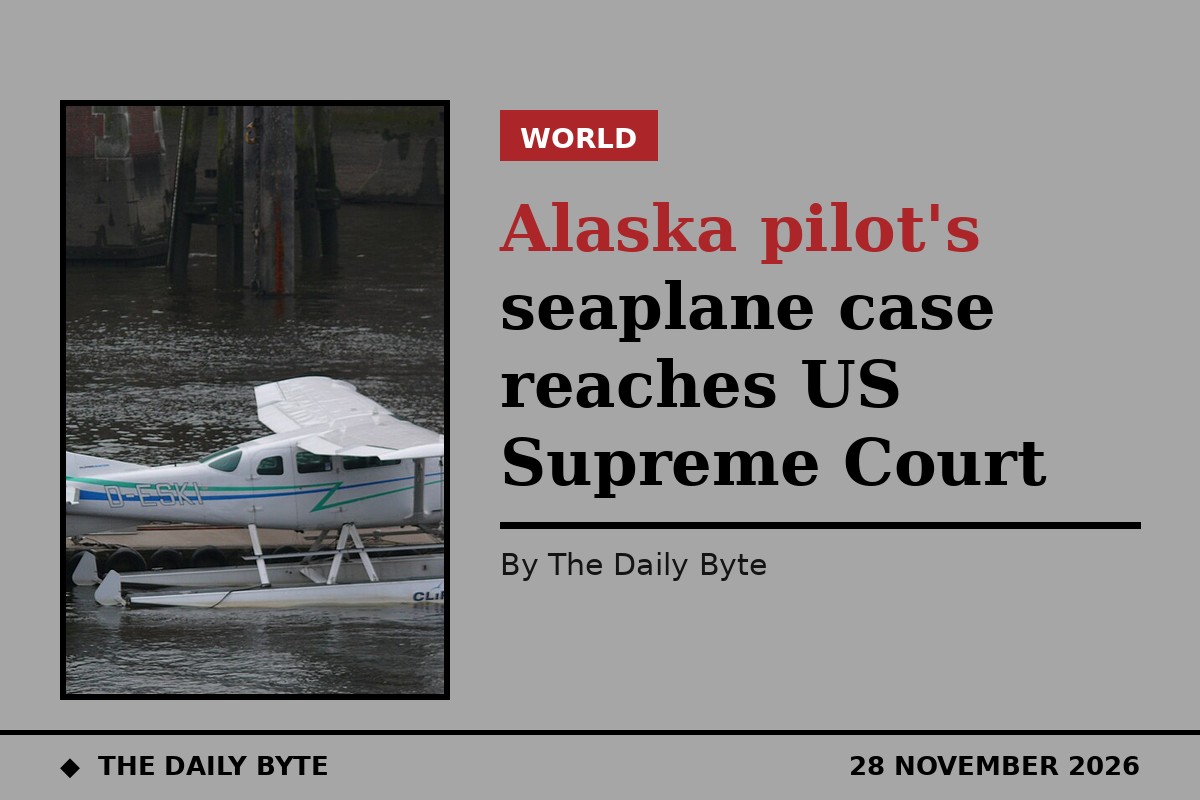
The United States Supreme Court will hear arguments on Tuesday, 1 December, in a case that asks whether the state of Alaska can seize a bush pilot's aeroplane, worth $95,000, because beer was found on board a flight bound for a village where alcohol is banned.
The case, Jouppi v Alaska, reaches back to 3 April 2012, when Alaska state troopers, armed with a search warrant, found 72 beers on the Cessna aeroplane that pilot Kenneth Jouppi was preparing to fly from Fairbanks to Beaver, a community on the banks of the Yukon River, 14 miles below the Arctic Circle. At least one six-pack was visible in a shopping bag among other groceries, the troopers said. The beer belonged to a passenger who was visiting her husband, then the village postmaster.
Beaver is one of 71 “dry” villages in Alaska that forbid the importation of alcohol under a state law allowing local communities to ban drink. Jouppi, who owns the AirKen air taxi service and had flown in Alaska since the 1970s, had no previous criminal record. A jury convicted him of knowingly transporting alcohol into a dry village, a misdemeanour for which he was sentenced to three days in jail and fined $1,500. His company was fined the same amount.
Prosecutors then sought to take the Cessna itself, under a provision of Alaska law that makes aircraft, vehicles and vessels used to carry alcohol into dry villages subject to forfeiture. A trial court found the forfeiture unconstitutionally excessive, but the Alaska Supreme Court ruled in April 2025 that it was not grossly disproportionate to the offence, judging the gravity of the crime against the maximum $10,000 fine Jouppi could have faced rather than the $1,500 he was actually given.
The question now before the US Supreme Court is how courts should decide whether a fine is excessive: by looking at the gravity of the offence in the abstract, or by considering the specific defendant's wrongdoing. Jouppi's lawyers, from the Institute for Justice, argue that Alaska's highest court judged the offence “at a stratospheric level of abstraction”. They say the value of the plane is more than nine times the maximum fine he could have paid, and that a first-time offender should not lose his livelihood over a small quantity of beer he says he did not know was on board.
Alaska has urged the court to uphold the forfeiture, arguing that the state legislature reasonably decided that mandatory forfeiture would help stop alcohol-related injuries and crime in its most isolated villages. The Trump administration has joined the case on Alaska's side, arguing that the United States has a long history of authorising the forfeiture of vehicles used to commit crimes. The justices agreed in July to hear the appeal, and a decision is expected by early summer.
The case turns on the Eighth Amendment, which forbids excessive fines as well as cruel and unusual punishment. In 1998 the Supreme Court ruled that a punitive forfeiture breaches the clause if it is grossly disproportionate to the gravity of the offence, and in 2019 it held that the ban on excessive fines applies to the states as well as the federal government. The ruling in Jouppi's case could give lower courts clearer guidance on how to weigh the severity of a punishment against the seriousness of the crime.


