Albania Rules Out 2027 NATO Summit in Tirana
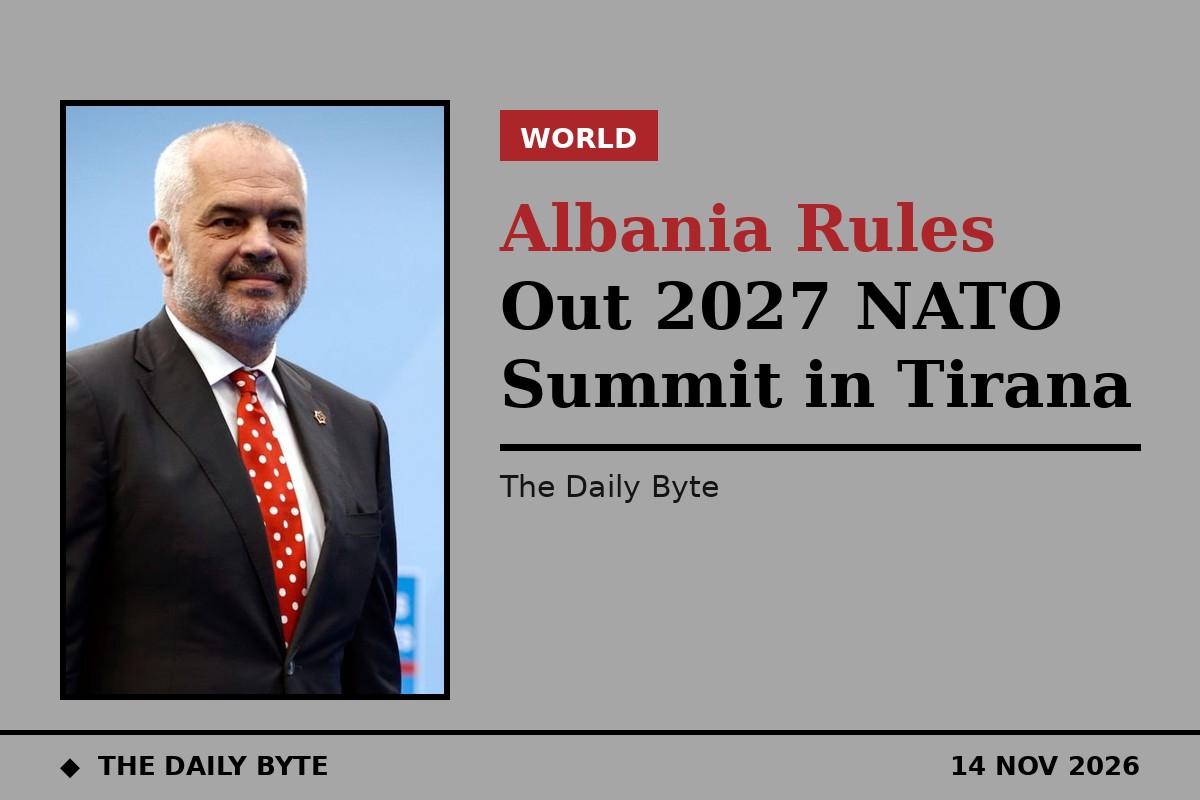
Albania will not host a NATO summit in 2027, Prime Minister Edi Rama has said, ending months of uncertainty over whether Tirana would stage the alliance's next gathering of leaders. Speaking in Dublin on 12 November, ahead of the ninth European Political Community summit, Rama said NATO members had not reached a common position on when their next summit should take place.
"The issue is that there is not yet [a] common position on when the summit will happen, for sure not in 2027," Rama said. "And in 2028, if it will be a summit, it will be in Tirana." A NATO official confirmed on the same day that the next summit would be held in Albania, while adding that a decision on the date had yet to be made.
The announcement leaves Albania still designated as a future host, but with no agreed date. Rama has publicly rejected suggestions that the hosting role has been withdrawn, insisting that only the timing remains undecided. The distinction matters in Tirana, where hosting a summit of NATO leaders would have been one of the country's biggest diplomatic events since it joined the alliance in 2009.
How the timetable slipped
The plan for Albania to follow Türkiye as host was set out in the declaration adopted at the NATO summit in The Hague in June 2025, when leaders said they looked forward to meeting in Türkiye in 2026, followed by a gathering in Albania. But the declaration adopted at the July 2026 summit in Ankara referred only to the next meeting, without specifying its date or location, an early sign that the timetable was no longer certain.
Doubts had been building since June 2026, when Reuters reported that plans for a 2027 summit in Albania were facing resistance from the administration of US President Donald Trump, alongside dissatisfaction among some NATO members over Albania's defence spending. Washington has continued to press European allies to carry more of the burden for the alliance's collective defence, and spending levels have become a measure of political credibility inside NATO.
Defence spending under scrutiny
At the 2025 Hague summit, allied leaders agreed a new commitment to invest 5% of GDP a year in defence and security-related spending by 2035, including 3.5% for core defence requirements and up to 1.5% for broader security priorities such as critical infrastructure, cybersecurity and resilience. The agreement has raised expectations that every member state should show tangible progress towards stronger military capabilities.
Albania's government has previously indicated that its defence and defence-related spending would increase in line with the new alliance-wide commitments. Even so, its spending levels have remained a source of scrutiny among some allies, and hosting a summit would have given Tirana a prominent stage on which to present its defence commitments and influence the alliance's agenda.
Summit schedule itself under review
The delay also reflects a wider debate inside NATO about how often its leaders should meet. The alliance's leaders have gathered every year since 2021, but some members favour holding summits every two years, or reducing the number of high-level meetings, to allow more time to implement existing commitments and to plan for the longer term.
Supporters of less frequent summits argue that fewer gatherings would reduce the pressure to produce immediate political announcements and limit the risk of high-profile disagreements overshadowing substantive discussion. Others warn that the alliance still needs regular political coordination, given Russia's war against Ukraine, the security of NATO's eastern flank and the expansion of European defence capabilities.
What it means for Albania
For Albania, a summit in Tirana would have been a chance to underline the strategic importance of the Western Balkans, a region where political instability, unresolved disputes and outside influence continue to complicate European security. The country has consistently presented its NATO membership as a central pillar of its foreign and security policy, and a high-level gathering would have showcased its standing among Western allies.
The timing also carries domestic weight for Rama's government, which has faced months of anti-government protests, with demonstrators raising concerns about corruption and governance. A NATO summit would have served as a visible demonstration of international recognition. The postponement does not amount to a formal diplomatic setback, but it means Tirana will have to wait longer to turn its hosting role into a major international event, with 2028 now the earliest possible year.
Sources: Nexus Europa and Reuters.


