Albania Sends Ex-Deputy PM Balluku to Trial in €400m Case
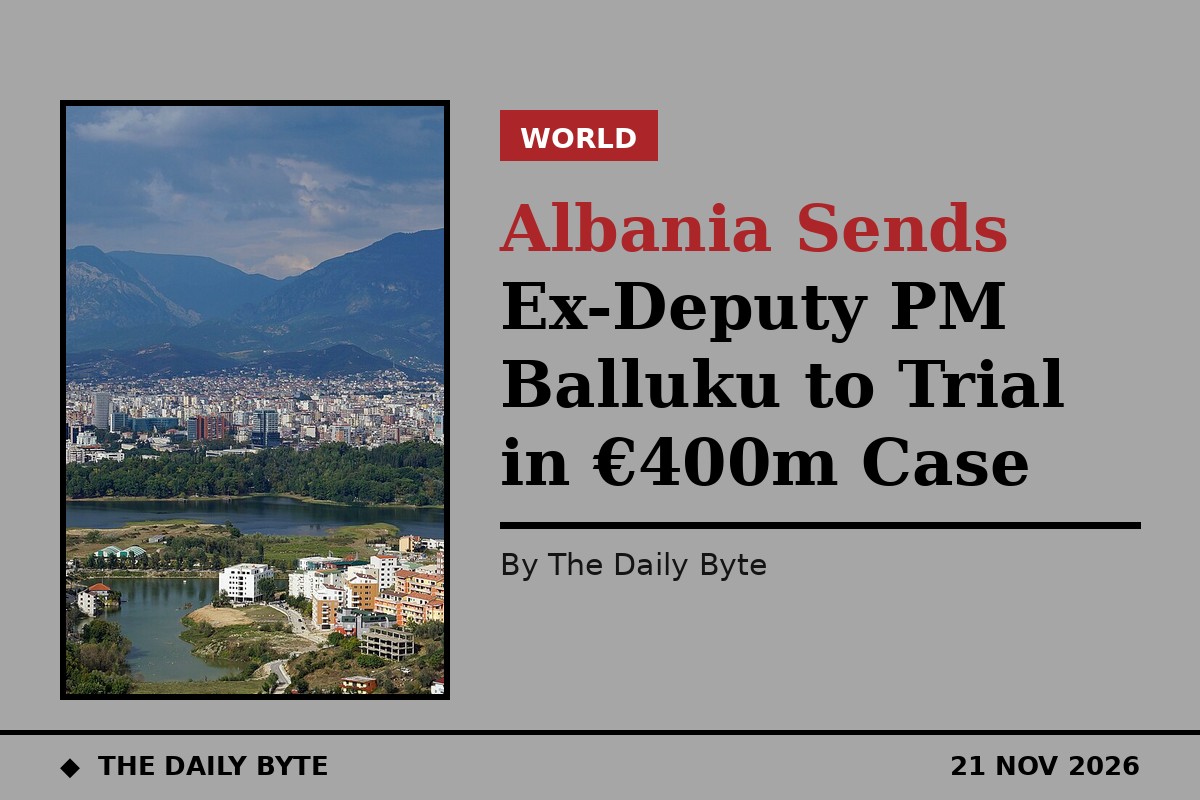
Albania's special anti-corruption prosecutors have sent former deputy prime minister Belinda Balluku to trial on charges including corruption, money laundering and manipulating public tenders, in the biggest case the country's Special Prosecution Office, known as SPAK, has brought. The indictment, announced on Monday 16 November, names 28 defendants, Balluku herself, 25 other people and two companies, and covers 10 public tenders worth about €400 million.
SPAK accuses Balluku of interfering in nine procurement procedures to steer contracts to predetermined bidders. The tenders under investigation include the Llogara Tunnel, sections of Tirana's Great Ring Road, infrastructure works near the port of Durrës and a project for Albcontrol, the state-owned air navigation company. The earliest contract cited dates to November 2014, shortly after Balluku was appointed to run Albcontrol; the other eight date from late 2020 to 2023, when she was minister of infrastructure and energy, a post she took in 2020. Prosecutors put the alleged damage to the state at about 5 billion lek, roughly €50 million, and say the Llogara Tunnel is the centrepiece of the file. They have also seized two luxury seaside villas, in Palasë and Dhërmi, valued together at about €1.8 million and allegedly linked to kickbacks from the rigged tenders. Among the evidence cited is a photograph of a box packed with €50 notes, found on the phone of the husband of Balluku's housekeeper; prosecutors say the cash itself was never recovered. Prosecutors also indicted senior officials from her former ministry and the Albanian Road Authority, making the case, by the number of defendants, SPAK's largest corruption prosecution to date.
No new request to lift her immunity
Balluku remains free, and prosecutors have decided not to ask parliament a second time to authorise her arrest. She was dismissed from the cabinet in a reshuffle in February, but parliament rejected SPAK's first request to lift her immunity on 12 March, by 82 votes to 47, blocking any attempt to place her in pretrial detention. SPAK chief Klodian Braho said the earlier rejection, combined with the absence of new evidence of a flight risk, interference with witnesses or repeated offending, left prosecutors without sufficient legal grounds to seek a harsher measure, and pointed to a Supreme Court ruling that detention must rest on specific circumstances rather than the gravity of the allegations alone. The decision drew sharp criticism from the opposition and legal commentators, who questioned why substantially more serious charges had not prompted a fresh request.
The case is also a test of Albania's justice reforms as the country pushes to join the European Union by 2030. In its annual progress report on 4 November, the European Commission warned that parliament's refusal to lift Balluku's immunity raised serious concerns about institutional checks and balances and equality before the law. SPAK has confirmed a second, separate investigation into Balluku opened earlier this year, with no details released. All 28 defendants are presumed innocent unless proven guilty by a final court judgment, and the trial will now test whether prosecutors can prove that procurement was systematically manipulated, and whether Albania's institutions are prepared to accept the consequences when independent justice reaches the highest levels of government.


