Alberta Bike Lane Bill Sparks Cost Row
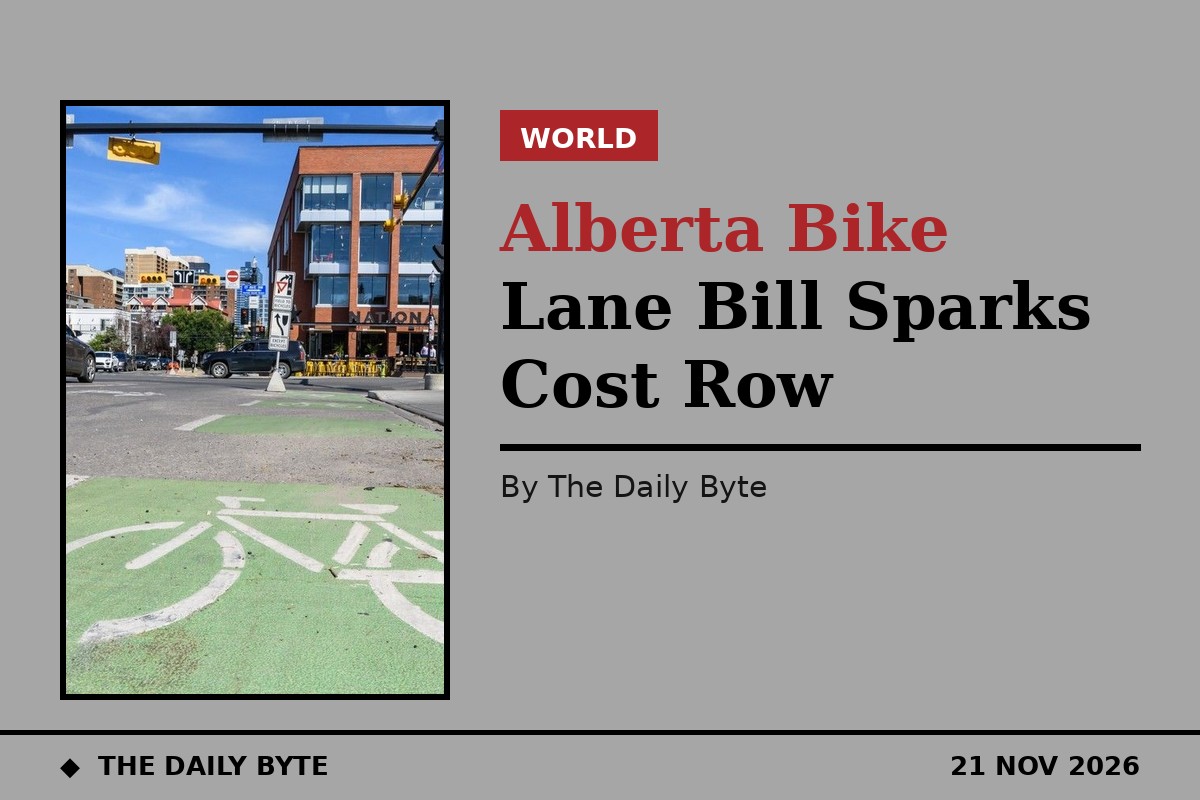
Alberta's government has tabled legislation that would give the province sweeping control over bike lanes in the province's cities, including the power to block new lanes and order existing ones removed — and a row has already broken out over who would pay for the removals.
What Bill 43 would do
Bill 43, the Safe and Sensible Roads Act, was introduced in the Alberta legislature on Thursday by Transportation Minister Devin Dreeshen. It would bar municipalities from building new bike lanes that take away space from motor vehicles unless the transportation minister gives written approval. It would also let the minister order a city to remove an existing lane that reduces road capacity for drivers. Municipalities could ask for exemptions case by case, but would have to supply supporting information, and the bill sets out no criteria for granting exemptions or for choosing which lanes should go.
The changes are part of an omnibus transport bill that would also raise penalties for unsafe commercial trucking, give the province more oversight over municipal light-rail projects, and set minimum safety standards for privately owned e-scooters and other small electric vehicles. If passed, the government expects the law to take effect in April, with regulations to follow in the spring.
Dreeshen said the aim was to preserve road capacity. “It is intended to preserve roadway capacity at the end of the day,” he told a news conference on Thursday, adding that the province would work with municipalities and ask for traffic impact assessments on lanes identified as problems. He has argued for months that bike lanes make sense in some places but should not take away parking spaces or traffic lanes used by motor vehicles, and he has pointed to an Ontario Court of Appeal ruling that overturned a lower court's decision against Ontario's plan to replace some bike lanes with car lanes.
Mayors push back over the bill
The sharpest dispute is over money. Dreeshen told reporters after the bill was introduced that cities would pay to remove lanes, saying they had “extensive” bike lane budgets. Calgary Mayor Jeromy Farkas pushed back on Friday, saying the premier's office had assured him the province would cover the cost. “My understanding is that a premature draft version of that legislation was put forward, and my understanding, and speaking with the premier's office, is that was a mistake; the provincial government will fully pay for any change orders that are required,” Farkas told reporters. “The premier's office has told me that under no circumstances will municipalities be paying for this, and I take that to the bank.”
Farkas said the bill as introduced “missed the mark” but that he believed in good faith the government would amend it before it becomes law. Edmonton Mayor Andrew Knack was blunter on Thursday, calling the proposal dangerous and accusing the government of using bike lanes to fuel a political culture war rather than following evidence. Edmonton city council has heard that removing the city's bike lanes could cost $150 million.
Dreeshen struck a more collaborative note on Friday, saying in a written statement that the province would “continue to work with municipalities to ensure the new legislation serves its purpose to limit future bike lanes in high-traffic areas” and that existing problem lanes would be dealt with “in co-operation with affected municipalities.”
A wider argument about city streets
The bill lands after months of argument in both big cities. Calgary council voted down a motion in October that would have temporarily halted design or construction of new bike lanes while the city waited to learn what the province planned. Council heard the city has spent $10 million on bike lanes over the last four years, against almost $50 million on multi-use pathways, and that a dedicated bike lane costs roughly $500,000 per kilometre to build. Farkas has argued funding should reflect use, saying that if only two per cent of road users are cyclists, a similar share of the capital budget should go to cycling projects — while insisting that local autonomy matters and that the provincial taxpayer should pay if the province orders changes.
For now, nothing has been removed and no lane has been ordered out. The bill must still pass through the legislature, and the fight over who pays — and which lanes, if any, are judged to be problems — will be settled in the amendments and regulations that follow.


