Alberta could fill pipeline with oil royalties
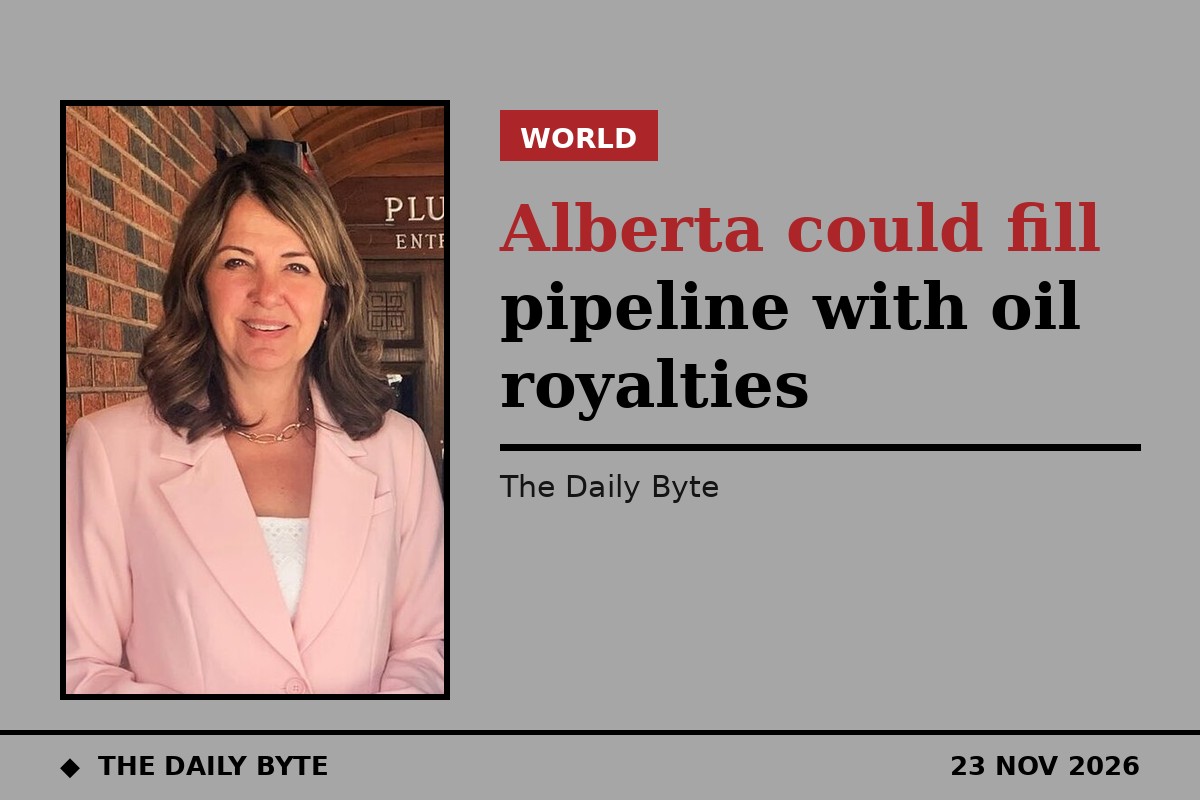
Alberta could take the royalties it is owed by oil companies in barrels of oil rather than cash, and use that crude to fill its proposed Pacific Link pipeline to the West Coast, according to a CBC News analysis published on 22 November 2026. The province already has a little-known royalty-in-kind policy that would allow it to do so — but the experts CBC spoke to warned the idea would not create a single extra barrel of oil.
The Pacific Link pipeline would carry oil from the Edmonton area to a port near Vancouver, with capacity of about one million barrels a day. The biggest obstacle to the project is not building it, but filling it: oil companies have yet to sign the long-term contracts that would commit them to using it.
A fallback if shippers will not sign up
Under the royalty-in-kind policy, the Crown can elect to receive its share of production as physical bitumen instead of money. Grant Sprague, a former deputy energy minister in Alberta, told CBC that if more barrels were needed for the pipeline, the Crown could take more of its royalty in bitumen and physically allocate it to Pacific Link.
A government official, speaking on background, said Alberta could access enough oil through the programme to fill the million-barrels-a-day pipeline. The official added, however, that it was not the government's intention to do so, because it is confident the oil industry will increase production on its own.
Experts warn it is no panacea
Sprague himself cautioned against treating the mechanism as a solution. More production, he said, was the ideal way to fill the pipeline, because taking royalties in oil would simply divert barrels from elsewhere. "It's a diversion. It's never additive," he said. "Short answer: it's not a panacea."
Former Suncor chief executive Mark Little said he was "very certain" the Alberta government was considering the option, and warned companies would feel the squeeze if it went ahead. Oil producers hold long-term contracts for space on other export pipelines, and if they had less of their own oil to ship they would still have to pay for capacity they were not using — paying, in industry terms, for "air barrels".
Richard Masson, former chief executive of the Alberta Petroleum Marketing Commission, the provincial agency that runs the royalty-in-kind programme, was blunter still. If the province needed barrels, he said, it should simply buy them. "Alberta gets its royalties in cash every month at the market price. If they want to acquire some barrels, just go buy them," he said. "Royalties-in-kind is just a mechanism that complicates life, creates uncertainty and doesn't create an extra barrel to ship."
Part of a wider push to double output
The idea sits alongside a new incentive programme announced by Premier Danielle Smith on 13 November. Under the Oil Sands Growth Program, new projects and expansions of at least 5,000 barrels a day would pay a guaranteed royalty of 2 per cent of gross revenue for five years, rising by one percentage point a year to 6 per cent in years nine and ten, before returning to the existing system. Applications open in 2027.
Smith said the goal was to stimulate investment and double oilsands production over the coming decade, arguing Alberta needed to compete with the United States and Venezuela for capital. Critics, including the Pembina Institute, say the programme hands more of the value of a publicly owned resource to corporate shareholders at a time when the industry is reporting record profits.
Pacific Link also faces legal challenges from three First Nations in Alberta seeking to overturn the federal government's designation of the pipeline as a project in the national interest, a designation that fast-tracks approvals under the Building Canada Act. The chances of the province actually using royalty-in-kind are relatively small, CBC reported, given the financial harm it could cause some producers — but the policy gives the government a lever to press the oil industry to invest in pumping more crude.
Frequently asked questions
What is royalty-in-kind? It is a policy under which Alberta can choose to receive its oil royalties as physical oil or bitumen instead of cash. The province's commercial oil agency, the Alberta Petroleum Marketing Commission, runs the programme.
What is the Pacific Link pipeline? It is a proposed pipeline that would move oil from the Edmonton area to a port near Vancouver, with capacity of about one million barrels a day. It has been designated a project in the national interest by the federal government.
Will Alberta actually do this? A government official said it was not the province's intention, and experts put the chances as relatively small. The more likely effect is pressure: the threat of taking royalties in oil may push producers to invest in new production instead.
Sources: CBC News and The Canadian Press.


