Algeria condemns Ukraine drone strikes in Libya
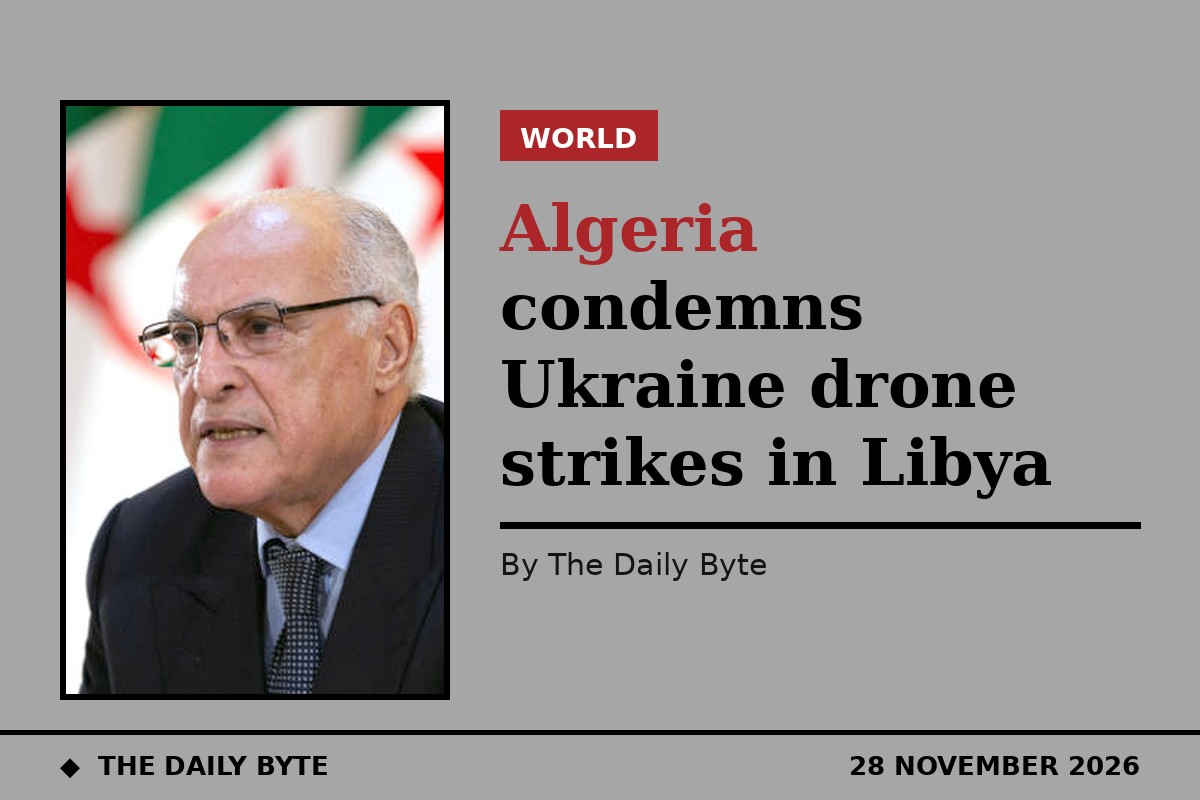
Algeria has condemned Ukrainian drone strikes on Russian vessels at the port of Benghazi in Libya as an unacceptable spillover of the Russia-Ukraine war into North Africa, after two Libyan naval officers died of wounds sustained in the attack.
Foreign Minister Ahmed Attaf spoke on Thursday 26 November, saying Algeria does not accept the war being exported to its region. "We do not accept a spillover of the Russia-Ukraine war in our region," he said, adding that the attacks on the vessels could only be condemned.
The Benghazi attack
The strikes took place on Sunday 22 November, when Ukrainian sea drones hit two Russian vessels at the Benghazi naval base in eastern Libya. Ukraine said its drones sank the Russian corvette Merkury and also hit the cargo vessel MV Angara, which President Volodymyr Zelensky said was carrying weapons.
The Libyan National Army, the force aligned with eastern commander Khalifa Haftar, said the corvette had stopped at the base to refuel when it was struck. Two of its naval officers, Al-Taher Abdullah al-Sadiq and Lieutenant Ali Mohammed al-Said, were wounded in the attack and died of their injuries on Tuesday 24 November. The army said it would retaliate at an appropriate time and place.
The operation took place about 2,000 kilometres from the battlefield in Ukraine, and it has turned a distant war into a North African security problem. Satellite images showed the corvette capsized at its berth, and Russian naval groups in the Mediterranean changed course after the attack, according to Reuters, with one convoy turning back near the Strait of Sicily and another stopping off the Algerian coast.
Algeria's warning
Attaf said the strikes were a stark reminder of the urgent need to reach a solution that ends the crisis in Libya. He added that the crises in Libya and the Sahel are linked, and that foreign interference remains a major concern for Algiers. Libya shares its eastern border with Algeria, and Algiers has long warned against outside powers using Libyan territory for their own conflicts.
The condemnation came as the diplomatic fallout continued. Ukraine's foreign minister, Andrii Sybiha, said after speaking to his Libyan counterpart that Ukraine's action was directed at Russia's military, not Libya, and that Kyiv regretted the unintended consequences. On Friday 27 November, Zelensky said the operation had been carried out without prior coordination with European partners, after Italy's foreign minister said Zelensky's earlier claim of coordination was untrue.
The United Nations Support Mission in Libya expressed serious concern after the strikes and called for an immediate, independent and transparent investigation. Both the Tripoli government and the eastern administration condemned the attack.
Why this matters for North Africa
The Benghazi operation is the clearest example yet of the Russia-Ukraine war reaching the southern Mediterranean. Libya has been divided between rival administrations since 2011, and its ports have become a point of interest for outside navies. Algeria's message is that North African states do not want their waters and ports turned into a new front.
For now, the immediate questions are whether the Libyan National Army follows through on its promise of retaliation, whether Russia changes its naval movements in the Mediterranean, and whether the diplomatic row between Kyiv and its European partners over coordination deepens. What is already clear is that two Libyan officers are dead in a war that was not theirs, and that Algeria has put its objection on the record.


