Algeria economy grows 3.8% in 2025, World Bank says
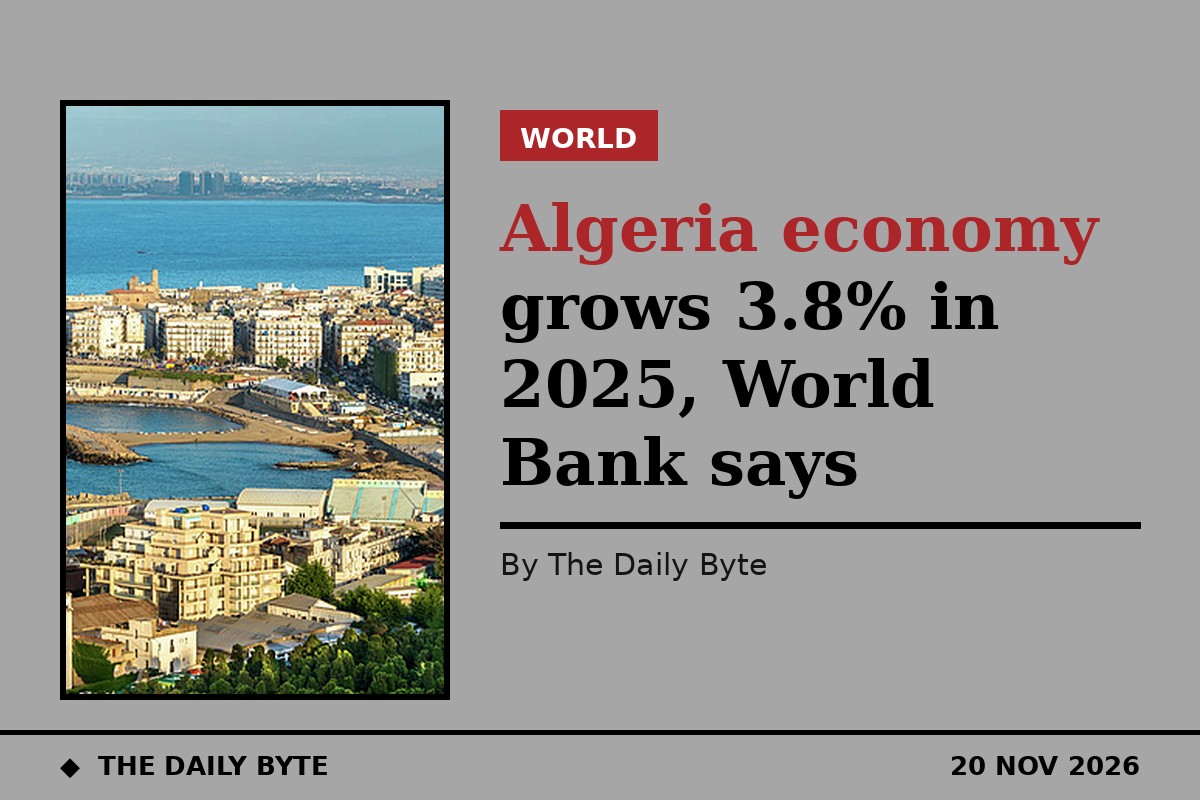
Algeria's economy grew by an estimated 3.8 percent in 2025, supported by public investment and strong domestic demand, despite weaker energy earnings, the World Bank says in its Fall 2026 Algeria Economic Update.
Growth outside the hydrocarbon sector led the expansion, with non-hydrocarbon activity rising by 4.2 percent. Inflation fell to 1.4 percent in 2025, its lowest level in years, easing price pressures during a period of continued economic expansion.
Energy earnings under pressure
Lower oil prices and smaller export volumes cut hydrocarbon revenues to 9.8 percent of GDP in 2025, putting pressure on Algeria's external accounts. Higher imports linked to investment added to that pressure, widening the current account deficit to 8.8 percent of GDP.
The report, titled "Hydrocarbon Revenues and Fiscal Resilience", examines Algeria's growth performance and its exposure to changes in energy markets.
Fiscal deficit narrows
The fiscal deficit narrowed to 10.4 percent of GDP in 2025, down from 14 percent in 2024, supported by resilient revenues outside the hydrocarbon sector. Exceptional dividends from state-owned enterprises also contributed to the improvement.
World Bank economist Amel Henider described the narrowing deficit as an encouraging indication of Algeria's capacity to mobilise financing beyond hydrocarbon revenues. She pointed to global energy price swings and growing domestic energy consumption as continuing challenges for managing public finances.
Cemile Hacibeyoglu, the World Bank Group's Resident Representative for Algeria, said growth outside the hydrocarbon sector reflected real economic resilience. She identified greater room for private investment, more effective use of public resources and reduced exposure to energy price swings as priorities for turning that resilience into lasting growth.
Growth forecast at 3.7 percent for 2026
The World Bank projects GDP growth of 3.7 percent in 2026, with hydrocarbon production expected to rise by 3.8 percent following the easing of OPEC production quotas. The recovery in energy production is expected to compensate for some moderation in non-hydrocarbon activity, keeping overall growth close to its 2025 pace.
Growth is forecast to ease to 3.4 percent in 2027 as public expenditure and hydrocarbon output stabilise.
Inflation rises again in 2026
Inflation rose to 5.3 percent during the first half of 2026, largely reflecting higher manufactured goods prices after the unusually low inflation recorded in 2025. The report notes a similar trend across many economies in the region and says Algeria's authorities are well positioned to monitor price developments.
A more favourable hydrocarbon price environment is projected to help narrow the current account deficit to 2.9 percent of GDP in 2026.
The update's special chapter looks at fiscal resilience and hydrocarbon revenue management, arguing that stronger fiscal anchors, supported by a fully operational stabilisation mechanism, could help cushion economic shocks and build long-term savings for future generations. It links Algeria's future progress to policy choices that unlock more opportunities for businesses, make public spending more effective and strengthen entrepreneurship, so the economy can create the jobs Algerians need.


