AMD plunges 11% as chip sell-off deepens
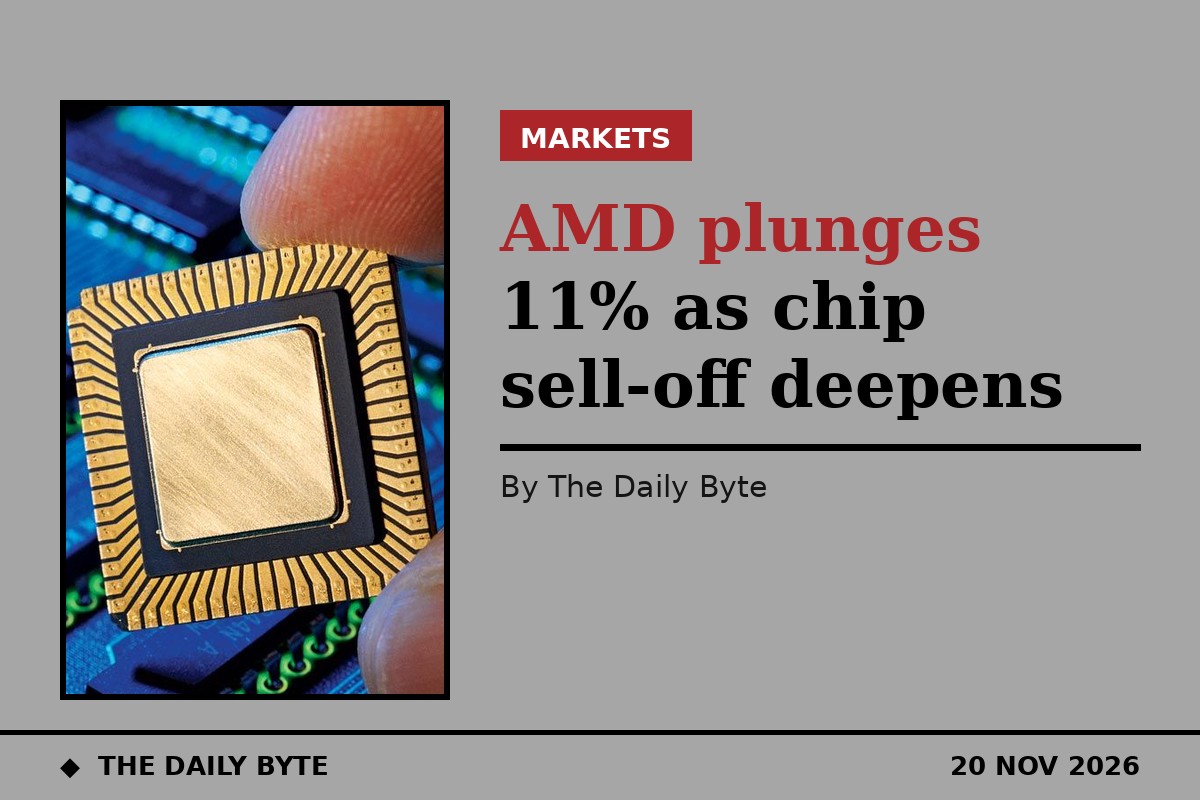
Advanced Micro Devices shares plunged 11% on Friday as a brutal sell-off swept through semiconductor stocks, wiping out almost a fifth of the chipmaker's value in two sessions and dragging the Nasdaq Composite down nearly 3%.
AMD was trading 11.03% lower by late morning in New York, while memory-chip maker Micron Technology fell 12.03%, according to the Motley Fool's midday market report. The Nasdaq Composite had dropped 2.8% to 23,210, the S&P 500 was down 1.54% at 7,065, and the Dow Jones Industrial Average was almost flat at 49,048.
The slide is the latest leg of a week-long unwind in the artificial intelligence trade. AMD had already fallen 7.7% on Thursday after Hunterbrook Capital disclosed a short position in the stock, following a report by its media affiliate alleging that AMD firmware had ties to IEIT Systems, a Chinese server maker subject to United States export restrictions. Across the two days, the shares have lost roughly 18% of their value.
AMD has said it complies with US export rules, but the report added to pressure on a stock that had already been falling as investors questioned the returns on the vast sums being poured into AI infrastructure. The selling spread across the whole sector on Friday: Nvidia fell about 7%, Broadcom dropped more than 9%, and the Philadelphia Semiconductor Index was down around 7%, with the iShares Semiconductor ETF down 9% and a memory-focused ETF down 11%.
Memory stocks lead the rout
Memory makers were hit hardest. SanDisk, the worst performer in the S&P 500 for the session, plunged 16% after research firm TrendForce warned that NAND flash prices would fall in 2027, with Chinese cloud providers cutting orders for enterprise drives. Micron, the other big memory name, fell more than 11% as investors reassessed demand for the chips that power AI data centres.
The damage began in Asia, where technology benchmarks in Taiwan, South Korea and Japan each sank more than 5% on Friday. The fear gauge on Wall Street, the VIX, rose above 30 for the first time since March, a sign of how sharply sentiment has turned.
Nothing about the week was supposed to go this way for AI bulls. Anthropic, the AI developer behind the Claude chatbot, raised more than $81 billion in a record-breaking initial public offering this week, but its shares slid on their second day of trading and failed to revive enthusiasm for the sector. Instead, the listing exposed doubts that had been building beneath the rally: uncertain returns on AI spending, unease about the volume of debt being raised to finance chips and data centres, and regulatory risk after California opened a probe into Nvidia's chip sales to China.
Investors rotate to safety
Money moved into defensive corners of the market. Consumer staples led the S&P 500's sectors on Friday, while technology suffered the heaviest losses, and government bond yields fell as investors sought safety. Gold also tumbled, down 3.73% to $3,547.90 an ounce at midday, a sign that investors were cutting risk across the board rather than simply rotating from one asset to another.
For much of the past two years, investors rewarded companies simply for their exposure to AI and their ability to grow revenue. With borrowing costs still elevated and the Federal Reserve expected to raise interest rates again in December, the market is now more likely to favour companies generating tangible returns from AI over those committing billions of dollars to infrastructure with uncertain payback periods. Profit margins, free cash flow and capital efficiency could matter more than growth promises in deciding which technology stocks recover first.
Some analysts argue the selling has gone too far, pointing out that big technology companies still plan to spend heavily on data centres next year. But with the S&P 500 trading below its 200-day moving average and the Nasdaq on course for its worst week since April 2025, buyers have so far shown little appetite to catch a falling knife. The next test comes from the companies themselves: whether the next round of chip earnings can show that demand for AI hardware is still growing, or whether the boom is cooling faster than the market feared.