Angola Builds 90MW Solar Plant to Power Cabinda
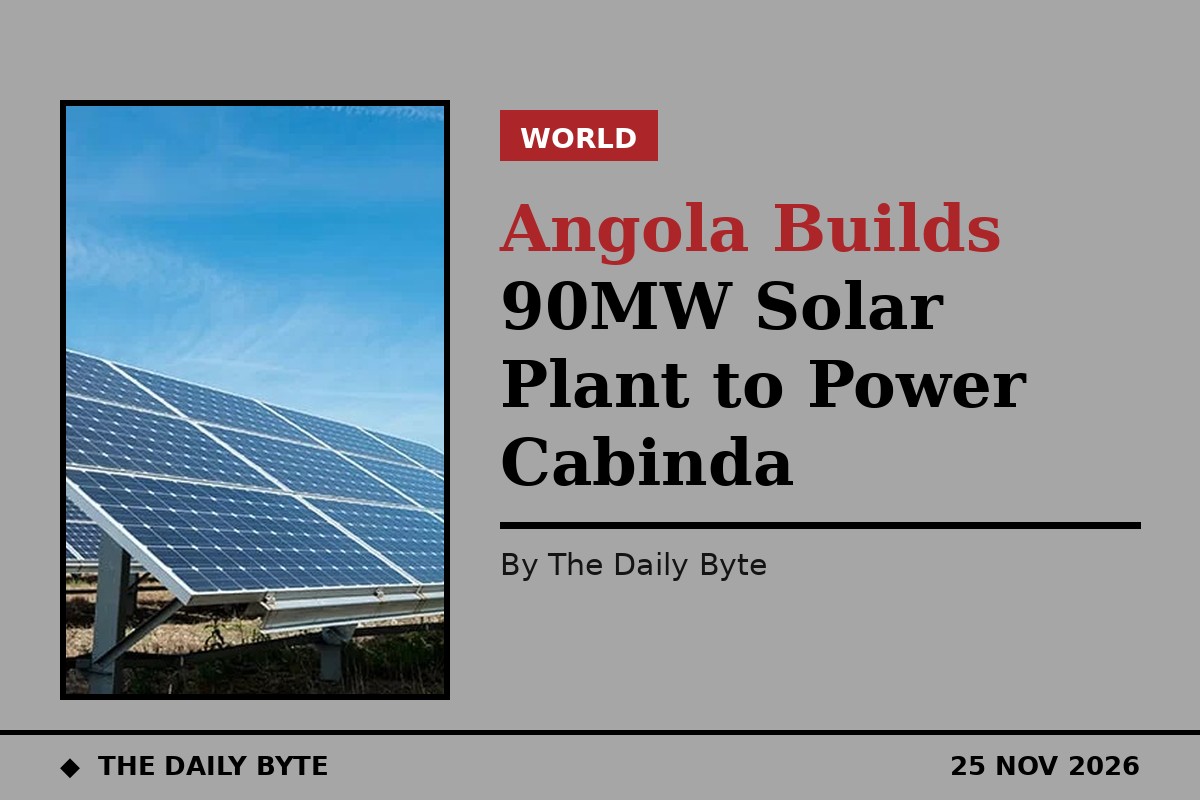
Angola has started building a 90-megawatt-peak solar power plant in its isolated Cabinda province, in a €142 million ($164 million) project aimed at easing chronic power shortages for more than 180,000 people.
Egypt’s Elsewedy Group broke ground on the facility at Ngoio on 16 November. It is building the plant for Angola’s state-owned electricity generator, PRODEL-EP, with completion scheduled for June 2029. South African engineering firm Zutari is supervising the works.
Storage and grid links included
The plant will pair a 90MWp solar array with 25 megawatt-hours of battery storage, alongside a 33/60kV substation and nine kilometres of overhead transmission lines.
Cabinda’s supply gap is wide. The province had nearly 200MW of installed generation capacity in 2025 but distributed only about 97MW, less than half of the roughly 400MW the provincial government estimates it needs. Limited transmission and distribution networks restrict how much power reaches consumers.
An enclave cut off from the national grid
Cabinda is separated from mainland Angola by a strip of territory belonging to the Democratic Republic of Congo, which makes connecting it to the national grid more difficult. The province has therefore relied heavily on its own generation, while the government also pursues a submarine power link from Soyo; the tender for the subsea section was relaunched in 2026 after an earlier procurement was cancelled.
The Ngoio project was first authorised in 2022. The investment will add solar generation and battery storage to Cabinda’s electricity system, although the scale of the supply deficit means further investment in generation and grid infrastructure will still be needed to meet demand.


