Angola Starts $164m Solar Plant to Power Cabinda
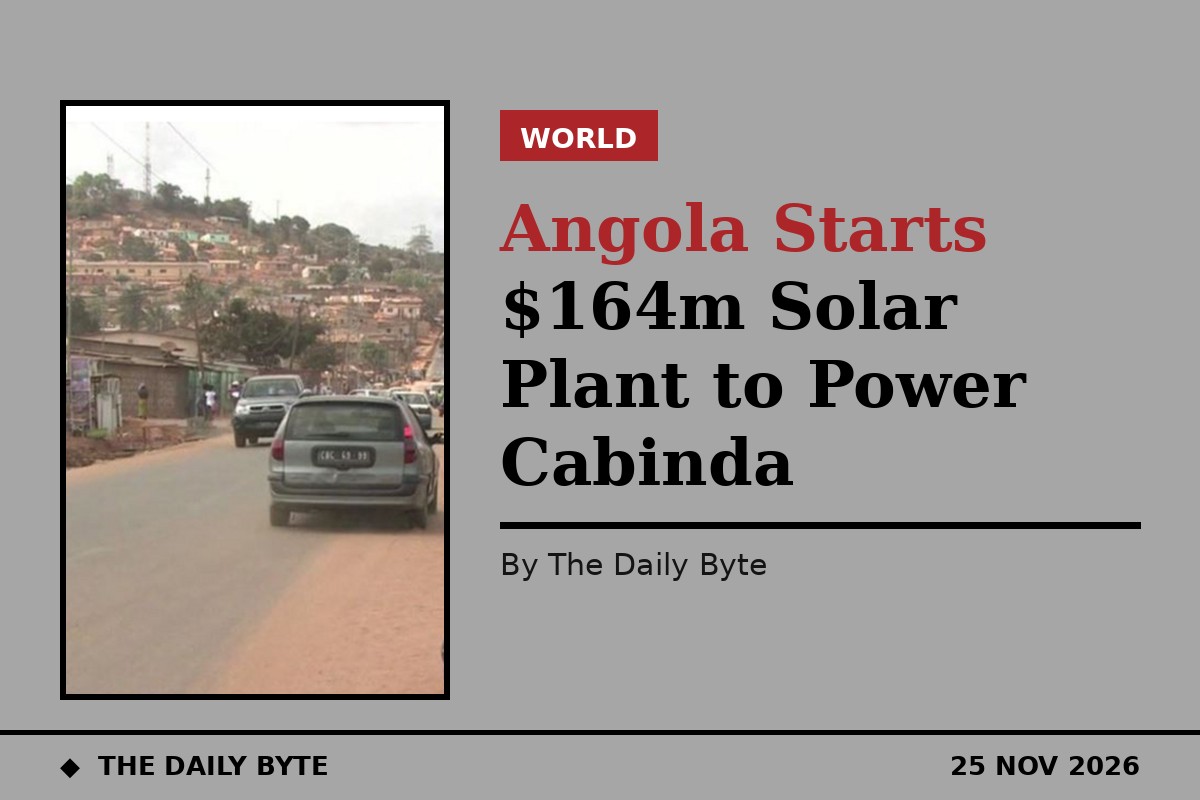
Angola has begun construction of a 90-megawatt-peak solar power plant in its isolated Cabinda province, a project valued at 142 million euros (about $164 million) that is intended to ease chronic power shortages for more than 180,000 people. Egypt's Elsewedy Group broke ground on the facility in Ngoio on 16 November, building it for Angola's state-owned electricity generator, PRODEL-EP.
The plant will pair a 90MWp solar array with 25 megawatt-hours of battery storage, allowing power generated during the day to be used after dark. It will also include a 33/60kV substation and nine kilometres of overhead transmission lines. South African engineering firm Zutari is supervising construction, which is scheduled for completion in June 2029.
The project was first authorised in 2022, so the start of construction marks a long-awaited step for a province that has struggled to turn its installed generation capacity into reliable electricity. An initial financing agreement worth 141.8 million euros was approved in 2022, followed by agreements with HSBC in 2023, although the government's latest announcement did not specify whether the financing had been finalised.
A province cut off from the national grid
Cabinda's electricity problems are shaped by geography. The coastal province is an exclave, separated from mainland Angola by a strip of territory belonging to the Democratic Republic of Congo, which makes connecting it to the national grid far more difficult than for other provinces. As a result, Cabinda has had to rely heavily on its own generation, much of it from thermal plants.
The gap between what Cabinda can generate and what reaches homes and businesses is stark. The province had nearly 200MW of installed generation capacity in 2025 but distributed only about 97MW, less than half of its estimated electricity requirement of 400MW. Limited transmission and distribution networks restrict how much power actually reaches consumers, a problem the new solar plant and its substation and lines are designed to help address.
Alongside the Ngoio solar plant, Cabinda is pursuing a submarine electricity connection from Soyo, a port city on Angola's northern mainland coast. The tender for the subsea section of that proposed connection was relaunched in 2026 after an earlier procurement process was cancelled.
For the people of Cabinda, the solar project promises steadier supply rather than a complete fix. At 142 million euros, the investment will add solar generation and battery storage to the province's electricity system, but the scale of the supply deficit means further investment in generation and grid infrastructure will still be needed to meet demand.
The project also fits a wider shift in Angola's energy mix. Cabinda is best known as an oil-producing province, but the Ngoio plant is designed to reduce its reliance on fossil fuels for electricity and to make supplies more reliable in a province whose isolated grid has left residents facing repeated shortages. If construction stays on schedule, the plant should be feeding power into Cabinda's grid by the middle of 2029.


