Anti-social behaviour reported every 20 seconds in UK
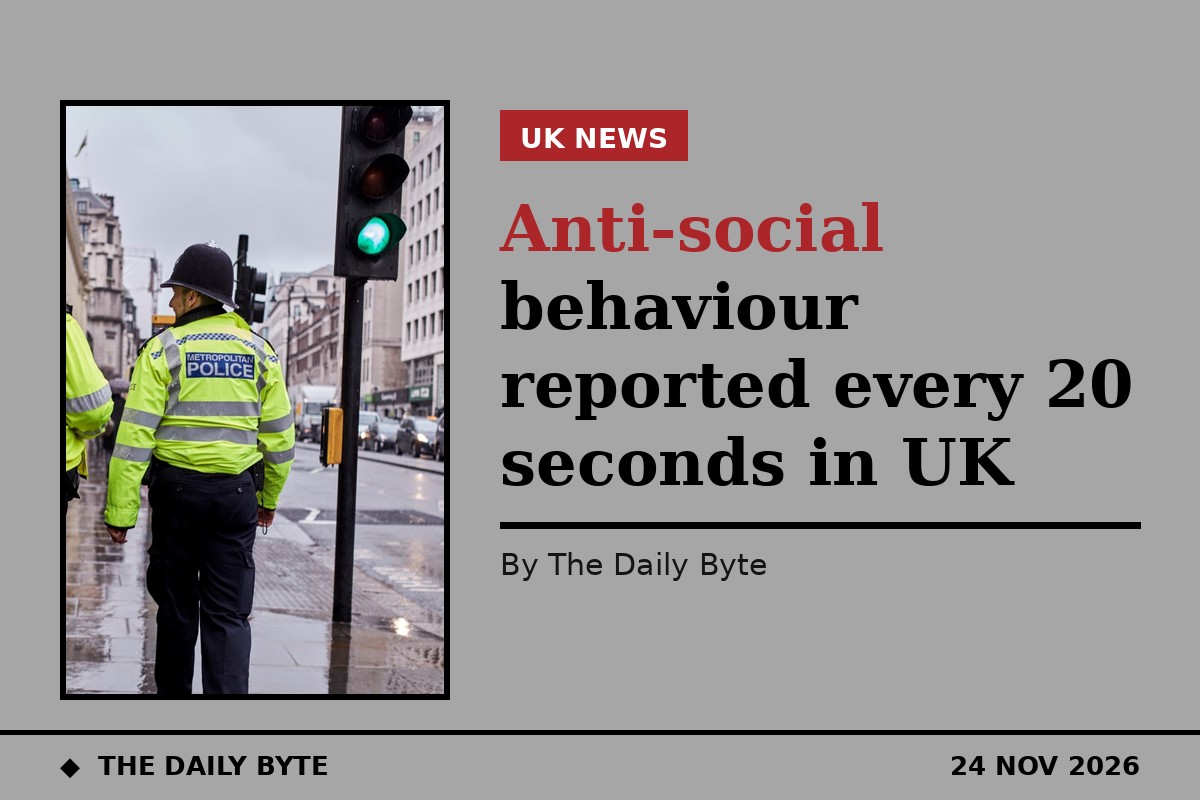
Anti-social behaviour is reported on average every 20 seconds across the UK, according to a Channel 4 Dispatches investigation reported on 24 November. Data obtained by the programme, Lawless Britain? Undercover on the Streets, found almost 2.5 million reports of anti-social behaviour over 18 months — and police failed to attend half of them. Four in ten police forces attended less than a third of reported incidents.
The gap was starkest in the largest forces. Figures for 2025 obtained by the programme showed the Metropolitan Police recorded 255,656 anti-social behaviour incidents and attended fewer than one in five, 47,960. West Midlands Police attended 14 per cent of its 22,667 reports, and Northumbria Police attended 22 per cent of its 29,040. Across the country, councils closed seven in ten cases without any formal resolution.
Brixton: intimidation within hours
Presenter Ellie Flynn spent a night undercover in a flat in Brixton, south London, an area the programme describes as an anti-social behaviour hotspot, where the behaviour is the single most reported issue. Within hours of filming starting, the crew faced aggressive intimidation, witnessed crack cocaine being openly smoked on a doorstep and filmed the violent arrest of a man who appeared to attack a female police officer.
One tenant who has lived in Brixton all his life described the daily impact. “How do you expect me to raise a family when I have to jump over someone injecting themselves, or smoking something on my doorstep?” he said. “Sometimes you have to turn the TV up loud just so you pretend that you don't live where you live.” The Metropolitan Police said targeted patrols in the area had cut anti-social behaviour reports by 33.7 per cent over the past year.
Lambeth Council, which covers Brixton, was named as the worst-performing town hall in the country for tackling anti-social behaviour, with 99.8 per cent of nearly 10,000 reported cases in 2025 closed without any formal enforcement action. Councillor Jonathan Bartley, the council's cabinet member for safer, thriving neighbourhoods, said he recognised the serious problems residents were experiencing, including open drug use and intimidation, and accepted that “the response to these problems has not always been good enough”.
Masked e-bike gangs on Tyneside
The programme also visited Tyneside, where a woman described how her husband was beaten by a gang of masked e-bike riders in front of their family after a minor traffic dispute. “They just kept kicking, and kicking, and kicking him,” she said. Northumbria Police said an investigation was launched but the case was closed because of evidential difficulties. The programme also reported that an 86-year-old grandmother had recently been knocked down and killed by an e-bike on a zebra crossing.
E-bike use has grown sharply: private sales doubled between 2018 and 2024, and police seized 7,000 e-bikes in a single 12-month period. The programme gained exclusive access to a group of balaclava-clad riders on the outskirts of London, who admitted wearing masks to evade police, knowing that if caught their bikes would be confiscated and they could face a criminal record.
A 19-year-old care leaver known as Beth told the programme she had been housed by her local council next to an active drug den and lived in constant fear. “It just feels like you're always on high alert. I don't want to be here by myself,” she said. She said the council had refused to move her. South Tyneside Council said the allegations involving a council tenant were serious and were being reviewed urgently, and that everyone had a right to live in their home without fear.
Minister: findings 'not great'
Policing minister Sarah Jones admitted to the programme that the findings were “not great”. She pointed to a new guarantee that police will respond within 72 hours to non-emergency reports and to the government's aim of putting thousands more police into neighbourhoods. Flynn said she had been “embedded in hotspots across the country, seeing how some authorities are struggling to tackle it and how many victims are left feeling abandoned” — and warned that when disorder was not dealt with, “the impact can be devastating”, as The Sun reports.