Antigua PM: US Warned Us Over Cuba UN Vote
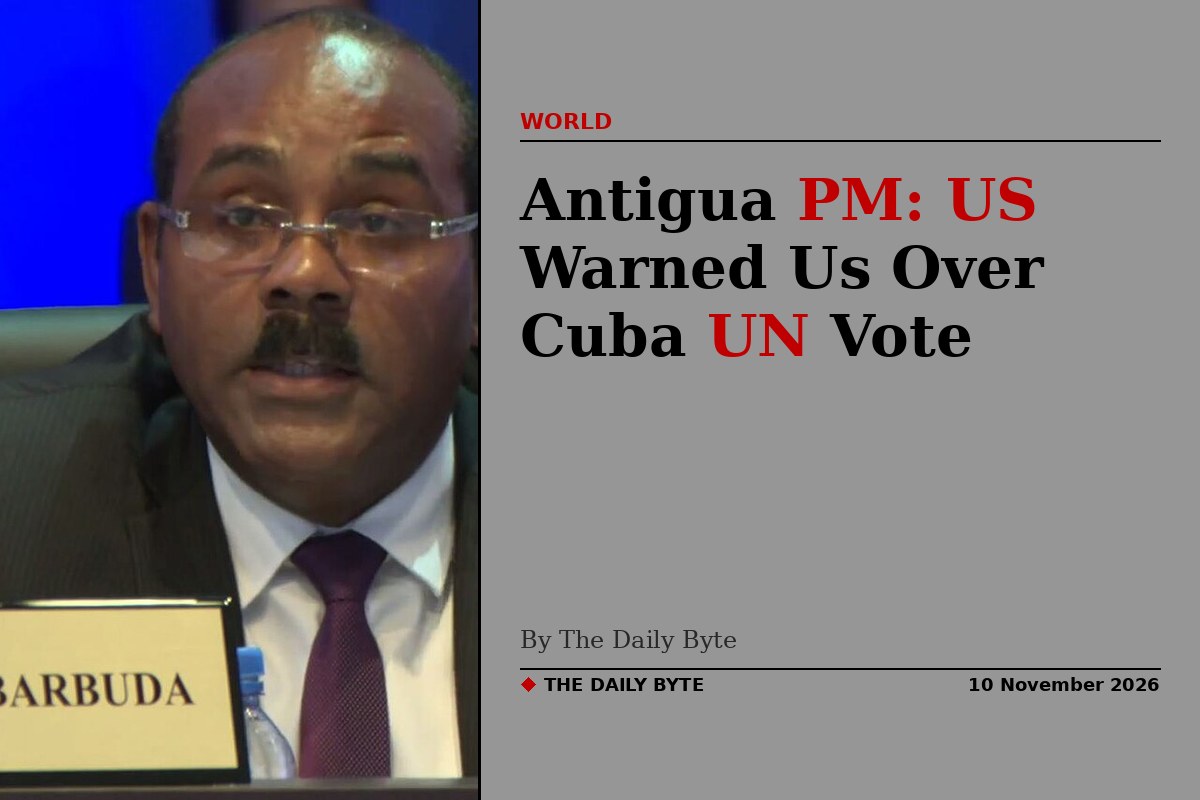
Antigua and Barbuda's Prime Minister Gaston Browne has said his government changed its planned support for Cuba at the United Nations after a warning from the United States that backing the resolution could damage ongoing visa negotiations. Browne made the admission on his weekly radio programme, the Caribbean Media Corporation reported on 9 November.
"We had decided to support Cuba on a resolution recently and change our position because we had a call from the State Department advising us that they're making progress in the negotiations and if we supported Cuba, that it would undermine the negotiations, so we changed our position," Browne told his listeners.
Ambassador told to abstain, but did not vote at all
Browne said his instructions to Antigua and Barbuda's ambassador in New York were to abstain from the vote. "Our instructions to the ambassador in New York was to abstain. I noticed he did not show up, I don't know what happened, but we changed our position because of certain things that were said," he said.
The prime minister said his government was still trying to resolve the visa issue through diplomatic channels. He acknowledged that the current visa situation with the United States "is a very difficult proposition" and said the matter was now being dealt with at the State Department, adding that someone in the White House had made a determination, although he did not know whether President Donald Trump had signed the order himself.
The vote that split the Caribbean
The UN General Assembly adopted Cuba's annual resolution against the US embargo on 28 October, by 130 votes to 17, with 25 abstentions and 21 absences, according to the Caribbean Council. It was the 34th consecutive year the resolution had won a clear majority, but support fell by 35 votes from the previous year, a point the United States presented as a victory.
For the Caribbean Community, the vote ended more than three decades of unanimity. Trinidad and Tobago voted against the resolution for the first time in over 30 years. Jamaica, Guyana, the Dominican Republic and Haiti abstained, while Antigua and Barbuda, Dominica and Saint Lucia did not vote. The Bahamas, Belize, Barbados, Grenada, St Kitts and Nevis, St Vincent and the Grenadines and Suriname all voted in favour.
Jamaica's abstention drew sharp criticism at home. Former Prime Minister P. J. Patterson, who governed from 1992 to 2006, described it as "an abominable betrayal that history will never forget".
Visa curbs behind the decision
Browne's remarks came in response to a caller who said she was unable to travel to the United States to be with her ailing mother because her visa had expired and securing a new one remained difficult. The prime minister has urged citizens not to apply for US visas unless their situation is "absolutely urgent", after new visas issued to Antiguans and Barbudans were limited to a maximum of three months and a single entry, a sharp change from the multi-year, multiple-entry visas issued in the past.
Browne also wondered whether the US position was being guided by concerns about Antigua and Barbuda's Citizenship by Investment Programme, through which foreign investors are granted citizenship in return for a substantial investment in the country's development. "We're still working through the diplomatic lines to have this issue addressed," he told his radio listeners.
The US lobbying ahead of the UN vote was led by Secretary of State Marco Rubio and Ambassador to the United Nations Mike Waltz. Cuba put the cost of US sanctions at a record $8 billion in the year to February 2026, bringing the cumulative total to $178.7 billion at current prices. Browne's admission lays bare the pressure small Caribbean states face when a vote at the United Nations collides with the everyday travel needs of their own citizens.


