Apple, Samsung Cut 2027 Phone Targets on Memory
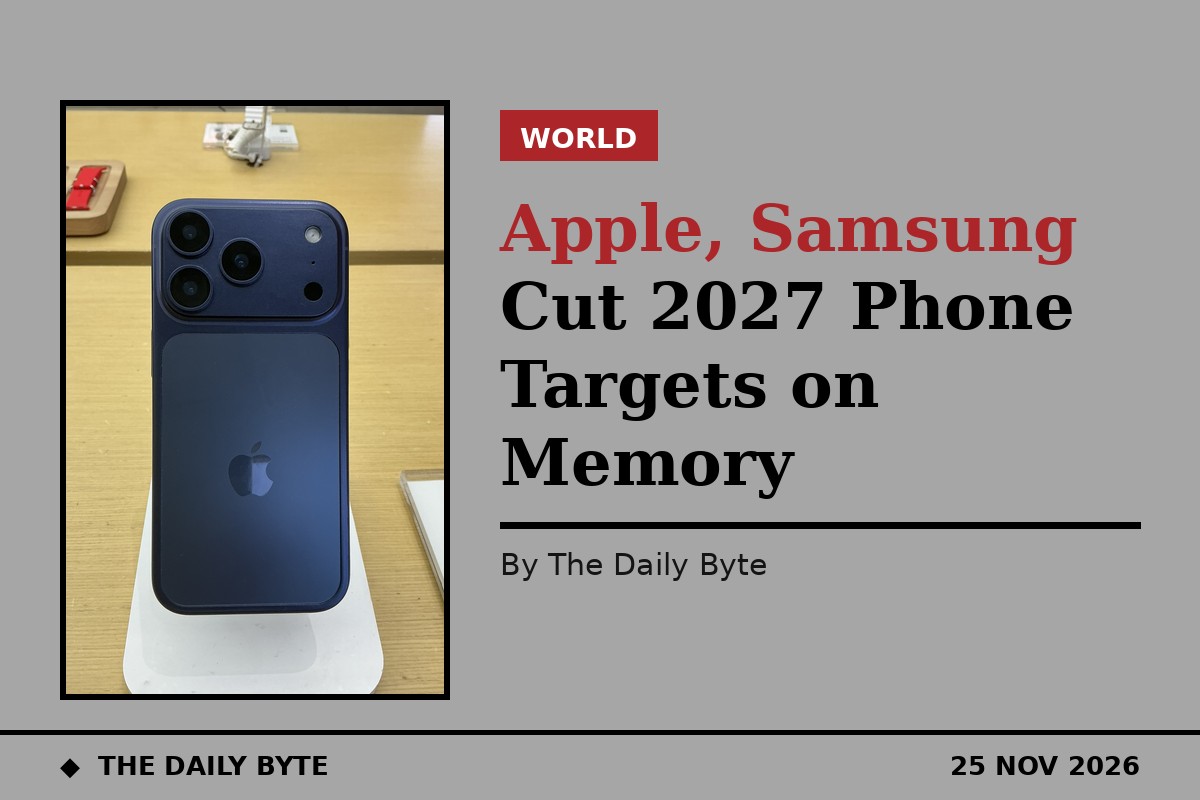
Apple, Samsung and almost every other major smartphone maker have cut their shipment targets for 2027, as the soaring cost of memory chips squeezes the industry. The cuts, reported by Chinese publication Jiemian News citing supply-chain sources, point to a weaker year for phone sales and higher prices for buyers.
Apple has lowered its target from about 233 million iPhones in 2026 to 220 million in 2027, a reduction of 5.6 per cent. Samsung has cut deeper, from 232 million units to 210 million, a fall of 9.5 per cent. If Apple reaches its revised figure, it could become the world's biggest smartphone brand next year, according to SamMobile's reading of the report.
The cuts elsewhere are steeper still. Xiaomi has reduced its 2027 target from about 120 million phones to around 90 million, a 25 per cent cut. Vivo has lowered its target from 85 million to 60 million, a 29 per cent drop, while Oppo has moved from 105 million to 90 million, down 14 per cent. Transsion's target has fallen 12 per cent, from 66 million to 58 million, and Motorola, owned by Lenovo, has cut its goal by a fifth, from 50 million to 40 million. Huawei is expected to ship fewer than 50 million phones, down more than 16 per cent from about 60 million. Honor is the only major brand that has not lowered its target, holding at about 50 million units.
Memory prices are the cause
The reason is the same across the industry: memory is getting far more expensive, and artificial intelligence is to blame. Demand from AI data centres is absorbing growing amounts of DRAM supply, pushing prices higher and leaving phone makers facing much more expensive components.
According to Counterpoint Research's global memory market tracker, DRAM market revenue rose 369 per cent year on year in the third quarter of 2026, approaching 200 billion dollars, with the average selling price reaching 1.90 dollars per gigabit. Prices for NAND flash, the storage memory in phones, have risen more than fourfold. Goldman Sachs estimates that the global DRAM supply deficit could reach 5.1 per cent in 2027, potentially one of the most severe shortages in more than 15 years, and expects demand for smartphone NAND to fall by 2 per cent next year as higher memory costs weigh on the market.
The pressure is already visible. Honor chief executive Li Jian recently said manufacturers are being forced into trade-offs to hold prices, with some using less powerful chips and cameras or cutting the amount of memory in their devices. Samsung has also scaled back discounts and deals compared with previous years to curb losses, after posting operating losses for two consecutive quarters for the first time in its history.
Relief is not expected until 2028
Analysts do not expect the squeeze to ease soon. Counterpoint expects memory prices to stay elevated, with significant new wafer capacity unlikely to become available before 2028. Goldman Sachs expects the DRAM supply gap to narrow to 1.2 per cent in 2028, with conventional DRAM and NAND prices potentially falling by around 20 per cent.
Until then, phone makers are likely to keep trimming their plans, and buyers should expect higher prices and leaner specifications. The figures are reported supply-chain targets rather than announcements by the companies themselves, so they may still move — but the direction of travel is now clear across the whole industry.


