Argentina Poverty Rises to 32.3% Under Milei, INDEC Says
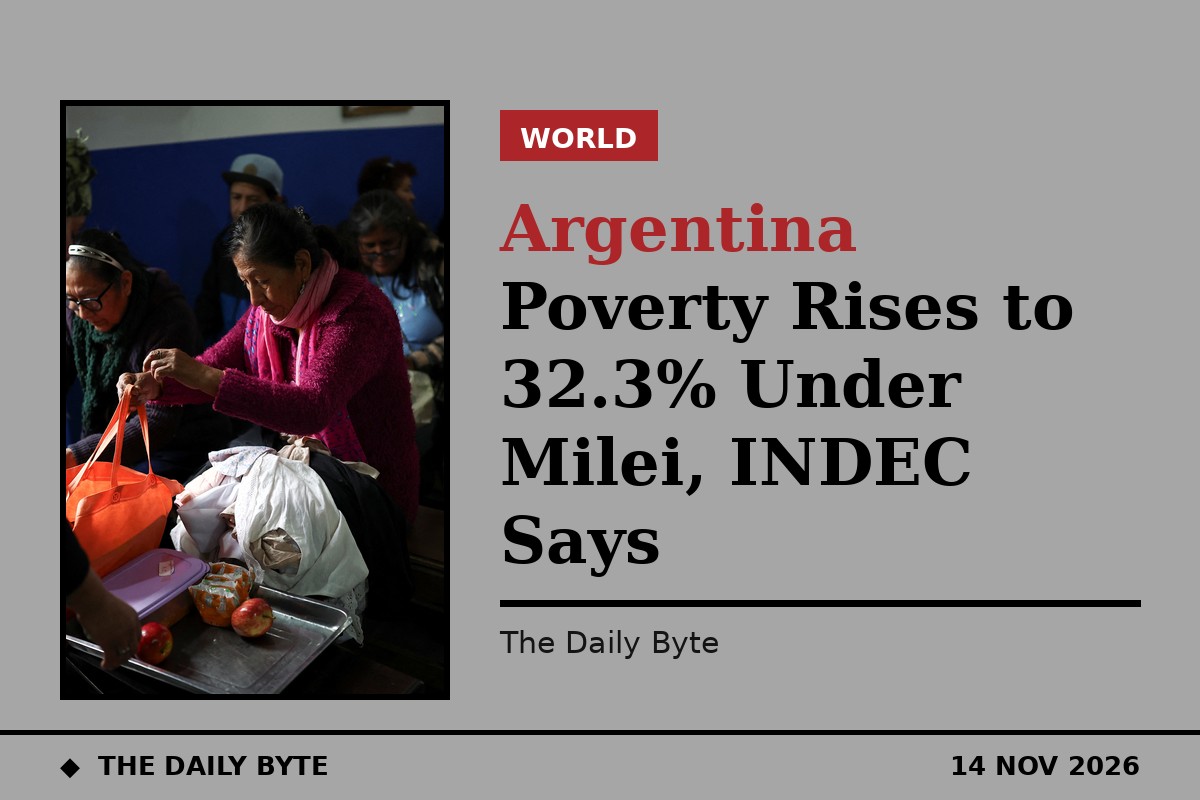
Argentina’s poverty rate has risen to 32.3 percent in the first half of 2026 under President Javier Milei, partly erasing the country’s earlier gains, according to figures released by the national statistics agency INDEC.
The poverty rate rose 4.1 percentage points between January and June compared with the last half of 2025, moving from 28.2 to 32.3 percent. Extreme poverty, where households cannot afford basic food needs, also rose, from 6.3 to 7.5 percent.
Household income per person rose 11.5 percent in the first six months of the year, but the cost of the basket of necessities used to calculate the poverty line rose nearly 20 percent over the same period, according to INDEC. In other words, pay went up, but the price of staying out of poverty went up faster.
A reversal after a sharp fall
The news comes after Mr Milei, elected in 2023, repeatedly cited falling poverty as evidence that his free-market economic overhaul was working. Poverty surged to nearly 53 percent in the first half of 2024 after his government’s devaluation of the peso and sweeping spending cuts sharply reduced purchasing power. The rate then fell rapidly as the austerity drive eased inflation, reaching 28.2 percent in the second half of 2025, the lowest level since early 2018.
Even with this year’s rise, the poverty rate remains below the level reached in the first half of 2024, when it exceeded 50 percent. But analysts say the increase could signal that the social gains driven by slowing inflation are losing momentum, with further progress increasingly dependent on stronger job creation and real wage growth.
“A modest increase in poverty would not undo the large decline seen under Milei, but it would suggest that the easier part of the improvement has run its course,” Nicholas Watson, managing director for Latin America at consultancy Teneo, told Al Jazeera.
Jobs and wages under pressure
More Argentinians found themselves out of work in the second quarter, after unemployment rose to 7.9 percent, the country’s highest level since 2021. For many who remain employed, wages have struggled to keep up with the rising cost of basic goods and services, and average salaries are still below where they stood in real terms when Mr Milei took office in December 2023.
INDEC’s poverty measure covers 31 urban areas rather than the whole country, comparing each household’s income with the cost of a basket of goods and services. Rural poverty is not included in the headline figure, so the number describes urban Argentina, where most of the population lives.
Separate estimates point the same way. The Catholic University of Argentina (UCA), widely seen as an early indicator of official poverty trends, estimated poverty at 34.4 percent in the second quarter of 2026 using INDEC household survey data, and its researchers suggest the rate could rise to 35 percent by the end of the year. Those are estimates, not INDEC’s measured figures, and the next official half-year figure is not due until early next year.
Political cost for Milei
Rising hardship appears to be damaging Mr Milei’s support among lower-income voters as he seeks re-election in 2027. The latest opinion polls suggest his approval rating has fallen sharply among poorer respondents, raising questions about whether he can retain a constituency that was central to his previous election victory.
A September AtlasIntel survey found disapproval among lower-income respondents, defined as those earning up to about $650 a month, had climbed to nearly 70 percent, while approval fell below 30 percent. A year earlier, those figures stood at 57 percent and 37 percent respectively.
The government’s case remains that inflation has been brought down from above 200 percent a year to roughly a third of that level, and that a fiscal surplus has been restored. But the new poverty figures show that stabilisation has not yet reached many households, and that the cost of living is again rising faster than incomes. Whether the first-half rise proves a temporary bump or the start of a new trend will only become clear when INDEC publishes the second-half figures. Sources: Al Jazeera and Sociedad Media.


