Milei Backs Senate Vote to Suspend Argentina Primaries
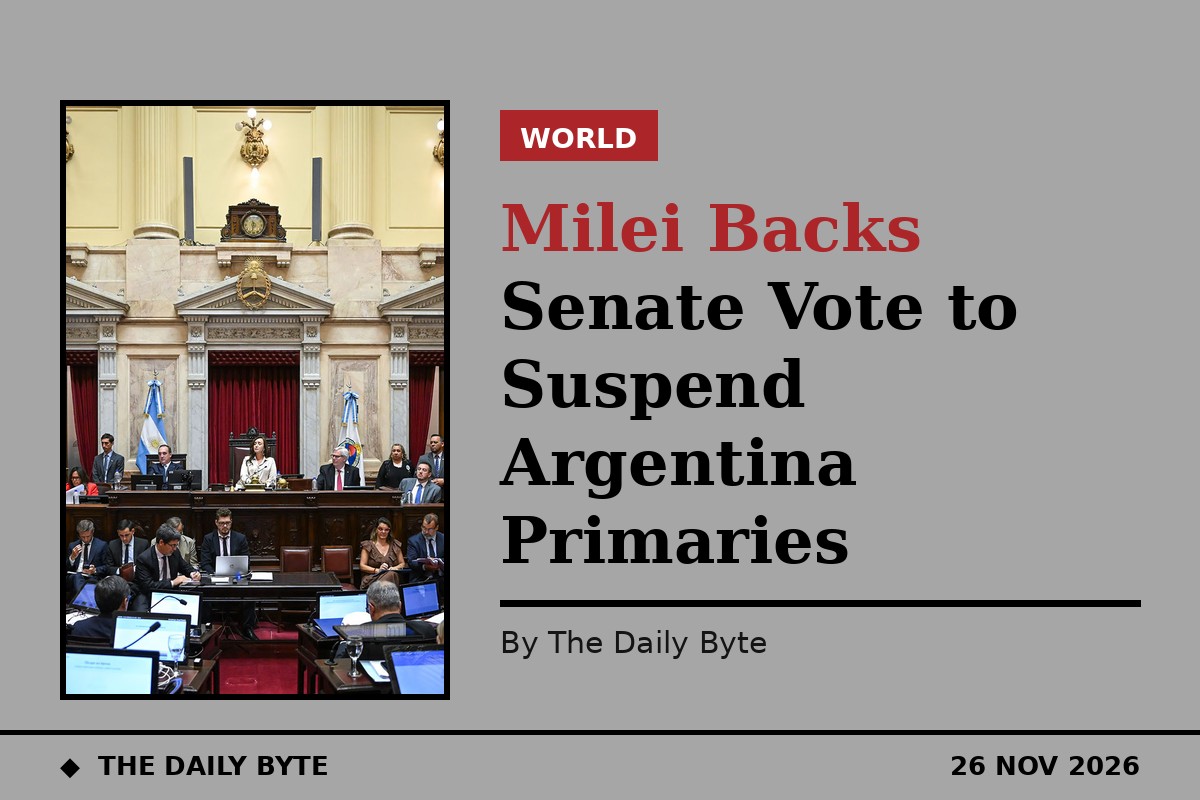
Argentina's Senate meets on Thursday 26 November 2026 to vote on a bill that would suspend next year's primary elections, handing President Javier Milei a possible boost ahead of his re-election campaign in 2027.
The session opens at noon in Buenos Aires, four days before the end of the ordinary session period on 30 November. Milei's government says it has the backing of centrist and centre-right allies to secure the 37 votes needed to pass the proposal in the 72-seat chamber, although the vote is not yet certain.
What the bill would change
The electoral reform bill would suspend the open, simultaneous and mandatory primaries, known by the Spanish acronym PASO, for the 2027 election cycle. It would also reduce public financing for political parties and scrap the mandatory presidential debate before general elections scheduled for October 2027.
The package goes further than the primaries alone. It would keep the single paper ballot, allow voters to choose a complete party list, cut free electoral advertising slots by half, suspend elections for Argentina's representatives to the Mercosur parliament, and introduce the Ficha Limpia rule, which bars people with certain confirmed criminal convictions from standing as candidates.
The vote arithmetic
Milei's La Libertad Avanza bloc holds 21 Senate seats and needs 16 more votes for an absolute majority. The government is counting on the ten senators of the Radical Civic Union, the PRO bloc and lawmakers aligned with provincial governors. Reports from Buenos Aires say the government believes it could reach as many as 40 votes, although a handful of senators remain undecided.
The Justicialist bloc, led by Jose Mayans and holding 22 seats, has said it will reject the reform, as have other opposition groups. The vote will therefore test Milei's ability to build congressional support even though his coalition holds a majority in neither house of Congress.
Why it matters for Milei
The stakes for the president are high. After three years of spending cuts, most economists estimate Argentina entered a technical recession in the third quarter of 2026. Unemployment is rising, inflation remains high compared with regional neighbours, and Milei's approval ratings have fallen from above 40 percent in January to the mid-30s, with some opinion polls suggesting the centre-left Peronist movement has a credible path back to power.
Investors view a suspension of the primaries as improving Milei's re-election prospects by removing an early nationwide test of voter sentiment that has historically shaped market expectations and, in some cases, triggered sharp financial volatility. The peso has come under pressure this year, and country risk has passed 1,100 points, according to market reports.
If there were no primaries, the divided Peronist opposition would have to settle its internal rivalries without a public vote, potentially complicating efforts to unite behind a single challenger. Analysts say that is part of the government's calculation as it seeks to tilt the playing field for 2027.
The reform is not without political risk for Milei. Political analyst Sergio Berensztein has warned that it could create the impression among voters that the president is reluctant to face electoral scrutiny or take part in debates. The government argues that suspending the primaries would reduce costs and simplify an electoral calendar in which citizens can be asked to vote as many as six times in a year. Critics reply that removing them would weaken a democratic safeguard by making it harder for parties to settle internal contests openly and transparently.
Background and what happens next
The primaries were introduced in 2009 and are held roughly two months before general elections as a mechanism for parties to settle internal contests. The government's original proposal, sent to Congress in April, sought to abolish them permanently, but parliamentary negotiations reduced the change to a suspension for the 2027 cycle only.
A Senate victory would revive momentum for Milei's legislative agenda, which has struggled to gain traction with lawmakers since the electoral bill was sent to Congress. The bill would still need approval in the lower house to become law, and the government is preparing to call extraordinary sessions in December to finish the work.
Thursday is a heavy day across Congress. While the Senate debates the electoral reform and a separate law against gambling addiction, the Chamber of Deputies is debating the 2027 budget, a reform of the central bank's charter and a package of economic measures. The outcome in the Senate will show whether Milei can still assemble majorities for the programme he wants to take into the 2027 election year.


