Artemis II Launch Tore Holes in Ionosphere, Study Finds
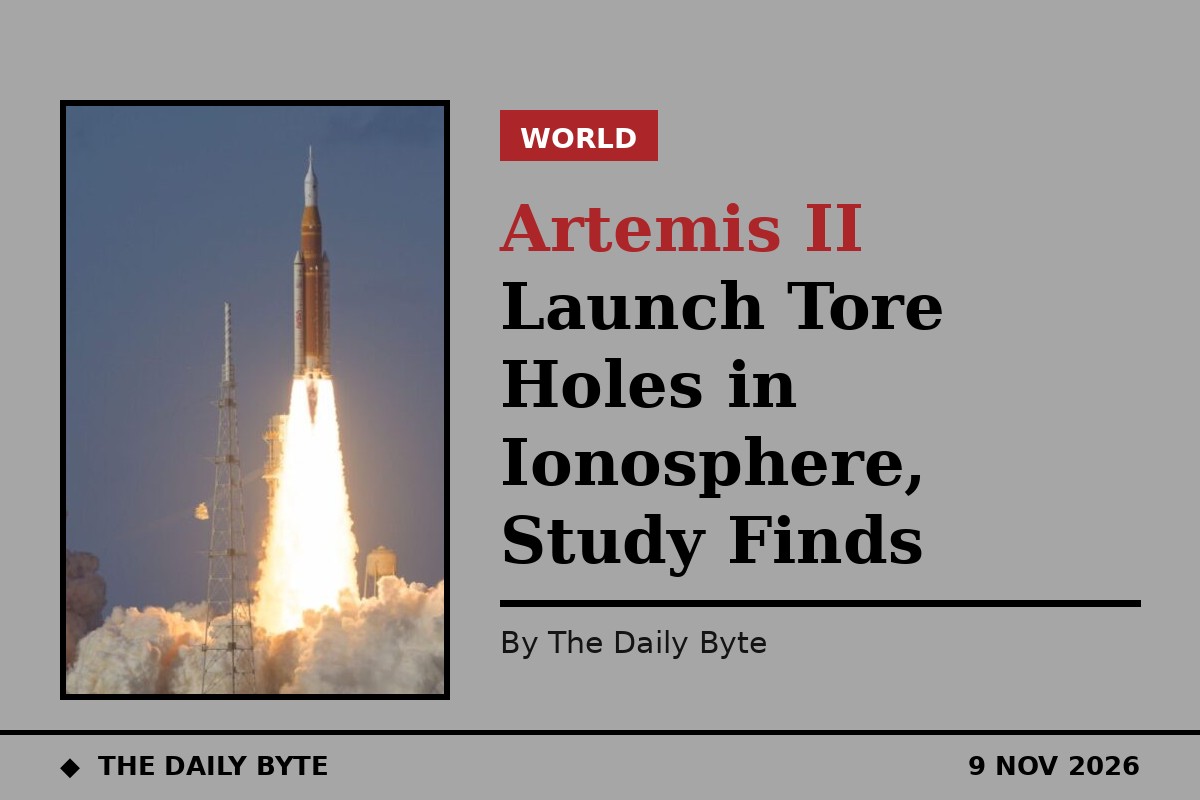
NASA's Artemis II mission tore three disturbances in the ionosphere, the electrically charged layer of the upper atmosphere, in a finding researchers say has never been observed from a single space mission. The study, from National Cheng Kung University in Taiwan, was reported by Space.com on 4 November, Gizmodo reported.
The first disturbance followed the Space Launch System core stage after liftoff on 1 April 2026, at the start of the crewed nine-day flight around the Moon. Two more followed from upper-stage engine burns, one about two hours later and one more than 24 hours after launch, at an altitude of about 185 kilometres.
GPS errors of several metres — but no outage
Using data from about 3,500 ground stations, the team found the disturbances stretched about 5,000 kilometres across North America and were up to 10 times stronger than those seen after SpaceX Starship test launches. The changes in electron density correspond to possible GPS positioning errors of several metres, TechTimes reported.
The study did not record any GPS outage, navigation failure or affected vehicle. Co-author Charles Lin, an Earth science professor, said an error of a couple of metres could affect an autonomous car's lane choice and drone positioning. The paper is a preprint awaiting peer review, so its conclusions remain provisional.
Why it matters for future launches
Researchers say the result matters as heavy-lift launches become more frequent: the same exhaust effects that briefly thinned the ionosphere could complicate navigation for aircraft, drones and self-driving vehicles if launches cluster. The authors call it the first time one mission produced three disturbances over the same region during successive manoeuvres.