ASA bans four brands' 'carbon neutral' delivery ads
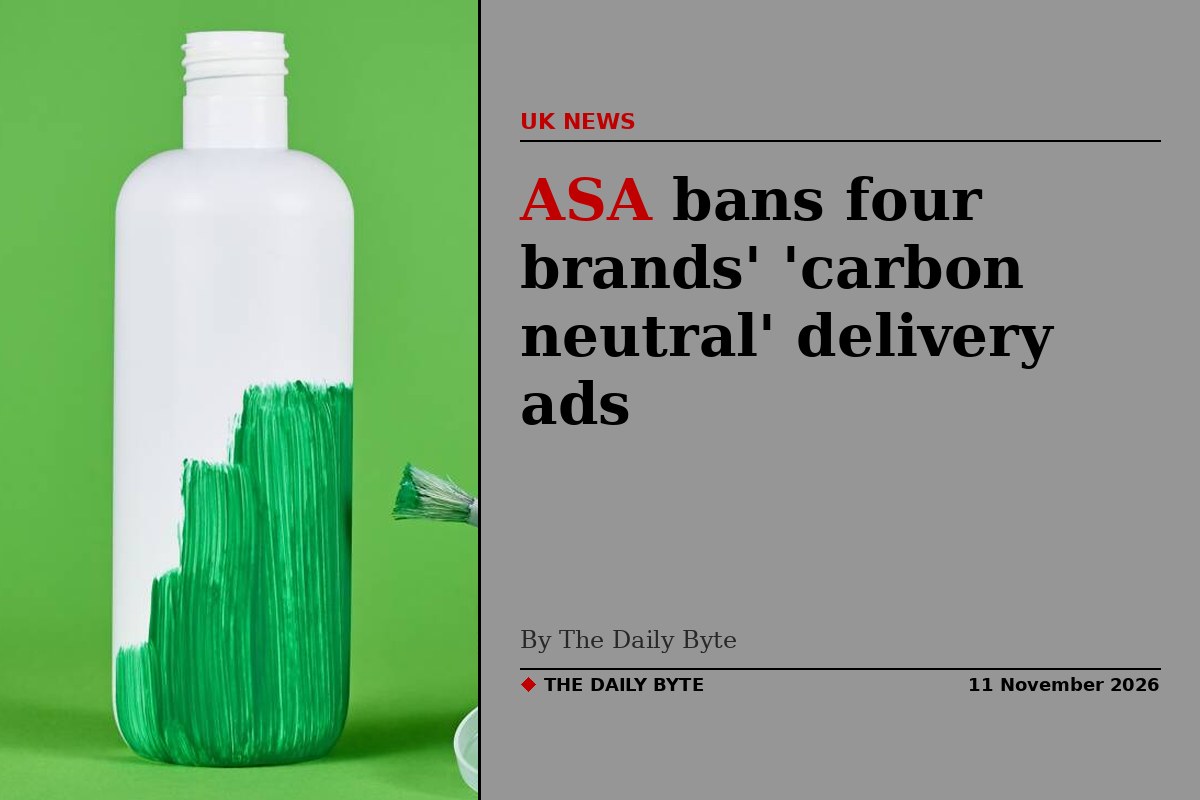
The Advertising Standards Authority (ASA) has banned advertisements by four retailers over misleading claims that their deliveries were “carbon neutral” or “carbon positive”.
The rulings, published on Wednesday, concern toilet roll retailer Who Gives A Crap, kitchenware retailer ProCook, coffee company Grind and sports retailer SportsShoes.com.
In all four cases, the ASA found that the advertisements presented carbon-neutral or carbon-positive delivery as an environmental benefit without explaining how that status had been achieved. Consumers could not tell whether the claims were based on reducing emissions at source or on offsetting them through carbon credits.
All four complaints were upheld. The ASA ruled that the advertisements omitted material information and were likely to mislead consumers, breaching rules 3.1 and 3.3 on misleading advertising and rule 11.1 on environmental claims in the CAP Code. The advertisements must not appear again in the forms investigated.
Why the claims misled shoppers
The ASA said its guidance on environmental claims required advertisers to explain the basis of carbon-neutrality claims. Information about whether, and to what extent, claims relied on active emissions reductions or offsetting should not be omitted.
The investigations form part of a wider ASA review of advertisements making carbon-neutral delivery or similar claims. The ads were identified through the regulator’s intelligence gathering and its Active Ad Monitoring system, which uses artificial intelligence to identify online advertisements that may breach advertising rules.
What each brand claimed
Who Gives A Crap: a paid-for Meta advertisement, seen on 9 June 2026, included the phrase “Carbon neutral shipping”. The company told the ASA the claim covered transport from its manufacturing sites to customers’ doorsteps, with the associated emissions offset through verified carbon credits. It said it also invested in reducing emissions through renewable energy and electric vehicles for deliveries where infrastructure allowed. The ASA found the advertisement did not explain the role of offsetting or distinguish it from actual emissions reductions, and the landing page did not provide the missing information.
ProCook: a Google search advertisement, seen on 8 June 2026, promoted “Next Day Delivery Available – Carbon Neutral Delivery”. The company said the delivery service was provided by a third party that had reduced some emissions and offset the remainder. It argued consumers would understand the claim to relate only to delivery from its premises to customers, rather than the wider product lifecycle. The ASA accepted the claim referred to delivery alone, but said the advertisement did not make clear how carbon neutrality had been achieved, and ProCook’s website did not explain the basis of the claim.
Grind: a Google search advertisement used the phrase “Carbon Positive Delivery”. The company said it referred to emissions from delivering orders placed through its website, which were offset through a third-party service funding a carbon removal scheme. The ASA found the term “carbon positive” was ambiguous and could be understood as either meaning carbon neutral or suggesting a greater environmental benefit. The advertisement did not explain that the claim relied on offsetting credits or clarify its relationship to actual emissions reductions.
SportsShoes.com: a Google search advertisement stated “Carbon Neutral Deliveries”. The company told the ASA it measured emissions associated with deliveries from its warehouse to customers and invested in a carbon sequestration project to offset an equivalent amount. The ASA found the advertisement did not explain that the claim was based on offsetting. It also noted that the website page intended to provide supporting information had been deleted, and the advertisement could direct consumers to different pages that did not explain the claim.
A warning to advertisers
The rulings underline that “carbon neutral” is not a claim brands can use without explanation. Where a claim depends on buying carbon credits rather than cutting emissions, shoppers must be told so clearly, close to the claim itself, before they decide to buy.
Sources: edie and Press Association.