ASEAN, China Fail to Agree South China Sea Code
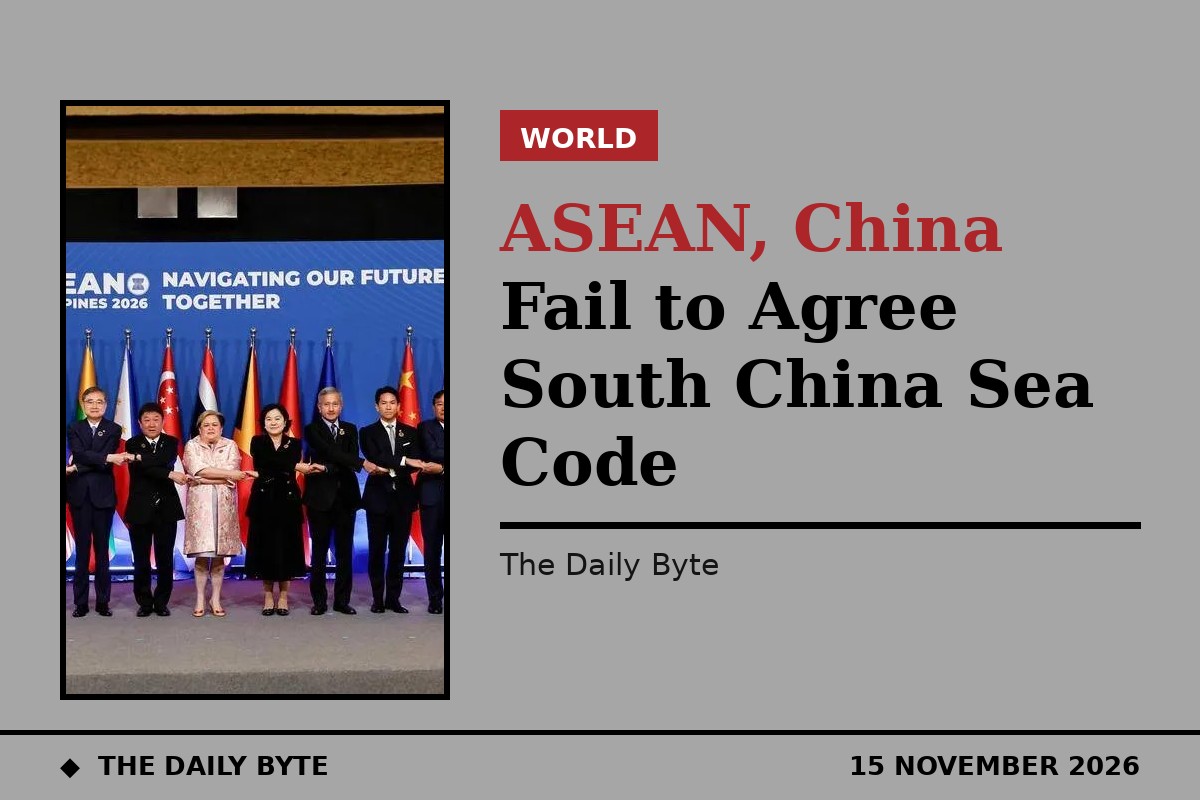
ASEAN and China were unable to conclude negotiations on a long-delayed code of conduct for the South China Sea, the Philippines said on Sunday, despite reaching provisional agreement on about 80 per cent of the draft text.
Philippine Foreign Minister Ma. Theresa Lazaro confirmed the outcome at a press conference during the summit of the 11-member Association of Southeast Asian Nations in Manila, telling reporters: “There is no conclusion yet.”
Negotiations on an ASEAN-China Code of Conduct in the South China Sea have dragged on for more than two decades. The Philippines, as this year’s ASEAN chair, had committed to speeding up the talks and concluding the code in 2026. That deadline has now passed without a deal.
What is still unresolved
Several key issues remain open, including whether the code would be legally binding. That question has divided the parties for years. China’s Southeast Asian neighbours want the code grounded in international law, while Beijing has resisted language that would constrain its actions in the disputed waters.
The code is intended to give the claimants a set of agreed rules for managing incidents at sea and preventing clashes from escalating. China’s extensive maritime claims overlap with the exclusive economic zones of Brunei, Indonesia, Malaysia, the Philippines and Vietnam, making a working code a practical necessity for fishermen, coastguards and navies operating in the same waters.
An international arbitration tribunal ruled in 2016 that China’s sweeping claims in the South China Sea have no legal basis under international law. Beijing rejects that ruling and maintains that its actions in the waterway have been lawful.
What happens next
Singapore will inherit the task of trying to secure agreement on the code when it assumes the ASEAN chairmanship next year. The handover means the negotiations will continue under a new chair, with the roughly 80 per cent of the draft already provisionally agreed forming the starting point.
The failure to conclude the code in Manila is a setback for the Philippines’ chairmanship, which had made the talks a priority. But diplomats note that the provisional agreement on most of the text shows the talks have moved further than in previous years, even if the hardest questions — above all the code’s legal status — remain unsettled.
For the countries around the South China Sea, the absence of a code leaves the existing patchwork of bilateral understandings and informal arrangements as the main guard against miscalculation in one of the world’s busiest shipping lanes.


