ASEAN Signs Digital Economy Pact in Manila
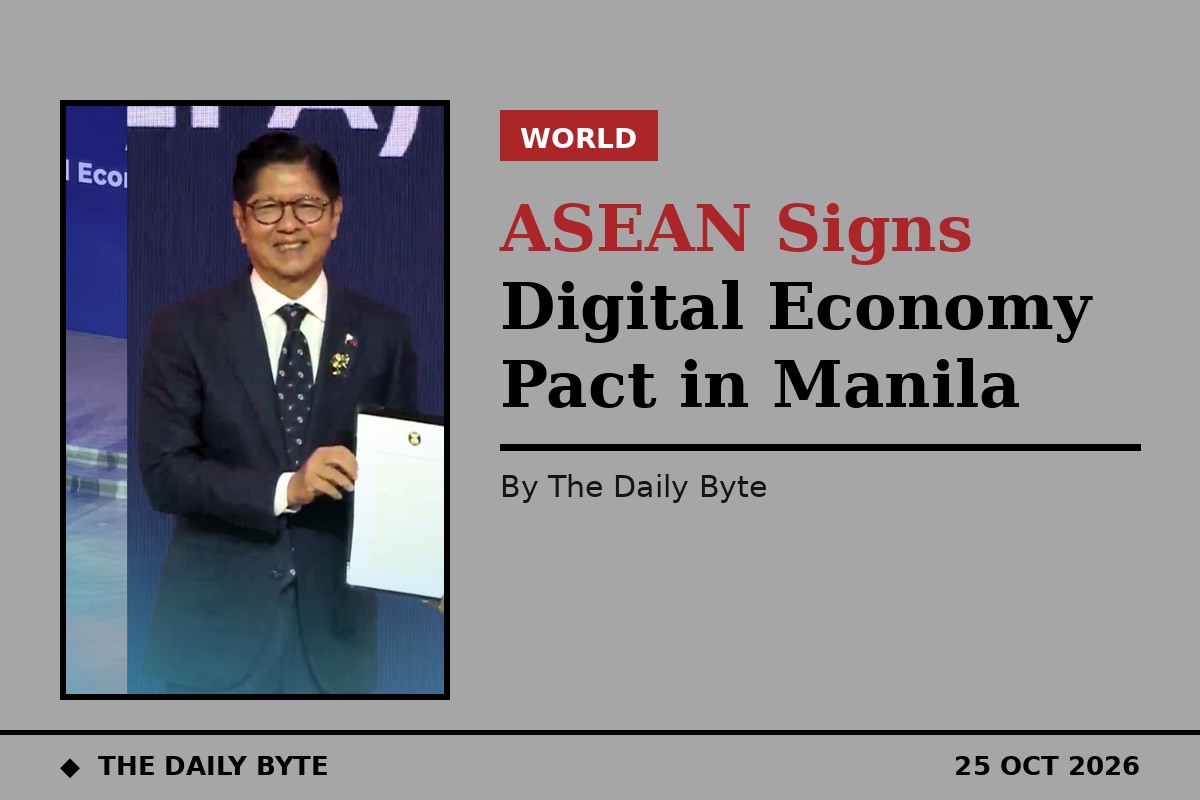
ASEAN has signed the world's first region-wide digital economy agreement, a landmark deal leaders say could unlock a digital economy worth $2 trillion across South-East Asia by 2030.
Philippine President Ferdinand Marcos Jr handed over the signed Digital Economy Framework Agreement (DEFA) to ASEAN Secretary-General Kao Kim Hourn during the opening ceremony of the 49th ASEAN Summit in Manila on Sunday, 15 November.
The agreement was signed by the bloc's economic ministers on Saturday, 14 November, after negotiations that began in 2023 and were completed this year. It is expected to enter into force in early 2027, according to the ASEAN Secretariat.
What the agreement covers
The framework sets common rules for digital trade and commerce, making it easier for businesses to sell goods and services across borders and helping small firms reach more customers through digital platforms.
It also covers electronic payments and digital identity, cross-border data flows and data protection, cybersecurity and online consumer protection, and the use of emerging technologies such as artificial intelligence.
ASEAN Economic Community Council Chair and Philippine Trade and Industry Secretary Cristina Roque, who chaired the signing ceremony on 14 November, said the deal would strengthen regional cooperation against cyber threats and online scams while giving consumers safer online transactions.
"DEFA opens a new chapter in ASEAN cooperation, one that brings our economies closer together, extends the benefits of trade beyond physical borders, and positions our region to compete in an increasingly digital world," Roque said.
A $2 trillion prize by 2030
ASEAN says the successful implementation of the agreement could help unlock a regional digital economy worth as much as $2 trillion by 2030, by providing a framework for a more seamless, secure and interconnected digital marketplace.
Roque said the agreement would also open new opportunities and skills for workers in e-commerce, information technology and business process management, digital services and the creative industries.
Thailand, which took part in the signing, said it would speed up its domestic ratification process so the agreement can take effect, and that DEFA will in time replace the ASEAN Agreement on Electronic Commerce.
Part of a wider summit agenda
Marcos told the summit plenary that the signing was among 19 priority economic deliverables under the Philippines' 2026 chairmanship, part of what Manila calls its "prosperity corridor" priority.
"We have worked to strengthen connectivity across markets, energy systems, infrastructure, technology and finance to foster more resilient, sustainable and inclusive growth," Marcos said.
The 49th ASEAN Summit, held at the Philippine International Convention Center in Pasay City from 15 to 17 November under the theme "Navigating Our Future, Together", brings together the bloc's 11 member states, including Timor-Leste, which joined as a full member this year. Leaders are also discussing energy security, food security and territorial disputes in the South China Sea.
The challenge now, Roque acknowledged, is turning the commitments into results, with governments enforcing the necessary policies and the private sector investing to make the agreement work.
Source: Vera Files


