ASEAN Signs First Binding Digital Economy Pact
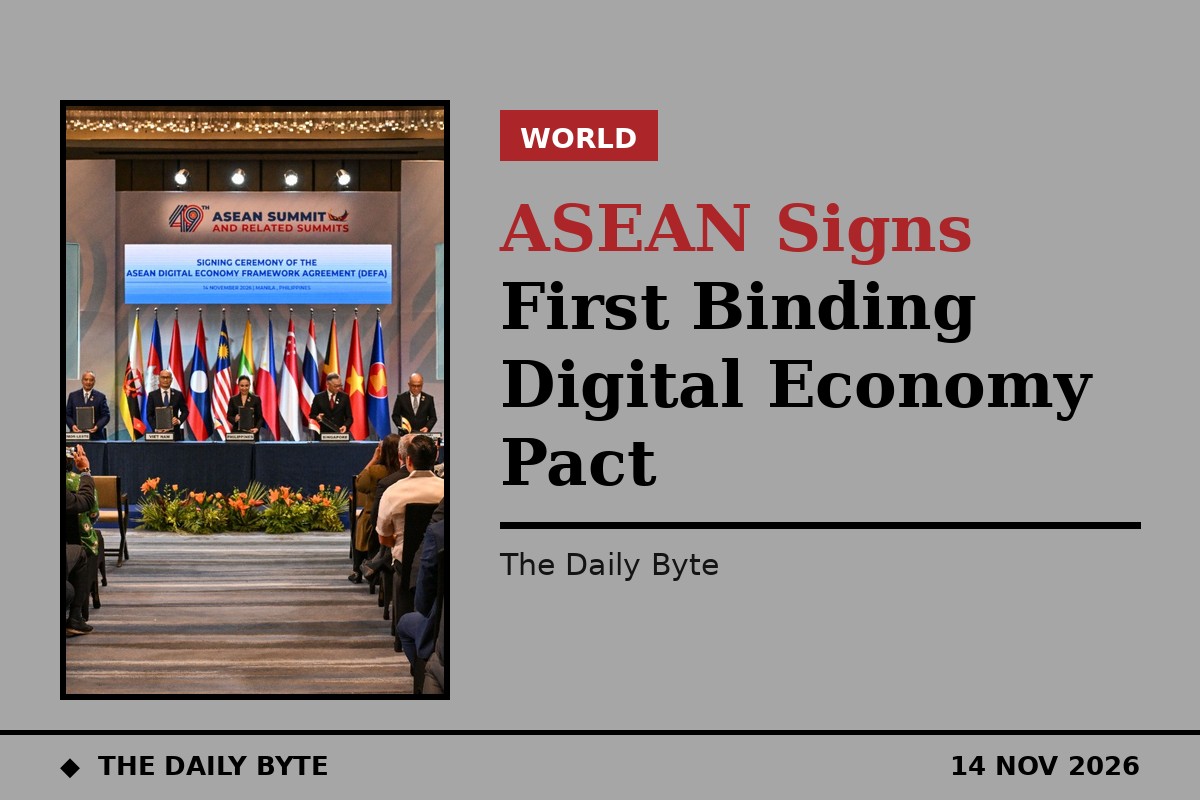
ASEAN nations signed the Digital Economy Framework Agreement (DEFA) in Manila on Saturday, 14 November 2026, creating what Singapore's trade ministry describes as the world's first legally binding, region-wide agreement on the digital economy. Trade and economic ministers from all 11 ASEAN member states signed the pact at the 28th ASEAN Economic Community Council meeting in Pasay City.
Philippine Trade and Industry Secretary Cristina Roque, who chairs the council, said the signing marked a defining moment in ASEAN economic integration. She said the agreement could help double the region's digital economy from an estimated US$1 trillion to US$2 trillion by 2030, in a market of about 680 million people.
What the pact covers
DEFA sets common rules for digital trade and cross-border electronic commerce, cross-border data flows, electronic payments, data protection, cybersecurity and artificial intelligence. It also covers online consumer protection, digital identities for businesses and electronic trade documentation. Once in force, it replaces the ASEAN Electronic Commerce Agreement of 2019.
Singapore Deputy Prime Minister Gan Kim Yong said the first projects under the pact could include digital payment systems, digital identities for businesses and electronic trade documentation.
Entry into force in early 2027
Singapore's trade ministry said the agreement enters into force 180 days after signing, putting its start in early 2027. Gan said he hoped implementation and the rollout of initiatives to benefit businesses and consumers would follow.
Negotiations began in September 2023 and were concluded in May 2026, after senior officials resolved the remaining issues in Manila. The agreement will be presented to ASEAN leaders at the summit plenary on 15 November.
Roque said the real task now was to translate the commitments into practical outcomes, urging governments to put the necessary infrastructure in place so smaller businesses were not left behind.


