Aspen wins approval for generic semaglutide
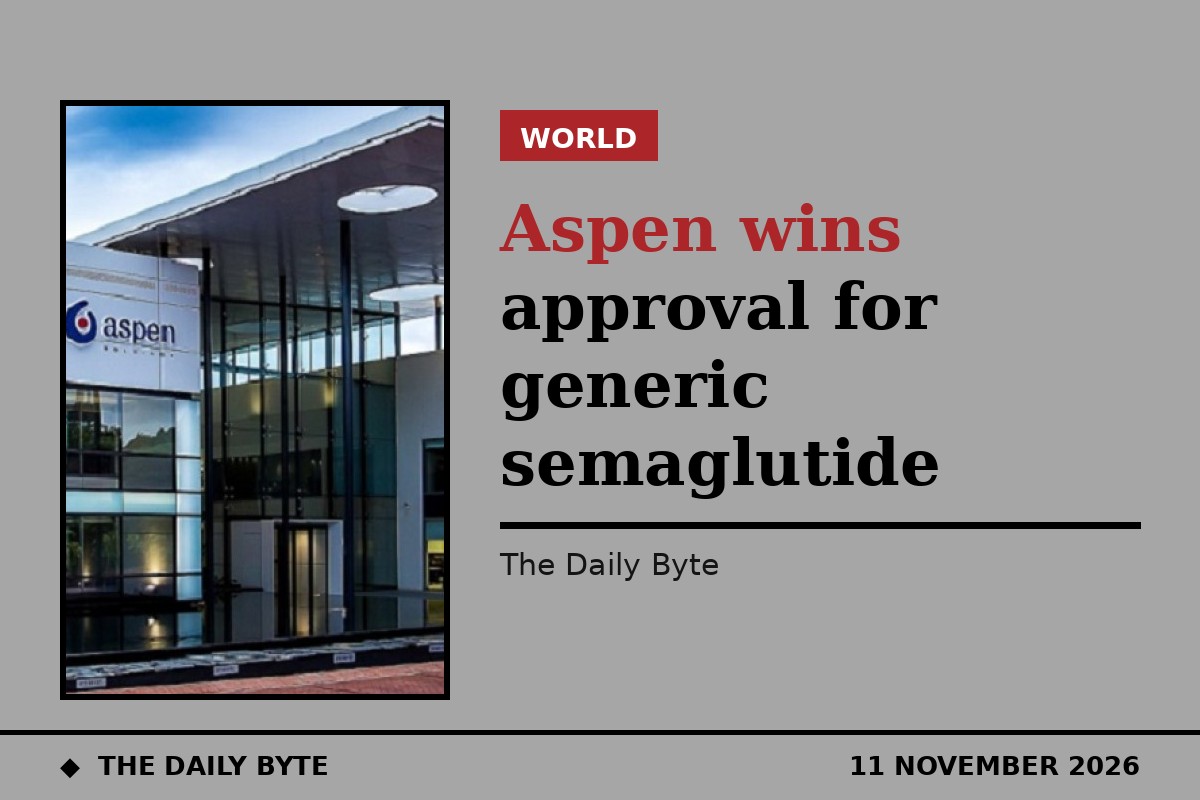
South Africa's Aspen Pharmacare has received regulatory approval in Brazil and South Africa for its generic injectable semaglutide, clearing the way for the drugmaker to launch a lower-cost version of one of the world's most in-demand medicines in two large emerging markets. The company announced the approvals on Wednesday, 11 November, and said sales should begin in the coming months.
Semaglutide is the active ingredient in Novo Nordisk's Ozempic, prescribed for type 2 diabetes, and Wegovy, prescribed for weight management. Aspen's version is an injectable treatment for adults with type 2 diabetes, to be used alongside diet and exercise to improve blood sugar control. Generic versions have become possible in a growing number of countries after semaglutide lost patent protection earlier this year, setting off a race among drugmakers to offer cheaper alternatives.
Rollout to follow in three markets
Aspen said commercial sales are expected to start in Canada, Brazil and South Africa over the next few months. The company had already received approval for the product in Canada in July. It is still waiting for regulators to decide in about 20 other countries, according to chief executive Stephen Saad.
The company is sourcing the active pharmaceutical ingredient from third-party suppliers, including India's Dr. Reddy's Laboratories for the Canadian market. Aspen is Africa's largest pharmaceutical manufacturer, and it has made generic semaglutide a central part of its growth plans as demand for this class of medicines, known as GLP-1 treatments, continues to climb in emerging markets.
A fast-growing market in South Africa
The South African market alone underlines why Aspen is moving quickly. The company said sales of GLP-1 medicines in the country have grown to nearly 3 billion rand, about $182 million, with Eli Lilly's Mounjaro accounting for more than half of that total. Diabetes is a major and growing public health problem in South Africa: the national department of health regards type 2 diabetes as a growing crisis, and the International Diabetes Federation has said more than four million adults in the country live with diabetes, with adult prevalence estimated at around 7% to 11% depending on the age group and study. Type 2 diabetes accounts for about 90% of all diabetes cases.
"Consumers really want this product. I've never seen a category grow like this, here and globally," Saad said in an interview after the company released its annual results in September.
Generics and the Mounjaro question
Aspen also distributes Mounjaro in sub-Saharan Africa under an agreement with Eli Lilly, and Saad has said he does not expect sales of its own generic semaglutide to reduce demand for Mounjaro. The two products serve overlapping but distinct parts of a market that is still expanding rapidly, and Aspen's annual results reflected that demand: for the year ended in June, the group reported a 22% rise in normalised headline earnings per share, helped by Mounjaro sales.
The semaglutide approval follows other recent portfolio moves by the group. Last week Aspen completed the sale of the European rights to its women's health product Ovestin, receiving 197 million euros on 3 November and expecting a profit of about 2 billion rand from the deal, while keeping a manufacturing and supply role. For patients and health systems in Brazil and South Africa, the more immediate question now is when the generic version will reach pharmacies, and at what price. Aspen has not disclosed pricing, but the arrival of generic competition in other markets has generally pushed treatment costs down, and health campaigners will be watching whether the same happens here.


