ATO returns $1.1bn unpaid super to 900,000 workers
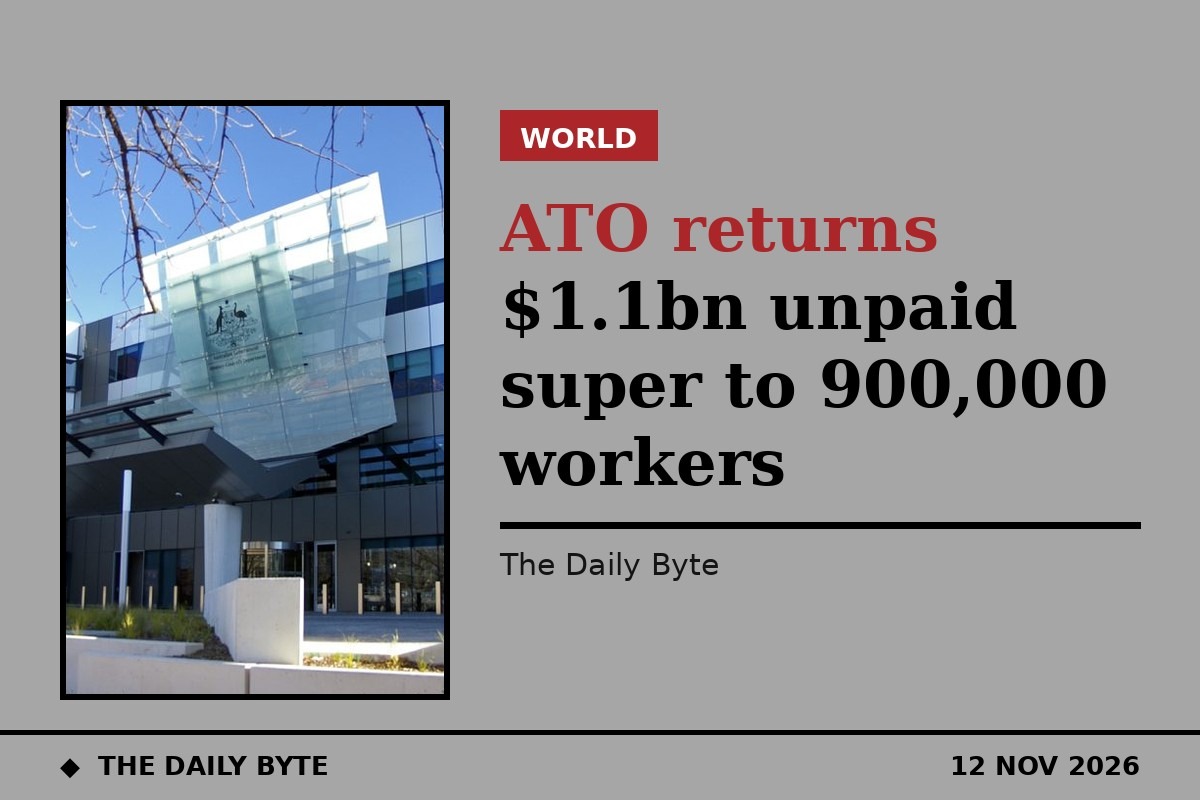
Australia's Tax Office has helped return more than 1.1 billion dollars in unpaid superannuation to the retirement funds of over 900,000 workers in the past year, according to new data released on 12 November. The Australian Taxation Office (ATO) said its compliance work and engagement with employers had raised more than 1.1 billion dollars in super guarantee charge liabilities, a sharp rise from 795 million dollars in the previous financial year.
Superannuation, known as super, is the retirement savings system in which Australian employers must pay a share of each worker's earnings into a fund. When an employer misses those payments, the worker's retirement balance falls behind, often without the worker realising. The ATO's latest figures show the scale of the shortfall it is still chasing, even as most employers pay on time.
Prompts recovered $467 million
A large share of the money came after the ATO contacted employers it believed had missed a payment or a lodgment date. Prompts sent to employers to correct potential unpaid super led to 467 million dollars in super guarantee charge being disclosed by employers themselves, compared with 206 million dollars in the prior year. For the small proportion of employers who chose not to act after being prompted, the ATO used firmer compliance action and raised almost 250 million dollars in penalties.
Deputy Commissioner Ben Kelly said paying the super workers are entitled to is non-negotiable. He noted that nearly 93 per cent of super guarantee obligations are met without any ATO intervention, but warned that employers who fail to comply can expect stronger enforcement. "Every dollar of unpaid super is money that should be helping Australians build their retirement savings," Mr Kelly said.
Payday Super now in force
The recovery comes as a major reform of the system takes effect. From 1 July 2026, Payday Super requires employers to pay super at the same time as wages, with contributions generally required to reach employees' super funds within seven business days of payday. Who is entitled to super and the super guarantee rate have not changed under the reform, but the timing has.
The ATO said the change is already helping employers meet their obligations, with more frequent payments giving employees their super sooner and more time for savings to grow. Workers also have greater visibility of what they are owed, making it easier to spot a missed payment, while the ATO expects the new system to help it identify unpaid super earlier and act more quickly.
Early implementation data shows many employers are now paying super more frequently, and the number of rejected contributions has fallen even though volumes have increased and super funds have less time to process them. "More frequent payments mean employees receive their super sooner, giving their savings more time to grow," Mr Kelly said.
What happens next
The ATO is urging employers who have not yet moved to Payday Super timeframes to do so as soon as possible, and says it will continue to use reported data to check that employers meet their obligations. It has published guidance for employers on meeting super obligations, and a snapshot of its super guarantee compliance results, for businesses that need to check their position.
For workers, the figures are a reminder to check that super is actually reaching their fund. The money recovered in the past year went to more than 900,000 people, but the ATO's own estimates have previously put the annual gap between super owed and super paid in the billions, meaning enforcement is likely to remain a priority.
Sources: Australian Taxation Office, SSBCrack News