Australia Senate Passes Defence Bases Bill 36-9
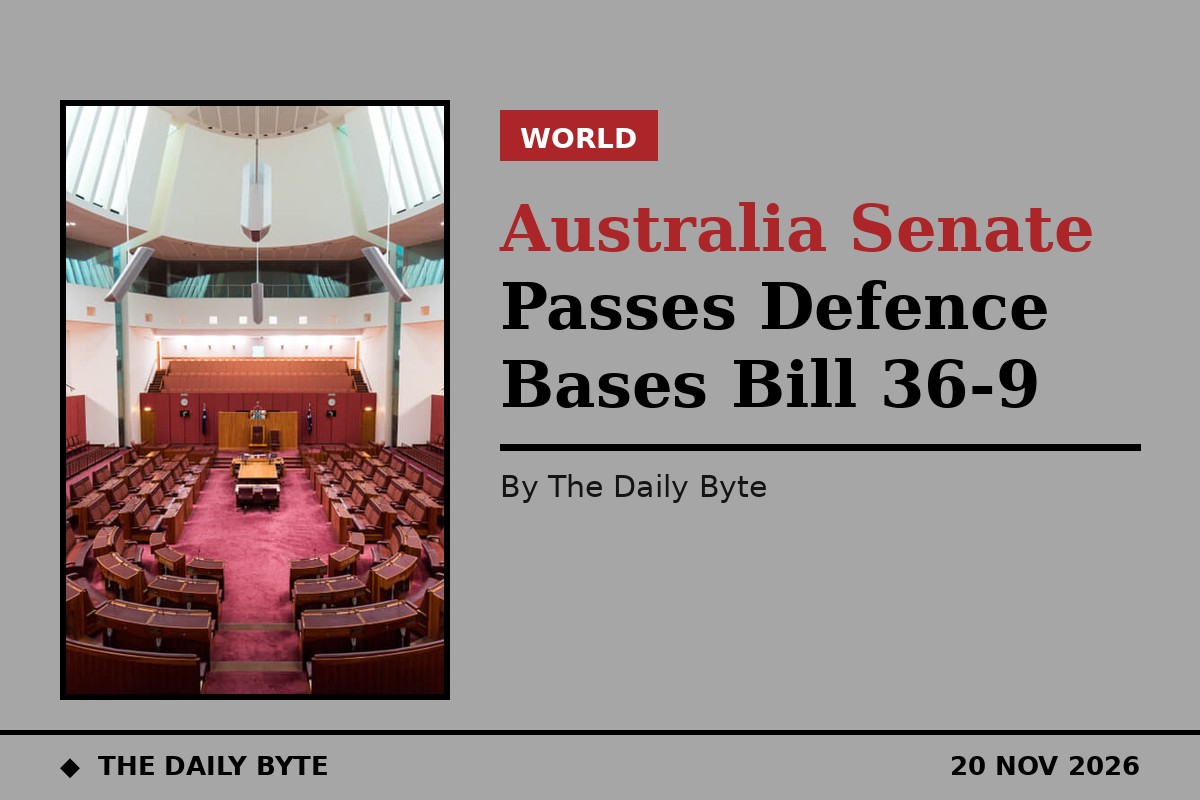
Australia's Senate has passed sweeping defence legislation that creates special security zones around military sites and allows the Defence Minister to set aside other laws for declared defence projects, by 36 votes to 9 after debate was limited to 30 minutes.
The Defence Legislation Amendment (Accelerating Capability and Protecting Bases) Bill 2026 was introduced on 27 October and passed by the House of Representatives on 29 October. Because the Senate amended the bill on Thursday, it returns to the House when it sits on Monday, 23 November, before it can receive royal assent and become law.
The 231-page bill names the joint defence facility at Pine Gap, near Alice Springs, as a special defence security zone. Entering such a zone without authority, or photographing the site or activities within it, can bring up to seven years in prison and a fine of more than 150,000 dollars. Offences in ordinary defence zones carry up to two years in prison and fines above 43,000 dollars.
What the bill allows
The legislation also empowers the Defence Minister to issue capability declarations that exempt defence projects, including projects under the AUKUS partnership, from state and territory laws and from some federal laws. Declared defence security officials, who may include employees of contractors, can stop vehicles and vessels, search people, demand personal details and detain a person until police take over.
Only the seven Greens senators, independent senator David Pocock and senator Fatima Payman voted against the bill. Labor, the Coalition and the remaining crossbench supported it.
The government says the changes are needed to protect bases from drones and intruders and to let Defence build and test new equipment faster. A parliamentary committee of Labor and Coalition members had recommended the bill pass.
Critics warn of protest and oversight risks
Greens senator David Shoebridge, rights advocates and the Law Council warned that the zones could extend to data centres and other civilian sites holding defence contracts, and could criminalise legitimate protest near them. Amnesty International Australia said the laws would unjustifiably erode human rights, including freedom of expression and peaceful assembly, with inadequate safeguards and oversight and no proper protections for peaceful protest.
Amnesty also criticised the speed of the process, noting that only a few days had been provided for public consultation and parliamentary scrutiny of a 231-page bill with significant implications for human rights. It has called on the Albanese government to make the bill consistent with Australia's human rights obligations before it becomes law.
Senator Pocock was one of the nine senators to oppose the bill, and the debate in the chamber was sharply divided, with critics arguing that the powers could be used well beyond the military bases they are said to protect.
What happens on Monday
The bill is not yet law. When the House of Representatives sits on Monday it must vote on the Senate's amendments, and only if both chambers agree on the same text can the bill go to the Governor-General for royal assent.
Until then, the zones, the penalties and the ministerial powers it creates remain proposals, not offences. But the Senate vote, carried with the support of both major parties, makes it likely that the amended bill will clear its final parliamentary hurdle next week.


