Australia Delays Final Vote on Gas Reserve Law
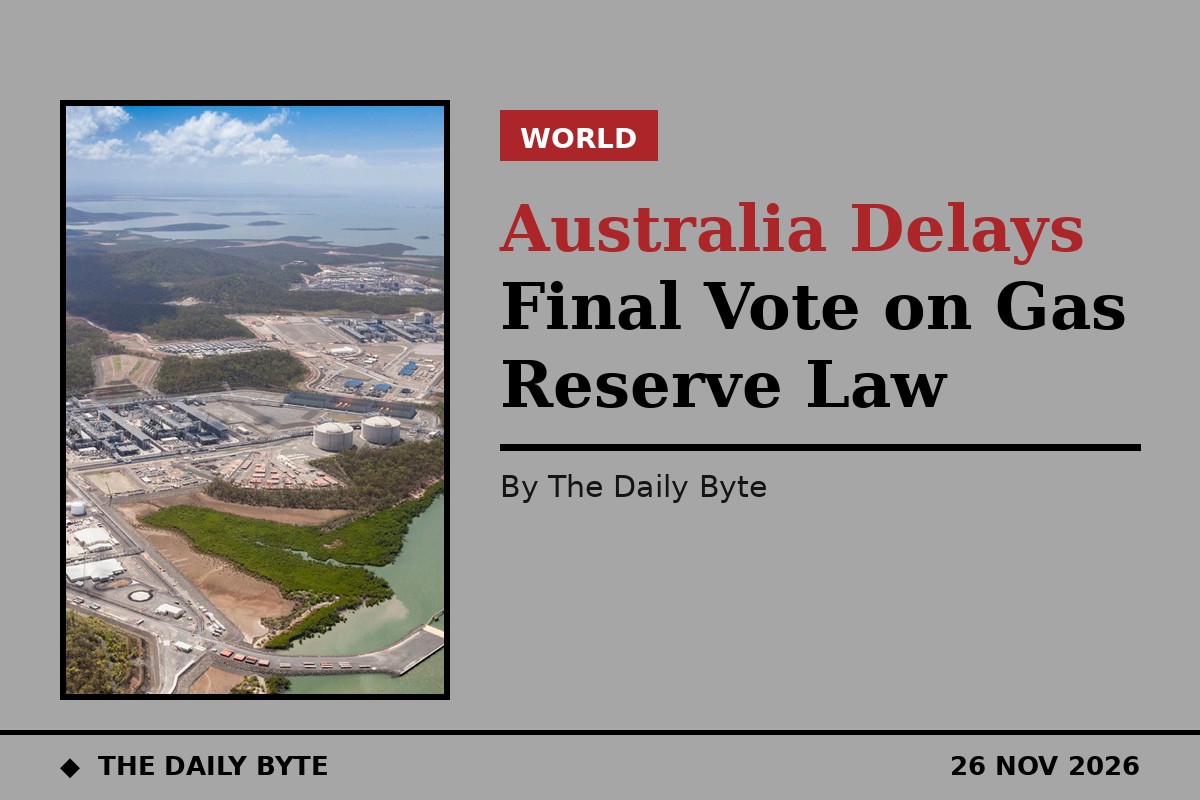
Australia's Senate has backed a landmark plan to force liquefied natural gas exporters to reserve up to a fifth of their output for domestic use, but the final vote on the scheme has been delayed until February 2027.
The Senate passed the second reading of the domestic gas reservation bill by 21 votes to 10 on Thursday. Industry Minister Tim Ayres, the bill's proponent in the Senate, then proposed a largely procedural third reading and asked for a delay until the Senate reconvenes in February next year.
The debate ran until after 10pm Sydney time in Canberra. While the text of the bill has been agreed, it will not become law until next year.
Under the scheme, LNG producers will have to set aside up to 20 percent of their supply for the Australian market from January 2028. The energy regulator will determine the exact amount to be reserved. The government says the scheme is designed to create a surplus described as a "modest oversupply" amounting to 110 percent of forecast demand.
Coalition agrees not to block bill
The centre-left Labor government secured backing for the scheme after the conservative opposition coalition pledged not to block it, despite flagging what it called flaws in the policy and proposing amendments.
"We will allow the government's proposal to move forward because we do believe in a domestic gas reservation and more gas being made available to Australia," opposition resources spokeswoman Susan McDonald told the Senate on Thursday.
McDonald also expressed fears the reserve would stifle investment in the sector, and said devising the scheme had "managed to alienate so much of the industry". Her amendment was voted down.
Labor had provisionally agreed to exempt Western Australia, the country's biggest LNG exporting state, which already runs its own reservation scheme. The exemption remains subject to ministerial oversight rather than being a formal, permanent carve-out.
Labor's proposal had already been watered down from a minimum of 20 percent of gas being set aside to a 20 percent cap. Producers can now undershoot the target with the government's say-so, and companies' existing deals with overseas buyers will not be affected.
Resources Minister Madeleine King said the reservation scheme would be a landmark economic reform. "It will drive a permanent wedge between international gas prices and the Australian domestic market," she told parliament.
Greens push for export tax rejected
The Greens and independents such as Senator David Pocock opposed the scheme in its current form, proposing an amendment for a 25 percent tax on gas exports. The Senate rejected the amendment on Thursday.
Greens leader David Shoebridge had argued the tax would raise about $17 billion a year. He said the reservation scheme would do little to help with cost-of-living concerns.
Gas producers have opposed the policy, citing provisions that suppliers "must sell", warning it would drive prices down too far and deter investment in new supply. Santos' Gladstone LNG project is thought to be the hardest hit, as it lacks spare gas beyond contracted volumes.
The governments of China and Japan, the two largest buyers of Australian gas, have also expressed concerns over the scheme.
Ayres said the policy contains provisions to incentivise gas development. "The domestic gas reservation will deliver reliable supply of affordable gas for business and for households," he said, adding that it would also benefit jobs and manufacturing and help support new business investment.
Australia is the world's second-largest exporter of LNG, sending far more gas overseas than it consumes at home. The government says the reserve would end years of "crisis-driven" market intervention. The final vote is now expected when parliament returns in February.


