Australia Inflation Hits 4.9% as Core Prices Accelerate
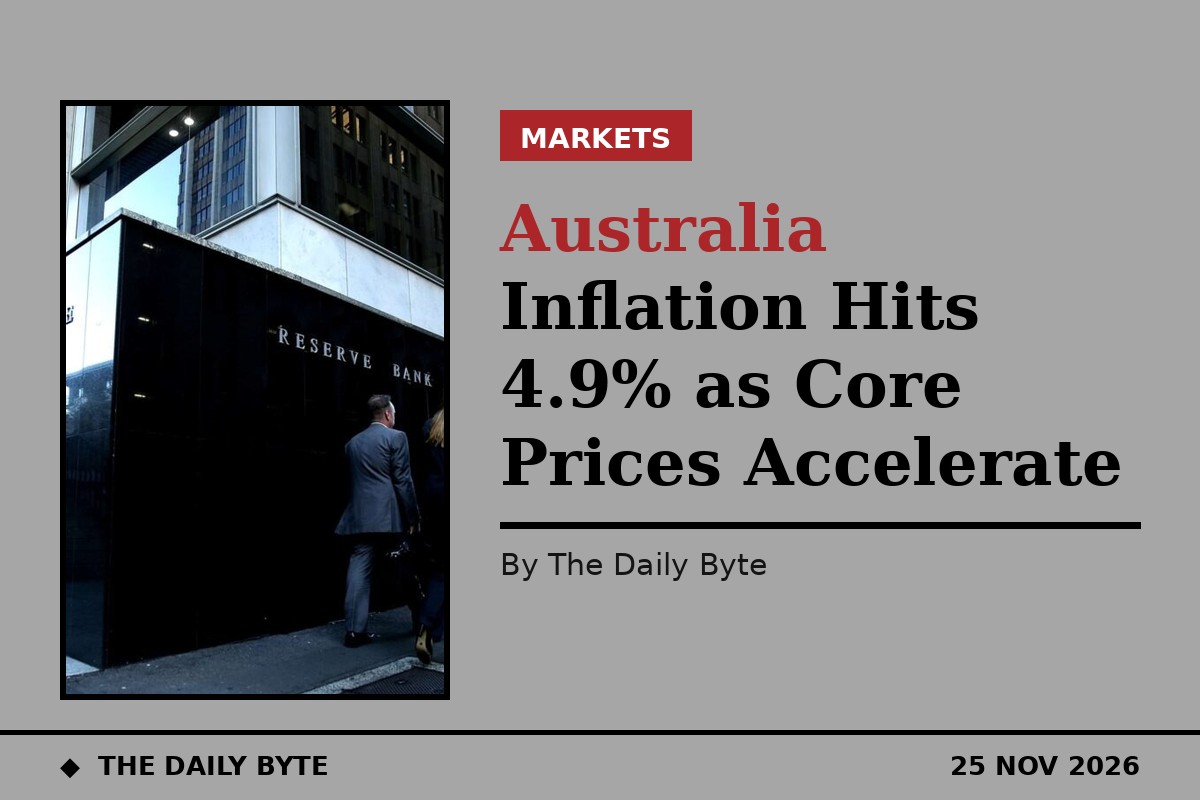
Australian consumer prices rose faster than expected in October, taking annual inflation to 4.9% — its highest reading in three years — and adding to signs that price pressures are broadening across the economy.
Data from the Australian Bureau of Statistics, published on Wednesday, showed the monthly consumer price index rose 0.5% in October from September, above forecasts of 0.4%, as fuel costs jumped 6.3% on higher global oil prices. That took the annual rate to 4.9%, up from 4.3% in September and well above the Reserve Bank of Australia's target band of 2% to 3%.
The underlying picture was also hotter than expected. The trimmed mean measure of core inflation, which the Reserve Bank watches most closely, rose 0.5% in the month and pushed its annual pace up to 3.8% from 3.6%, where it had been since June. It was the fastest pace for core inflation since 2024.
Goods inflation jumped 1% in the month, lifting its annual pace to 5.8%, while services inflation was unchanged in October, leaving its annual pace at 4%. New dwelling prices rose 0.8% in October, after a flat September, as home builders in some cities cut discounts and raised base prices despite subdued demand.
The figures put pressure on the Reserve Bank and on Treasurer Jim Chalmers. The central bank has raised interest rates by 125 basis points this year, to 4.85%, but that tightening has come at a cost: the jobless rate hit a five-year high of 4.9% in September. "We are in for some tough times ahead and the economy is on the knife's edge with inflation going up and unemployment also rising," Russel Chesler, head of investments at VanEck, told Reuters.
Markets reacted cautiously. The Australian dollar rose 0.1% to $0.6650 immediately after the release, while three-year government bond futures pared earlier gains to be down five ticks at 95.48. Traders still expect the next move in interest rates to be down, given the weakness in the labour market, but they no longer fully price a first cut until August. A cut in June is now seen as a 75% chance, down from about fully priced before the data.
Strategists at TD Securities and Commerzbank warned that the Reserve Bank is effectively boxed in: broadening price pressures make talk of rate cuts in the first half of 2027 premature, yet a cooling real economy after five rate rises this year makes further tightening hard to deliver. That policy paralysis, they argue, leaves the Australian dollar unable to draw support from hotter inflation, tilting the risks towards further weakness in the currency.
Not everyone expects the heat to last. Luci Ellis, chief economist at Westpac, said there was upside risk to her forecast for fourth-quarter inflation but that she expected October to mark the peak. "We are still forecasting a negative print for headline CPI in November because of the large fall in fuel prices," she said. Her view is that the Reserve Bank is likely finished raising rates but will still be considering another move in coming months.
HSBC chief economist Paul Bloxham was blunter about the dilemma facing policymakers: "The RBA's choices appear to be between stagflation or recession." Oxford Economics expects rates to remain on hold at 4.85% throughout 2027, while ANZ is sticking with its call for a first cut in June. The Reserve Bank's next decision is due on 9 February 2027.