Australia Marks Remembrance Day 108 Years After Armistice
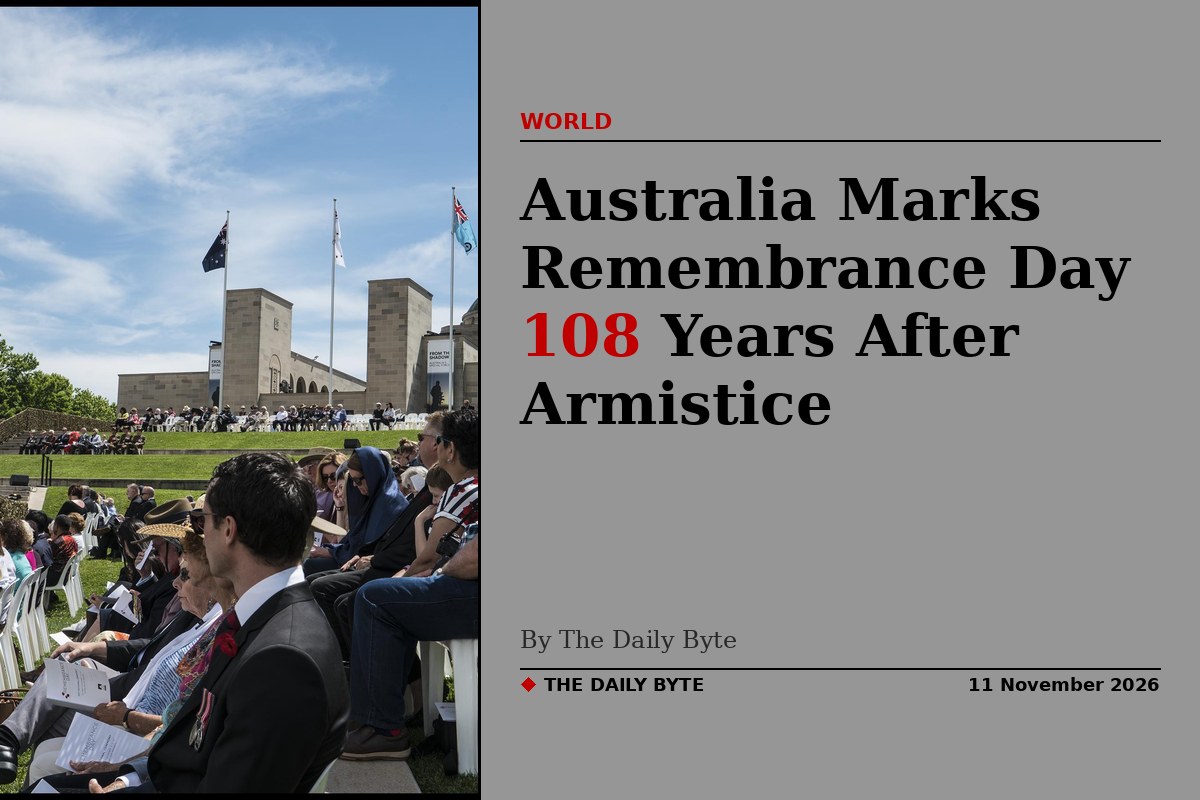
Australians across the country paused for a minute's silence on Wednesday to mark Remembrance Day, 108 years after the armistice that ended four years of fighting on the Western Front in the First World War, in which more than 60,000 Australians died.
The national ceremony took place at the Australian War Memorial in Canberra, where about 2,000 people gathered on the Parade Ground. Governor-General Sam Mostyn laid a scarlet poppy wreath first used in 1934 on the memorial's construction site, a gesture meant to symbolise the continuity of Australian service.
Stories of service at the Canberra ceremony
Australian Army chaplain Kelly Horne told the crowd about caring for Ukrainian recruits during a visit to the United Kingdom in 2023. Four of the recruits, who would be soldiers on the front line within a week, gave her a small wrapped chocolate bar as a thank you. She said the gift showed her that turning up, and offering kindness and hope, had mattered.
Veteran Brad Copelin, who served nearly 25 years in the Australian Army, including deployments to Afghanistan and the Solomon Islands, said Remembrance Day brought back both good memories and painful ones that veterans would carry with them always. A didgeridoo sounded during the ceremony to mark the sacrifice of Indigenous soldiers, many of whom fought before they were considered citizens.
Albanese marks the day in Singapore
Prime Minister Anthony Albanese marked Remembrance Day in Singapore, laying a wreath at the Changi Chapel and Museum during a stopover on his way to the United Nations climate talks. He was joined by Australia's High Commissioner to Singapore, Robyn Mudie.
The Australian War Memorial's programme also included a Last Post Ceremony in the afternoon, while its galleries and Commemorative Area opened to the public from 1pm. Chief of the Defence Force Admiral Mark Hammond was among those who laid wreaths in Canberra.


