Australia Melanoma Survival Hits Record 95%
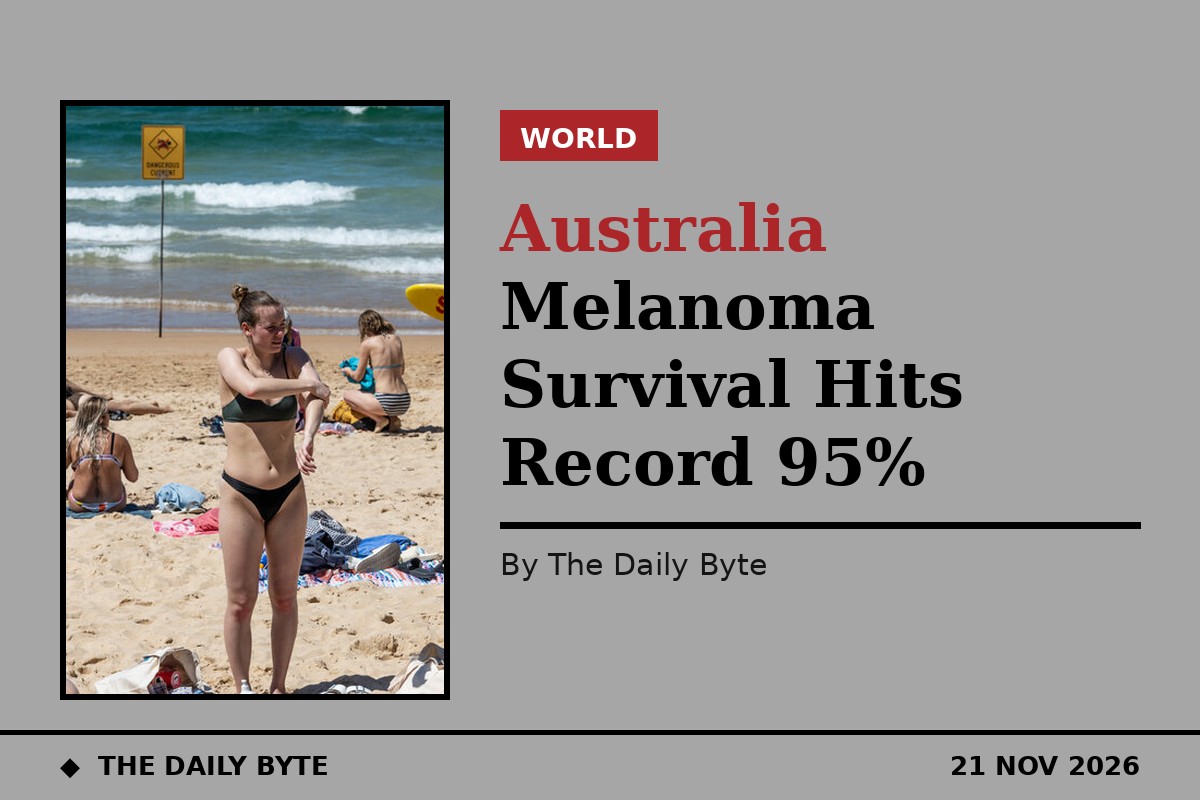
Australia's five-year melanoma survival rate has reached 95 percent, the highest figure ever recorded, according to new data from the Australian Institute of Health and Welfare (AIHW) released during National Skin Cancer Action Week.
The milestone was announced by Cancer Council Australia on Friday 20 November, alongside a second AIHW report showing that non-melanoma skin cancer has become the most expensive cancer for the health system to treat.
Earlier detection and better treatment
Cancer Council spokesperson Craig Sinclair called the 95 percent survival rate "a monumental achievement", crediting improvements in treatment, greater awareness and earlier detection with saving lives.
AIHW figures show the five-year survival rate for melanoma diagnosed in 2018-2022 was 95 percent, the highest recorded. Survival has sat a little above 90 percent since 1993-1997, making the latest figure a clear step forward.
Dr Adrian Lim, president of the Australasian College of Dermatologists, said melanomas were being detected earlier and that saved lives. For people with advanced melanoma, he said, immunotherapy and targeted therapies had transformed outcomes.
Melanoma remains the third most commonly diagnosed cancer in Australia. Cancer Australia estimates about 17,443 new cases will be diagnosed in 2025, and about 1,455 people will die from the disease this year. The estimated mortality rate for 2025 is 5.3 deaths per 100,000 people, down from a peak of about 8.2 per 100,000 in 2013.
Rates vary sharply by place. In 2021, the age-standardised incidence rate ranged from 45 cases per 100,000 people in South Australia and Victoria to 79 per 100,000 in Queensland, according to the AIHW.
The $2.14 billion cost of non-melanoma cancer
While melanoma outcomes improve, the AIHW's Health system spending on disease and injury in Australia 2024-25 report, also released on 20 November, found $2.14 billion was spent on non-melanoma skin cancer in 2024-25 - more than on any other cancer, including breast cancer at $2.09 billion and lung cancer at $2.04 billion.
Earlier data confirmed skin cancer is Australia's most prevalent cancer. Around 535,000 Australians - 2 percent of the population - have at least one common non-melanoma skin cancer removed each year, and the disease is about three times as common as all other cancers combined.
Two in three Australians are expected to be diagnosed with skin cancer in their lifetime.
"These figures are also a timely reminder that we should not overlook non-melanoma skin cancer," Sinclair said. "It is Australia's most common cancer and places a greater cost burden on the health system than any other cancer. Importantly, it is also one of the most preventable."
Dr Lim warned that non-melanoma skin cancer could also be deadly and often meant repeated procedures over a lifetime, frequently on the face, with a major impact on quality of life and a great economic cost to the community.
Sun-safe habits that last a lifetime
This year's National Skin Cancer Action Week, which runs from 15 to 22 November, carries the theme "Sun safe habits last a lifetime" and marks 45 years since Sid the Seagull first told Australians to Slip! Slop! Slap!
Cancer Council says half of a person's lifetime ultraviolet exposure happens before the age of 20, so habits built early matter. Its research shows children are 12 times more likely to use sunscreen, and three times more likely to wear a hat, when they see their parents do it first.
The advice remains the five SunSmart steps whenever the UV Index reaches 3 or above: slip on sun-protective clothing, slop on SPF50 or SPF50+ broad-spectrum water-resistant sunscreen, slap on a broad-brimmed hat, seek shade and slide on sunglasses.
Anyone who notices a new or changing spot is urged not to wait. "See your GP who may refer you to a dermatologist," Dr Lim said. "The earlier skin cancer is diagnosed, the better the outcome is likely to be."


