Australia Senate Passes Defence Bill Amid Protest Fears
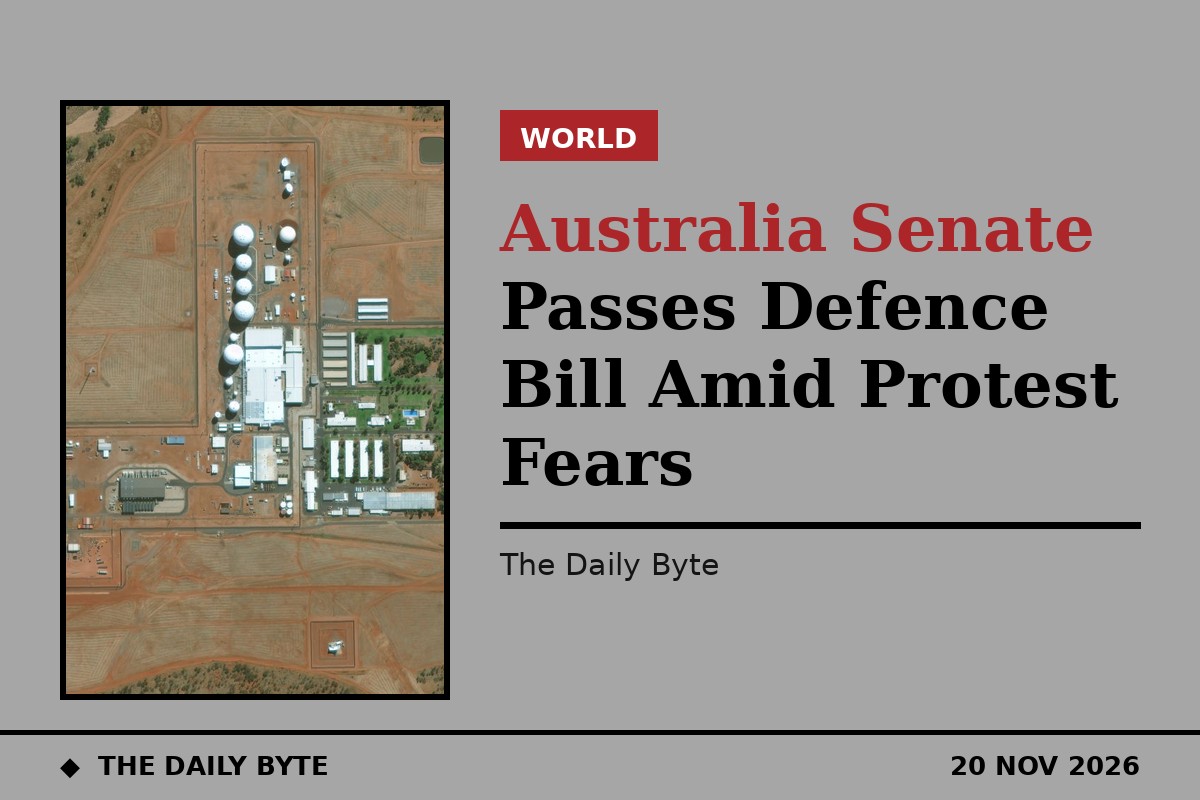
Australia's Senate has passed sweeping defence legislation that creates special security zones around military sites and hands the defence minister powers to override other laws for declared defence projects, prompting warnings from rights groups that peaceful protest could be criminalised.
The Defence Legislation Amendment (Accelerating Capability and Protecting Bases) Bill 2026 passed on Thursday by 36 votes to nine, after debate was limited to 30 minutes. Only the seven Greens senators, independent senator David Pocock and senator Fatima Payman voted against it, while Labor, the Coalition and the remaining crossbench supported it.
Seven years for entering Pine Gap
The bill names the joint US-Australia defence facility at Pine Gap, near Alice Springs, as a special defence security zone. Entering such a zone without authority, or photographing the site or activities within it, can bring up to seven years in prison and a fine of more than $150,000. Offences in ordinary defence zones carry up to two years in prison and fines above $43,000.
The legislation also lets the defence minister issue capability declarations that exempt defence projects, including projects under the AUKUS partnership, from state and territory laws and from some federal laws. Declared defence security officials, who may include employees of contractors, can stop vehicles and vessels, search people, demand personal details and detain a person until police take over.
The bill was introduced on 27 October and passed the House of Representatives on 29 October. Because the Senate amended it, the lower house must vote on the amendments when it sits on Monday 23 November, before the legislation can receive royal assent and become law.
Amnesty warns on right to protest
Amnesty International Australia said the laws would unjustifiably erode human rights, including freedom of expression and peaceful assembly, and called on the Albanese government to make the bill consistent with Australia's human rights obligations, with protections for peaceful protest, transparency and independent oversight.
"Everyone has the right to peacefully protest, speak out against injustice and hold those in power accountable," said Andrew Witheford, a strategic campaigner at Amnesty International Australia. "Peaceful protests are not a threat to national security. They are a fundamental human right, and the government has a serious obligation to protect it."
Amnesty also criticised the speed of the process, noting that only a few days were given for public consultation and parliamentary scrutiny of a 231-page bill with significant implications for human rights.
Concerns go beyond military bases
Greens leader David Shoebridge, rights advocates and the Law Council warned the zones could extend beyond military bases to data centres and other civilian sites holding defence contracts. Shoebridge said the bill gives the defence minister the power to turn almost anything, "a parcel of land, a truck or a convoy", into a security zone, and that temporary zones around moving equipment could catch a protester on a road where a defence truck was driving.
The defence department told a Senate inquiry in October that the bill contained carve-outs for lawful protests and would only apply when it was reasonably likely someone would be seriously harmed or killed. It also said increasing breaches meant the proposed changes were badly needed, and that state and territory police would still be expected to lead on guarding defence assets.
The government has presented the bill as a response to drone sightings and intrusions at military bases. Critics say the powers go far further than that purpose, and that the debate over where security ends and the right to protest begins will now move to the lower house on Monday.


