Australia jobless rate hits 4.9% as jobs fall
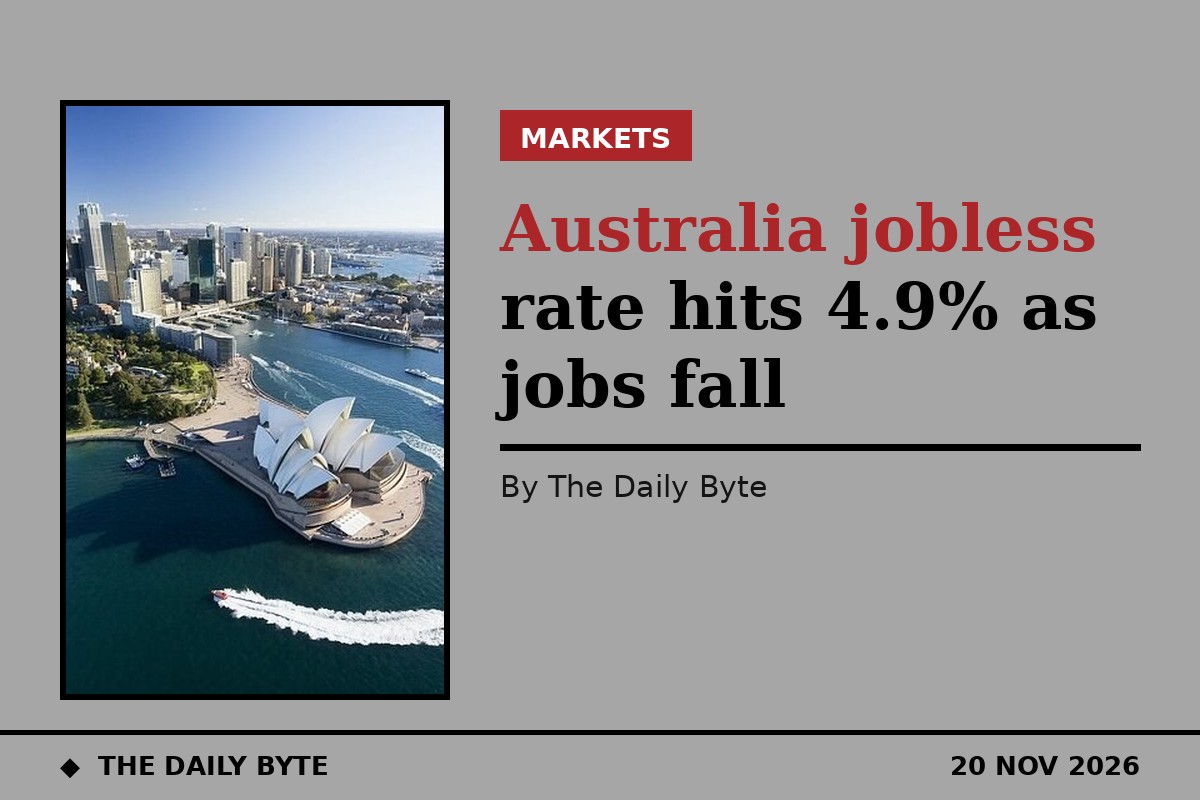
Australia's unemployment rate rose to 4.9 per cent in October, its highest level since October 2021, as the economy shed jobs for a second month in a row.
Employment fell by 43,500 people in seasonally adjusted terms, the Australian Bureau of Statistics said on Thursday, against economists' forecasts of a 25,000 increase. The number of unemployed people rose by 17,800 to 753,700.
The jobless rate has now risen for three straight months, from 4.5 per cent in July, and it sits well above the 4.7 per cent recorded in September.
Part-time work took the hit
Part-time employment accounted for almost all of the October decline, falling by 40,600 to 4.51 million people. Full-time employment slipped by just 2,900 to 10.23 million.
The participation rate fell 0.2 percentage points to 66.6 per cent, meaning the jobless rate rose even as fewer people were looking for work. The employment-to-population ratio dropped 0.3 points to 63.3 per cent, and monthly hours worked fell 0.2 per cent.
Underemployment eased 0.1 points to 6.2 per cent, while the broader underutilisation rate was unchanged at 11.1 per cent.
Young workers hit hardest
Youth unemployment rose to 11.3 per cent, up from 11.1 per cent in September and its highest since October 2021, a sign that younger Australians are bearing the brunt of the slowdown.
Over the 12 months to October, the number of unemployed Australians rose by 95,400, or 14.5 per cent, while employment grew by just 83,500. In other words, more people joined the jobless queue over the year than found work.
State figures showed wide differences. Victoria and Tasmania recorded the highest unemployment rates, at 5.4 per cent each.
What it means for interest rates
The figures ease the pressure on the Reserve Bank of Australia to raise interest rates again, after it tightened policy earlier in November. With unemployment already at the level the central bank had forecast for the end of 2026, economists reading the data said the case for further rises had weakened.
The federal government struck a steadier note, saying the labour market remained resilient and pointing out that 83,500 more Australians were in work than a year ago, with full-time employment up 117,600 over the same period.
For workers, though, the direction is clear. Two months of job losses, a jobless rate at a five-year high and youth unemployment climbing all point to a labour market that is losing momentum, and to a harder search for work in the months ahead.