Australia's Universities Warn Student Visa Cuts Cost Jobs
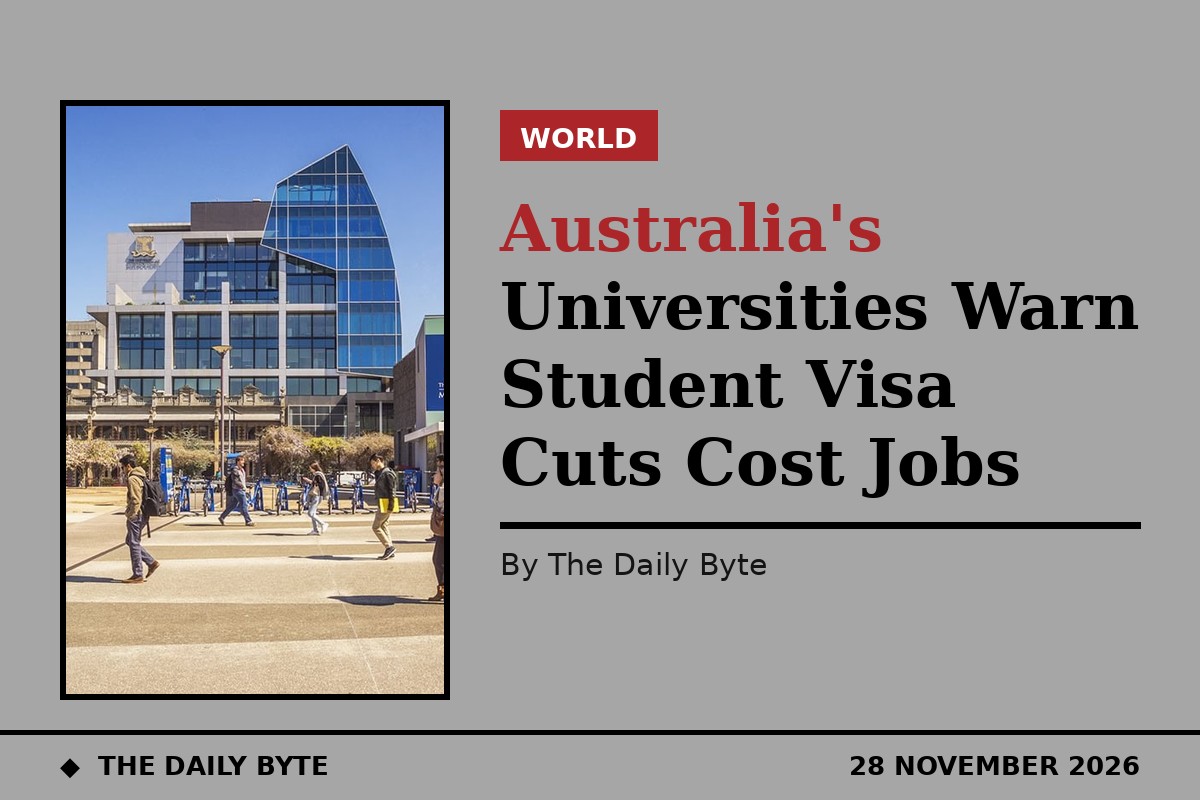
Australia's universities have warned that cuts to international student visas will cost Australian jobs and billions of dollars, as new figures show student numbers falling and campuses already planning redundancies.
Universities Australia, which represents the country's universities, said international education was a 55 billion Australian dollar export industry supporting around 250,000 Australian jobs. Its chief executive, Luke Sheehy, said Canberra was counting the visas it cut without counting the jobs, wages and opportunities at risk.
The numbers behind the warning
In the first eight months of 2026, international student numbers fell 8 per cent, enrolments dropped 9 per cent and new course commencements were down 12 per cent compared with the same period last year. The government's own assistant minister for international education, Julian Hill, expects new overseas student commencements at public universities to fall by around 18 per cent in 2026, at a cost of about 2 billion dollars in lost university revenue over three years.
The standard student visa application charge has more than tripled in two years to 2,500 dollars, and by June this year almost one in four applications was being refused. Universities Australia said more than 30 billion dollars of the sector's contribution came through spending on groceries, meals, transport and rent, supporting local businesses and jobs. The Reserve Bank estimates that around six in 10 international students participated in the workforce in 2024.
Campuses are already cutting
The University of Melbourne said about 180 positions could go under eight restructure proposals, from a workforce of about 13,800, to ease a five-year string of operating deficits. The roles under threat are mostly non-academic, in areas including alumni relations, biomedicine, financial planning, philanthropy and technology. Credit rating agency S&P Global recently changed its long-term outlook for the university from stable to negative, blaming federal international education policies as well as rising staff costs.
Deakin University plans to offer voluntary redundancies to address a projected revenue decline of between 200 million and 250 million dollars a year by 2029, a slump of about 16 per cent. Its acting vice-chancellor, Susan Elliott, told staff that international student numbers had fallen across the sector and that "the change is structural". Federation University is reviewing arts and humanities subjects with low enrolments, after walking back claims that 87 per cent of arts units would go, and its staff staged a 24-hour strike on 9 November.
Barney Glover, chief commissioner of the Australian Tertiary Education Commission, warned that volatility in international education would undermine the sector. "Volatility impacts our universities almost existentially," he said. "Integrity and sustainability are not the same thing as restriction."
A political contest over migration
Sheehy contrasted the treatment of students with that of backpackers, after Home Affairs Minister Tony Burke lifted a proposed cap on third-year working holiday visas from 5,000 to 25,000 when farmers and tourism operators warned of damage to regional businesses. "Canberra is counting the visas it cuts. It's time it counted the Australian jobs, wages and opportunities at risk," Sheehy said. "The government can't keep banking the political benefits of fewer visas while leaving Australians to foot the bill."
Universities Australia supports the crackdown on unscrupulous operators in the private vocational sector and says it recognises pressures on housing and services. But it argues that constantly changing the rules for genuine students is undermining Australia's appeal as a place to study. Its message to both major parties is that if governments want universities to depend less on international student revenue, they must explain what replaces it, or accept fewer of the nurses, teachers and engineers the country needs.


