Autistic Girls Miss School Most, Study Finds
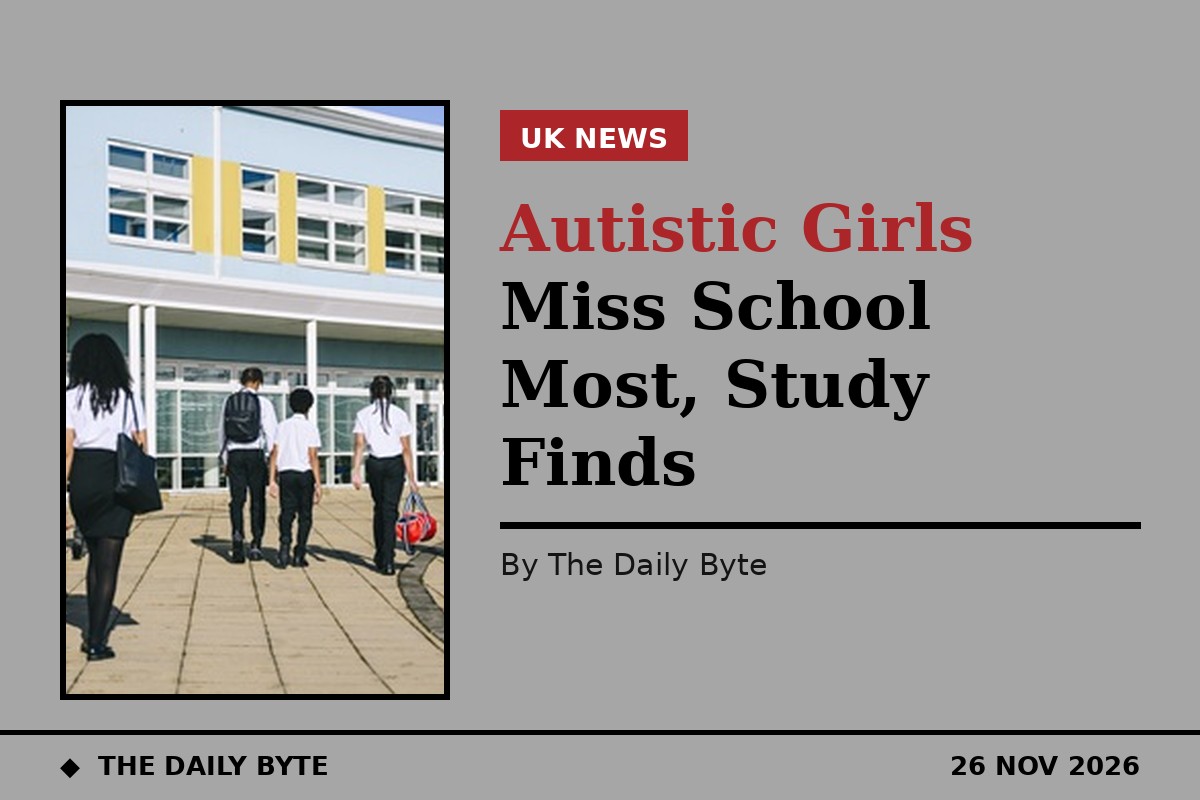
Nearly half of autistic girls in mainstream secondary schools in England were persistently absent from school, according to new research from the University of Southampton published in the journal Autism.
In 2022/23, 44.26 per cent of autistic girls in mainstream secondary schools missed 10 per cent or more of school sessions — the Department for Education’s definition of persistent absence. That is more than 7,800 girls. The rate compares with 31 per cent for autistic boys, around 25 per cent for girls with no identified special educational need, and 20 per cent for boys with no identified need.
The gap opened up sharply after the pandemic. Before Covid, around 25 per cent of autistic girls in secondary schools were persistently absent. By 2021/22 the figure had risen to 44 per cent and remained at a similar level in 2022/23. In primary schools, 28 per cent of autistic girls were persistently absent in 2022/23, up from 16.6 per cent in 2018/19, compared with 26.5 per cent of autistic boys and 15 per cent of children with no recorded special educational need. Primary absence for autistic girls peaked at 30 per cent in 2021/22.
The study, led by postgraduate researcher Chloe Eddy with professors Sarah Parsons and Hanna Kovshoff, analysed annual attendance data for all state-funded mainstream primary and secondary pupils in England from 2016/17 to 2022/23, covering between five and six million pupils each year. It is the first study to demonstrate, on a national level, that autistic girls face a distinct risk of persistent absence from school.
The researchers had to use a freedom of information request to obtain the figures. The Department for Education publishes attendance for children with special educational needs as a single group and does not break the figures down by type of need and sex together, so autistic girls effectively disappear into an average. The authors describe them as a group at risk of being “statistically forgotten”.
The study counts absence across the whole country and cannot say why individual girls miss school. But the authors point to difficulties that can build up over time, including sensory and social pressures, difficult relationships with school staff and unsuitable school environments. Their ongoing, as yet unpublished research with autistic girls and their families suggests that, for many, difficulties with attendance stemmed not from a lack of motivation to attend or learn, but from their experiences at school and the emotional impact of those experiences.
Eddy said the findings showed an urgent need to better understand and respond to the pressures autistic girls experience at school, and called for earlier support before difficulties escalate. The authors argue that spotting the pattern early matters: once absence becomes entrenched, catching up academically and re-engaging with school becomes much harder.
The research lands as school attendance and the experiences of children with special educational needs remain high on the national agenda. For parents and teachers, the message is that absence among autistic girls is not a marginal issue — in mainstream secondary schools, it affects almost one girl in two.


