Average private rent hits £269 a week in England
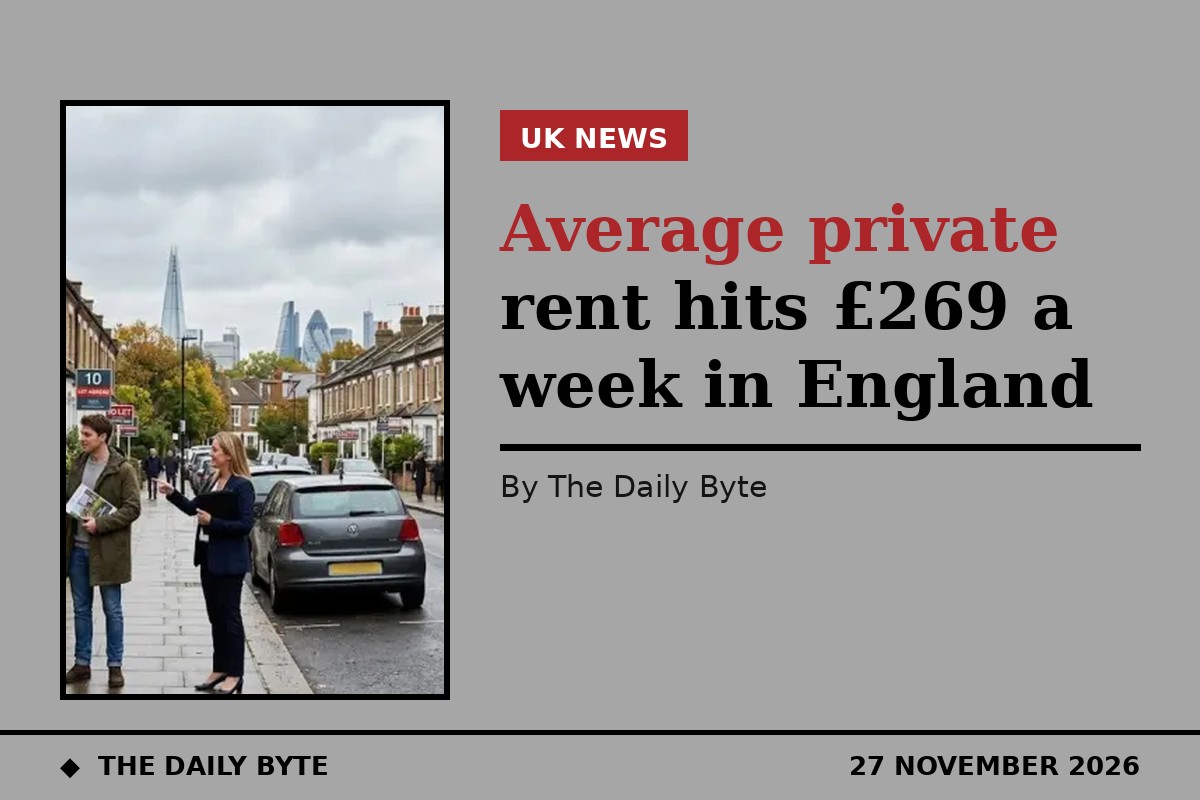
The average private rent in England rose to £269 a week in 2025-26, official figures show, as renters continued to spend around a third of their household income on housing.
The English Housing Survey, published by the Ministry of Housing, Communities and Local Government on 26 November, found the average weekly private rent increased from £250 in 2024-25 to £269 in 2025-26.
The increase was sharpest in London, where the average weekly private rent rose by £46, from £393 to £439. Across the rest of England, the average rose by £11 a week, from £207 to £219.
Renters spend a third of their income on housing
Private renters spent proportionately more on housing than people in any other tenure. In 2025-26, those in the private rented sector spent a third, 34 per cent, of their household income, including housing support, on housing costs. That compared with 28 per cent for social renters and 20 per cent for people paying a mortgage.
Even so, fewer renters reported struggling to pay. The proportion of private renters finding it fairly or very difficult to pay their rent fell from 32 per cent in 2024-25 to 27 per cent in 2025-26. Among social renters, the figure fell from 26 per cent to 22 per cent.
Arrears remained low in the private rented sector. Two per cent of private renters were in arrears at the time they were interviewed, and a further 2 per cent had fallen behind at some point in the previous 12 months, giving a combined figure of 4 per cent. Social renters were more likely to report being in arrears: 11 per cent reported current or previous arrears, although that is down from 25 per cent a decade ago, in 2015-16.
Owning still dominates, but young households rent
Owner occupation remained the largest tenure group in England, covering 65 per cent of households, or 16.3 million households. The private rented sector covered 19 per cent, or 4.8 million households, and the social rented sector was the smallest at 16 per cent, or 4.1 million households. The private rented sector has held at around a fifth of households since 2013-14.
Renting is heavily concentrated among the young. Nearly seven in 10 households headed by someone aged 16 to 24 lived in the private rented sector in 2025-26, compared with only 5 per cent of households headed by someone aged 65 or over. The share of households headed by someone aged 45 to 54 living in the private rented sector rose from 14 per cent in 2015-16 to 18 per cent.
First-time buyers are getting older
The survey also found that first-time buyers are getting older. The mean age of a first-time buyer in England was 34 in 2025-26, up from 32 in 2019-20. People aged 25 to 34 still accounted for the majority, 54 per cent, but that was down substantially from 65 per cent in 2019-20. At the other end, the proportion of first-time buyers aged 45 or over more than doubled, from 5 per cent to 11 per cent.
A quarter of first-time buyers were single-person households in 2025-26, up from 19 per cent in 2019-20.
Among private renters who expected to buy a home, 34 per cent thought they would do so within two to five years, and only 9 per cent put the wait at 10 years or more. The share expecting to buy within two years rose to 29 per cent in 2025-26, up from 23 per cent the year before.
The survey also recorded 1.2 million vacant dwellings in England, making up 5 per cent of all dwellings. One in 10 private rented dwellings was vacant at the time of the survey. Moves into the social rented sector are increasingly coming from the private rented sector: 82,000 moves, or 32 per cent of the total, came from private renting in 2025-26, up from 51,000, or 21 per cent, the year before.
This is the first release of data from the 2025-26 survey. Two more chapters, on housing quality and energy efficiency, are due in January, followed by more detailed topic reports in the spring and summer of 2027.


