Ayaz Sadiq bars MPs from using floor against state institutions
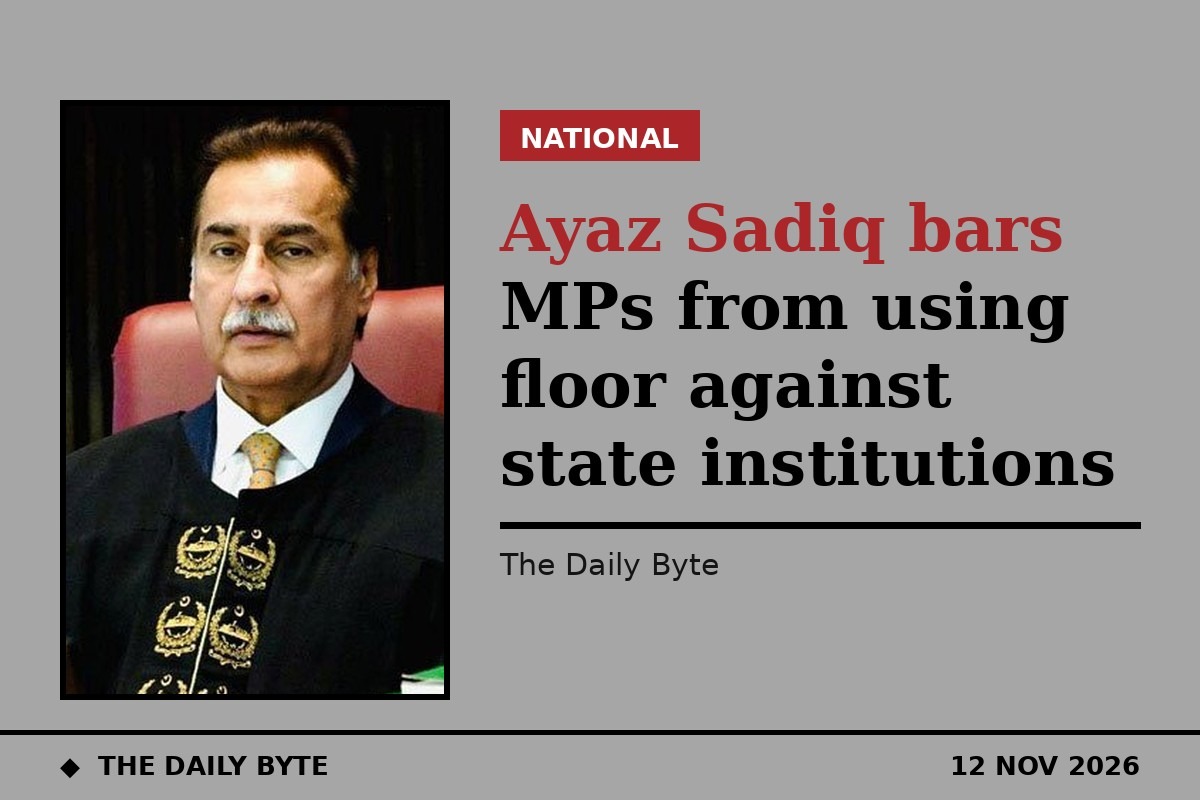
National Assembly Speaker Sardar Ayaz Sadiq has said no member of parliament will be allowed to use the floor of the House to speak against the state, the judiciary or the armed forces of Pakistan, while insisting that every elected representative retains the constitutional right to speak and present the concerns of the people. He was speaking to reporters in Sahiwal on Wednesday after offering condolences to the family of the late former MNA Chaudhry Muhammad Ashraf at his residence in the Officers' Colony.
The speaker met the deceased leader's son-in-law, Mian Ghaffarul Haq, and prayed for the departed soul. He paid tribute to Ashraf, saying he had stood firmly with the PML-N leadership during challenging times. The visit itself was confirmed by the Associated Press of Pakistan, which reported that Sadiq had travelled to Sahiwal to offer condolences to the family.
Parliament is not a rubber stamp, says speaker
Referring to the functioning of parliament, Sadiq said the National Assembly was committed to promoting democratic values and encouraging meaningful participation in the legislative process by both the treasury and the opposition benches. He said the National Assembly is not a rubber stamp, but a vibrant democratic forum playing an effective role in strengthening democratic traditions, safeguarding parliamentary norms and ensuring representation for all political voices.
He said the opposition was being given ample opportunity to express its views in the House, adding that speaking time had been increased from eight to thirteen hours on important occasions to ensure broader participation and to uphold the principles of fairness and parliamentary justice. He said it would be unfortunate if opposition parliamentarians did not join parliamentary committees and contribute to these bodies. "I want to be a non-controversial speaker," he said.
Claims of a move to oust the government dismissed
Commenting on recent political developments, Sadiq dismissed claims regarding any attempts being made to oust the government, saying such narratives are often promoted by individuals and groups that had failed to secure public support through the electoral process. He stressed that democratic institutions must be strengthened through constitutional and parliamentary means.
The remarks repeat a position Sadiq has stated before. In January 2026, during a visit to the National College of Arts in Lahore, he said statements against the country, the judiciary, the role of judges and the armed forces would never be allowed on the floor of the National Assembly, according to a handout issued by the National Assembly Secretariat. On that occasion he also said he was neither part of the government nor the opposition, but would perform his duties as speaker impartially and in accordance with the Constitution and the Rules of Procedure.
Why the warning matters
The speaker's latest comments set out, in plain terms, how he intends to run the House: open debate within constitutional limits, longer speaking time for the opposition on major issues, and no room for speeches directed against the state or its institutions. Whether opposition members accept that balance will be tested in the coming sittings, including in the parliamentary committees Sadiq urged them to join.
Sources: Dawn, 12 November 2026, Associated Press of Pakistan