Bad Weld and Sinking Ground Likely Caused Spain Crash
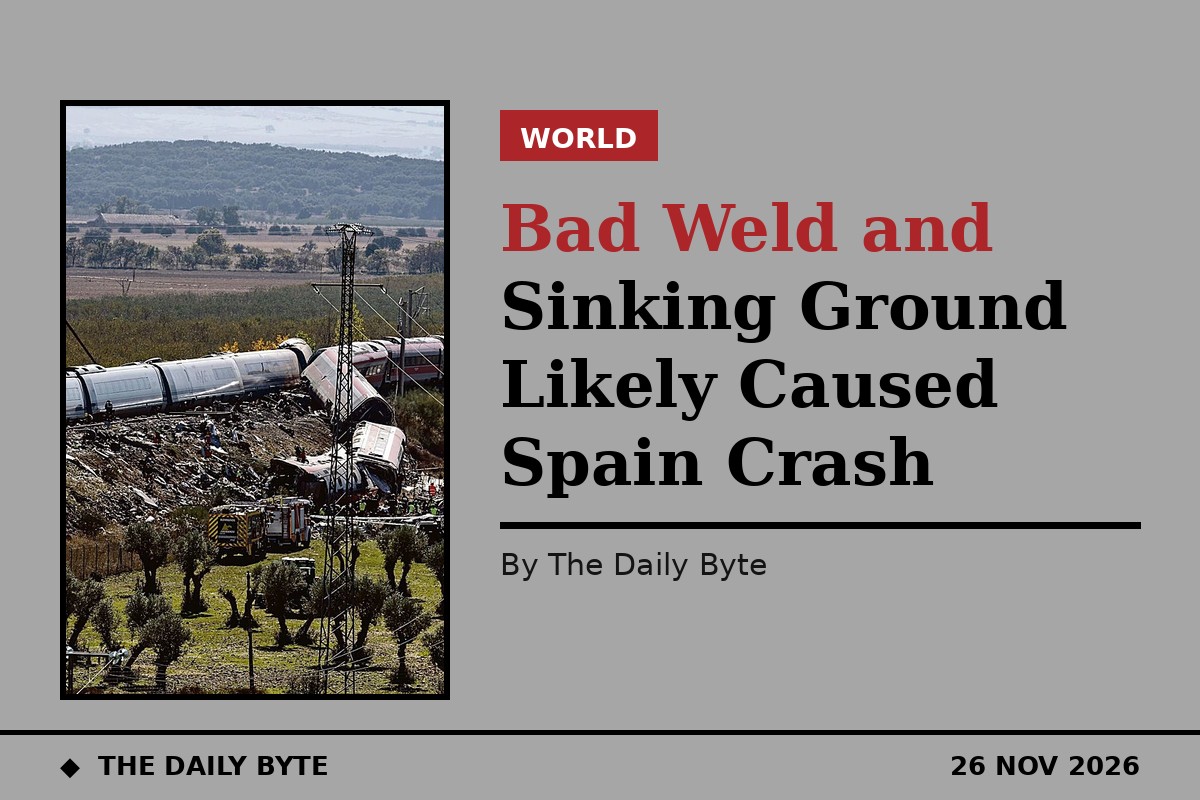
A badly executed rail weld and sinking ground most likely caused the high-speed train crash near Adamuz in Spain, which killed 46 people and injured more than 150, according to a report by court-appointed experts disclosed on 25 November.
The crash happened on 18 January, when an Iryo high-speed train travelling from Malaga to Madrid partially derailed near Adamuz, in the province of Cordoba. The last three carriages of the train left the rails on a straight stretch of track and crossed into the opposite track, where they collided with an oncoming Renfe train travelling towards Huelva.
Three court-appointed experts concluded that the most likely proximate causes were a separated aluminothermic weld joining dissimilar rails, subsidence of the track foundation, and dynamic amplification from a pre-existing vertical defect in the rail. An aluminothermic weld is a joint made by pouring molten metal between two rail ends, and the experts found that the weld at the fracture point had separated.
The report also found that a 6.4-millimetre vertical defect in the track had been detected in October 2025, about three months before the crash. Spain's rail infrastructure manager, Adif, found the defect and repaired it, but then failed to monitor it again, according to Guardia Civil investigators. The defect grew between October and November 2025 at the exact point where the rail later fractured, and the experts said they found no evidence that it had been followed up.
Investigators also documented missing ballast under at least four sleepers at the rupture site, and inconsistencies in the welding records for the section of track. Data from the train's recorder showed that some axles ran off the rails before the onboard alarms were triggered. There was a sharp voltage drop at 19:43:33, followed by a cascade of system warnings, and the train came to an emergency stop at 19:44:02 after travelling 878.6 metres.
The findings are preliminary, not final. Key laboratory tests on the rails, ballast and sleepers are still outstanding and could change the conclusions. The judicial inquiry remains open, with at least 186 further interviews still to be carried out, along with a review of maintenance contracts and of passive-safety issues such as luggage retention and seat anchoring, which could prompt changes to infrastructure oversight and operator procedures.
The report points towards possible responsibility at Adif, which manages Spain's rail infrastructure. The experts' findings put Adif's monitoring of the Madrid to Seville high-speed line, the section where the crash happened, at the centre of the inquiry. For the families of the 46 people killed, the report is the clearest account yet of how a routine journey ended in disaster — but the courts have still to decide where legal responsibility lies.


