BAE Systems to cut 1,070 jobs from head office and air sector
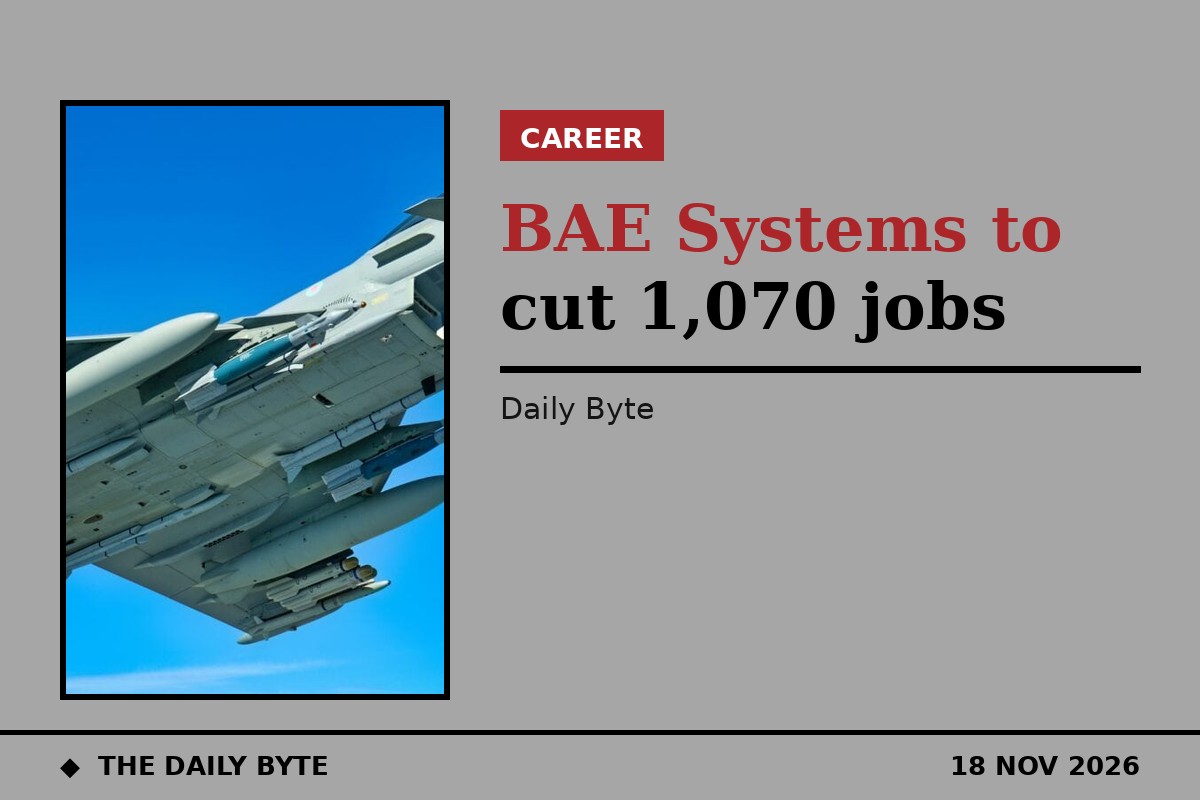
BAE Systems, Britain's biggest defence company, has said it wants to cut up to 1,070 roles from its head office and its air sector, as it moves to become more agile in a rapidly changing defence market.
The company announced the plan on Wednesday 18 November 2026, saying it would aim to shed the roles through voluntary redundancies. Factory workers and aircraft maintenance staff will not be affected.
Which jobs are affected?
The proposed reductions cover BAE's London head office and its air sector, the part of the business that builds and supports military aircraft, including the Eurofighter Typhoon. BAE employs around 50,000 people across Britain, up from 35,000 six years ago. About 18,500 of those work in the air sector, and around 1,000 work at head office.
The company said the cuts would exclude staff in shopfloor manufacturing and aircraft maintenance, including maintenance work at Royal Air Force bases, as well as early-career trainees. A BAE spokesperson said: "This announcement is the next stage of our ongoing focus on enhancing our agility and competitiveness, so we can help to maximise the value of every pound our customers spend on defence."
BAE added that it had made significant investments across the business to improve performance, speed up innovation and increase capacity, so it could meet customer demands for greater speed and efficiency in getting critical capabilities into service.
Why is BAE cutting jobs now?
The announcement comes after a period of strong growth for BAE, which has benefited as countries have increased defence spending since Russia's invasion of Ukraine in 2022 raised the geopolitical threat level. Earlier this month the company forecast that underlying operating profit would rise by 10% to 12% in 2026.
BAE said the cuts formed part of an investment plan aimed at meeting government demands for greater speed in a rapidly changing security environment. Its air division plays a key role in building the Eurofighter Typhoon and is working with Italy's Leonardo and Japan's Mitsubishi Heavy Industries to develop a next-generation fighter by 2035.
Union calls for Typhoon contracts
Trade union Unite criticised the plan and said delays in defence spending by the British government were having a negative impact on jobs in the sector. Unite general secretary Sharon Graham said Britain should announce contracts for Typhoon fighter jets, one of BAE's key platforms, and for collaborative combat aircraft "to stop the erosion of defence jobs and get the growth we need".
She warned that without government intervention the country risked losing manufacturing capacity, and said the announcement showed a lack of joined-up thinking in government, coming a day after ministers backed a major boost in apprenticeships.
What happens next?
BAE has not set out how the 1,070 proposed reductions would be split between head office and the air sector, and no timetable for the changes has been published. The company said it would seek to reduce numbers through voluntary exits first, and that it would consult with staff and unions as the process moves forward.
Workers in manufacturing and maintenance roles, and trainees starting their careers with the company, are not part of the proposal. Further details are expected as consultation begins.
Frequently asked questions
How many jobs is BAE Systems cutting?
Up to 1,070 roles, from its head office and its air sector in the UK.
Are factory jobs affected?
No. BAE said the cuts would exclude shopfloor manufacturing and aircraft maintenance roles.
Will the cuts be compulsory redundancies?
BAE said it was aiming to shed the roles through voluntary redundancies.