Baird Offers Ethiopia Eritrea Trade Bills for Peace
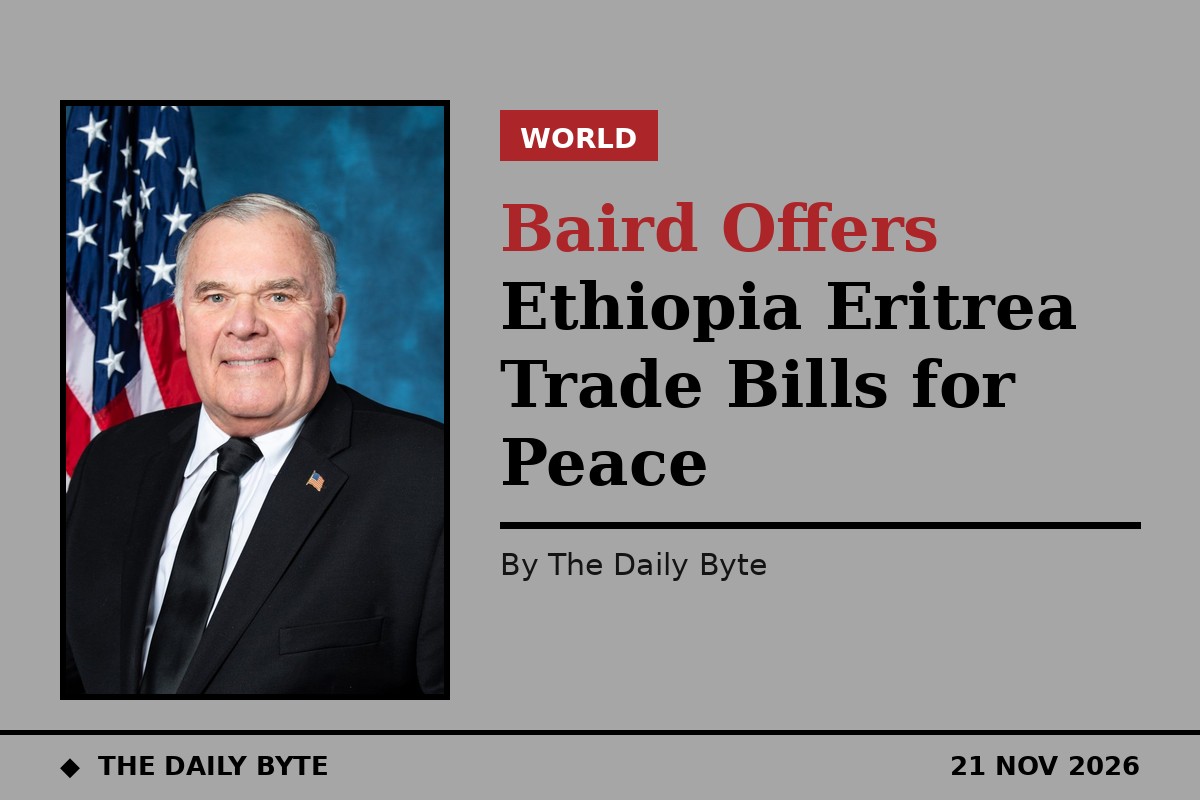
United States Representative Jim Baird has introduced two bills that would tie expanded trade and minerals cooperation with Ethiopia and Eritrea to steps toward lasting peace between the two Horn of Africa neighbours, as fears grow of a renewed war along their shared border.
The Ethiopia SPARK Act and the Eritrea PILLAR Act were introduced on 19 November, according to reports of the proposals. The Eritrea bill is recorded as H.R. 11085, a measure to establish a United States-Eritrea agricultural and critical minerals trade partnership, introduced by Baird on the same day.
Under the proposals, both countries would be offered formal trade negotiations and wider access to American farm products, including corn, soybeans, soybean meal and livestock feed, as well as farm machinery, agricultural research and technical assistance. The offer is conditional on progress toward establishing a lasting peace.
Trade offered in exchange for peace steps
The bills would also open the way for American help in developing the region's mineral resources, including gold, silver, copper, zinc, iron ore, potash, cement, limestone, natural gas and oil, alongside cooperation on port infrastructure. Reduced tariffs and improved trade terms could follow as further incentives.
Baird, a Republican from Indiana who sits on the House Foreign Affairs Subcommittee on Africa, framed the initiative as a chance to build economic partnerships with African countries while limiting the influence of American rivals. "African nations are primed for partnership," he said in a statement. "The continent is rich in natural resources and home to a young, growing population eager for greater economic opportunity."
He added that Indiana and the American heartland have the agricultural expertise and technological know-how to help unlock that potential. The proposals were shared in draft form with The Hill, which first reported them, and are also intended to strengthen Washington's economic influence in the Horn of Africa and reduce China's foothold in the region.
Why now: a border on edge
The initiative comes as relations between Addis Ababa and Asmara have deteriorated sharply. Diplomatic ties broke down on 1 October, when Ethiopia closed its embassy in Asmara and expelled Eritrean diplomats, a move Eritrea reciprocated. The two governments have since traded accusations of aggression at the United Nations.
At the centre of the dispute are competing claims over sovereign access to the Red Sea, alongside reported military buildups and artillery fire around the disputed border town of Badme. United States Secretary of State Marco Rubio has called for de-escalation and a return to the 2018 peace framework that ended two decades of hostility between the countries.
On 10 November, Democratic members of the Senate Foreign Relations Committee warned Rubio in a letter that the prospect of another war between Ethiopia and Eritrea was high, and urged sustained and coordinated diplomatic engagement. Baird's bills offer an economic approach to the same crisis, using trade and investment as incentives for cooperation rather than relying mainly on sanctions or military pressure.
What happens next
The full texts of the bills have not yet been made publicly available through the Congress portal, and their prospects will depend on the legislative process and the level of support they attract in Congress. Neither the Ethiopian nor the Eritrean government has publicly responded to the proposals.
For now, the bills are a signal of intent from one corner of Congress: that Washington is prepared to offer American farm exports, equipment and minerals partnerships to both countries if they step back from the brink. Whether either capital takes up the offer, and whether the bills advance in a crowded House schedule, remains to be seen.


