Forty Bangladesh garment factories shut indefinitely
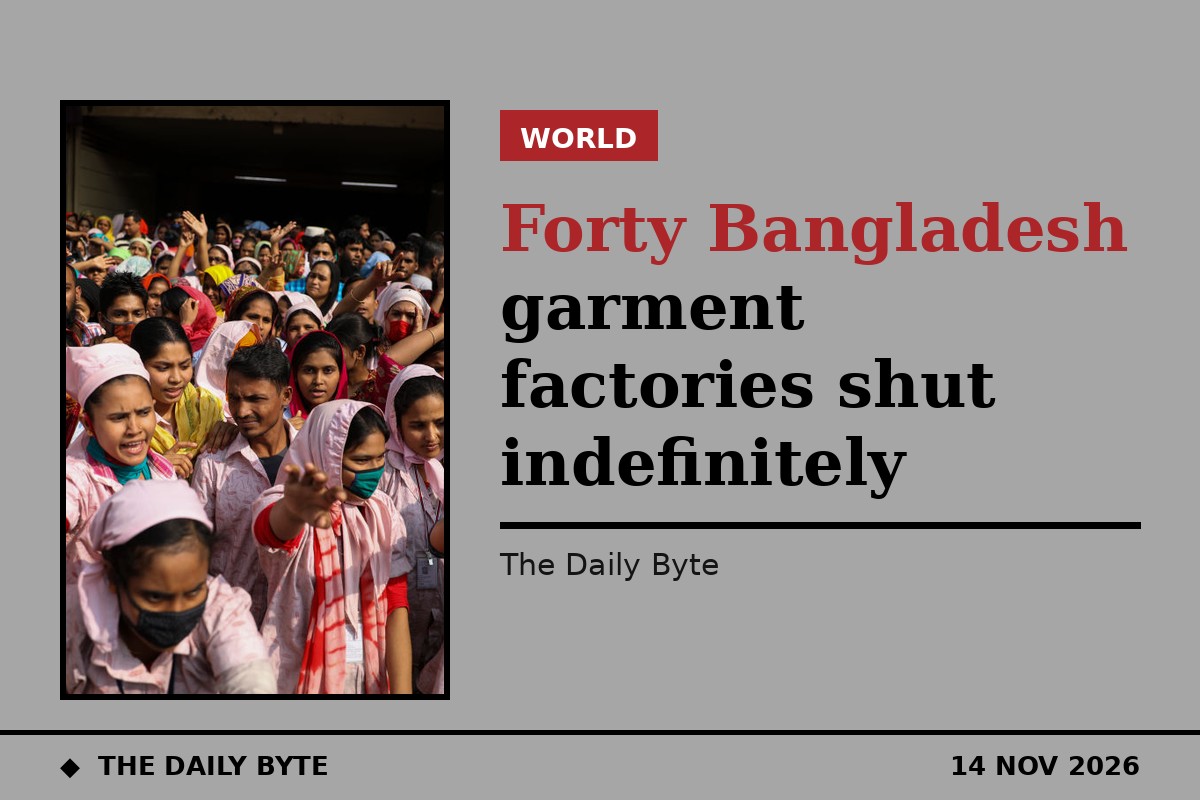
At least 40 garment factories in the Savar and Ashulia industrial areas of Bangladesh have been closed indefinitely amid continuing labour unrest, police confirmed on Saturday morning, in a sharp escalation of the wage dispute.
Ashulia Industrial Police superintendent Mohammad Mominul Islam Bhuiyan confirmed the closures at about 9.45am on Saturday. Another five to six factories declared general holidays after workers did not report for duty.
The factories were closed under Section 13(1) of the Labour Act, 2006, which enforces a "no work, no pay" policy, meaning workers receive no wages during the closure. Garment manufacturers' association president Mahmud Hasan Khan put the number at 55, and said production had also stopped at a further 147 factories.
Owners warn of wider shutdown from Sunday
Factory owners, meeting in Dhaka on Saturday, warned that any factory unable to operate normally from Sunday would be authorised to suspend operations under the same provision. Police said 132 people had been arrested in cases connected with the recent unrest, 72 by Savar police and 60 by Ashulia police.
Workers have been demanding a minimum monthly wage of 30,000 taka, up from 12,500 taka set in 2023, along with payment of outstanding wages and benefits and an end to blacklisting. The unrest began on 31 October, and the government formed a six-member minimum wage board on 1 November. At the board's meeting on 9 November, workers' representatives proposed 32,000 taka a month. Owners are due to table their counter-proposal when the board meets again on Monday, 16 November.
Khairul Mamun Mintu of the Bangladesh Garments and Sweaters Workers Trade Union Centre warned that invoking the "no work, no pay" provision could further fuel workers' anger,


