Bangladesh Raises Garment Wage 36% After Protests
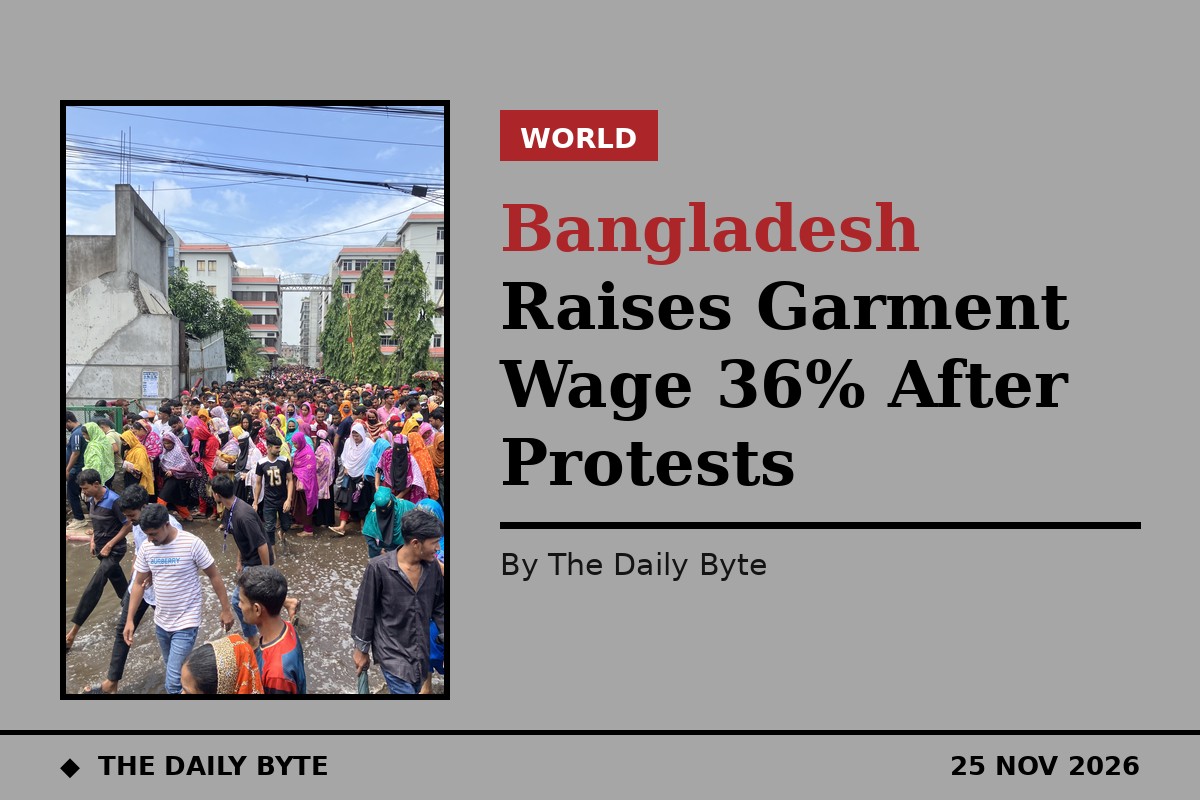
Bangladesh has raised the minimum monthly wage for garment workers by 36 per cent to 17,000 taka, after weeks of protests that shut factories, blocked highways and disrupted production in the country’s most important export industry.
The government-appointed wage board approved the new structure at around 2 a.m. on Wednesday, after nearly 12 hours of talks between workers’ and employers’ representatives at the Minimum Wage Board office in Dhaka. The six-member board, which includes two worker representatives and two employer representatives, approved the figure in a 4–2 vote, with the two dissenting members backing the workers’ demand for 18,000 taka.
The new minimum of 17,000 taka a month, about $137, replaces the existing floor of 12,500 taka, which was set in 2023. Under the four-grade structure, monthly wages will range from 17,000 taka for Grade 4 workers to 19,200 taka for Grade 3, 20,000 taka for Grade 2 and 21,500 taka for Grade 1.
Smallest rise in more than a decade
The increase is the smallest in more than a decade, following rises of 56 per cent in 2023, 51 per cent in 2018 and 77 per cent in 2013. Workers had initially sought a minimum wage of 32,000 taka before lowering their demand to 18,000 taka during negotiations. Factory owners first proposed 15,000 taka and later raised their offer to 17,000.
Wage board chairman Judge Syed Azad Subhani said a majority of the board supported the 17,000 taka figure after the vote early on Wednesday. Workers’ representative Babul Akhter confirmed the 4–2 split.
The new wage structure will take effect on 1 December, with workers expected to receive the revised wages from January.
Protests hit factories and export orders
Bangladesh, the world’s second-largest garment exporter after China, has seen protests by workers demanding higher pay since late October, driven by rising costs of food, housing, transport and healthcare. The sector employs more than four million workers, supplies retailers including H&M, Zara, Walmart, Target and Gap, and generates more than 80 per cent of Bangladesh’s export earnings.
The unrest has hit production hard. The Bangladesh Garment Manufacturers and Exporters Association said 397 factories were unable to operate on Tuesday, while another 84 remained closed under the labour law’s “no work, no pay” provision. A survey by the association estimated that 317 factories lost about $428 million in production during 18 days of disruption, while buyers shifted orders worth about $254 million to other countries.
Factory owners have warned that further wage increases could raise production costs and weaken competitiveness, while labour rights groups argue higher pay is needed to maintain workers’ living standards and ensure long-term stability in the sector. The relatively modest increase may not be enough to quell the unrest, which has already disrupted production during the peak season for spring and summer orders, with owners warning that prolonged disruption could delay shipments and lead to cancellations.
For the workers, the decision ends weeks of confrontation with a pay rise that falls well short of what they asked for. Whether it is enough to restore calm in the factories will become clear in the days ahead, as the new rates take effect at the start of December.


