Bangladesh Sets Tk17,000 Garment Wage After Protests
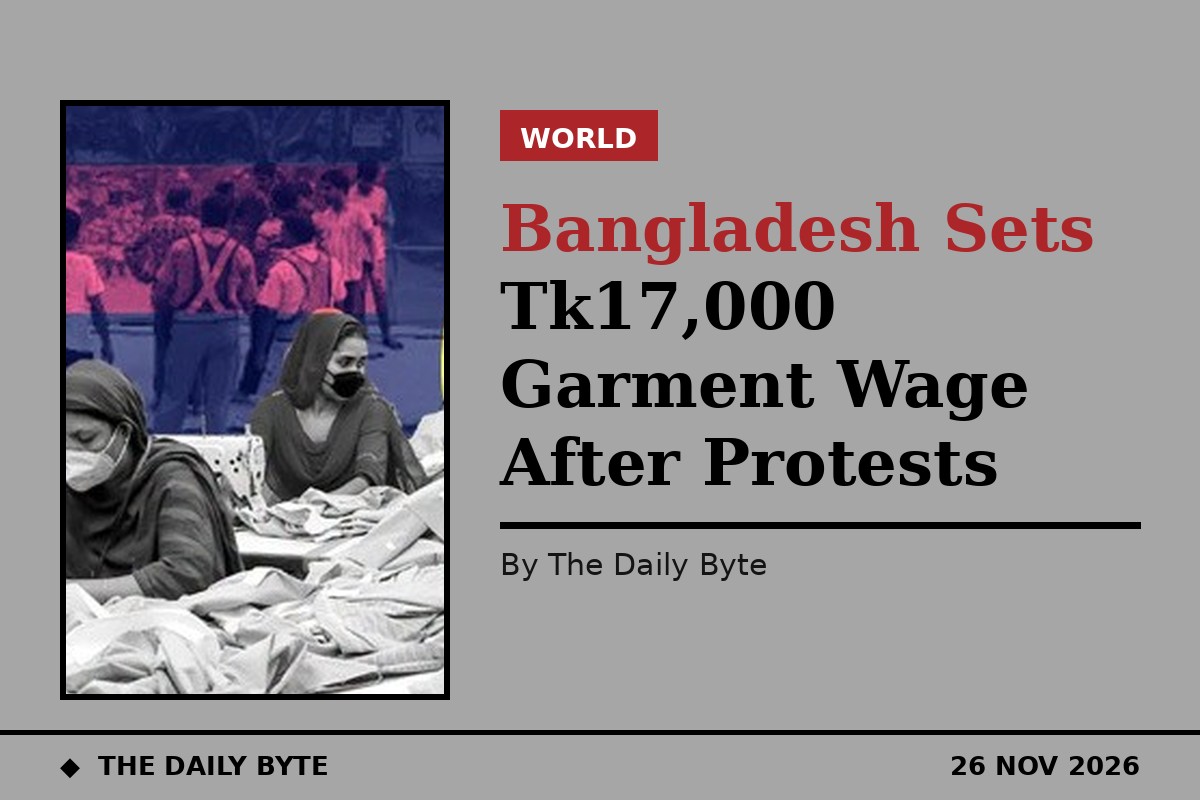
Bangladesh has set a new monthly minimum wage of Tk17,000 for its garment workers, a 36% rise from Tk12,500, after a wage board vote ended weeks of protests that shut hundreds of factories.
The six-member Minimum Wage Board approved the rate in a 4-2 vote in the early hours of Wednesday, after nearly 12 hours of talks. Board chairman Syed Azad Subhani announced the decision to reporters after the meeting. Two members backed the workers' demand for Tk18,000; four supported the employers' figure of Tk17,000.
Under the new four-grade structure, Grade 1 workers will receive Tk21,500 a month, up 43%. Grade 2 workers will receive Tk20,000, up about 40%, Grade 3 workers Tk19,200, up nearly 42%, and Grade 4 workers, the entry level, Tk17,000, up 36%. The new rates take effect on 1 December, with workers receiving the higher pay from January. The rates still need approval from the labour and employment ministry, which can raise them before issuing the formal notification.
The increase is the smallest percentage rise since the wage structure began in 1986, and the smallest in more than a decade, after rises of 56% in 2023, 51% in 2018 and 77% in 2013. Workers had first demanded Tk30,000 a month, then lowered their demand to Tk18,000 during negotiations. Factory owners first offered Tk15,000 before agreeing to Tk17,000.
Workers' representative Babul Akter said the workers' side was not satisfied but had to accept the decision. "We are not satisfied with the wages that have been announced. But since the decision has been made, we have to accept it, even if we do not want to," he said. He urged workers to return to work and called for cases against workers to be withdrawn and arrested workers to be released.
The unrest has hit production hard. The Bangladesh Garment Manufacturers and Exporters Association said 397 factories could not operate on Tuesday and 84 more stayed closed under the "no work, no pay" rule. A BGMEA survey estimated 317 factories lost about $428 million in production during 18 days of disruption, while buyers shifted orders worth about $254 million to other countries.
The sector employs more than four million workers and generates more than 80% of Bangladesh's export earnings, supplying retailers including H&M, Zara, Walmart, Target and Gap. The government confirmed the new wage at a press conference in Dhaka on Thursday, announcing rent control and seven specialised hospitals for garment workers alongside it. The wage board, formed on 1 November, reached its decision in 20 days, a record according to its chairman, but the modest rise has not yet ended the unrest, with fresh clashes reported on the outskirts of Dhaka after the announcement.


