Bangladesh and Sri Lanka Set Up Joint Commission to Deepen Cooperation
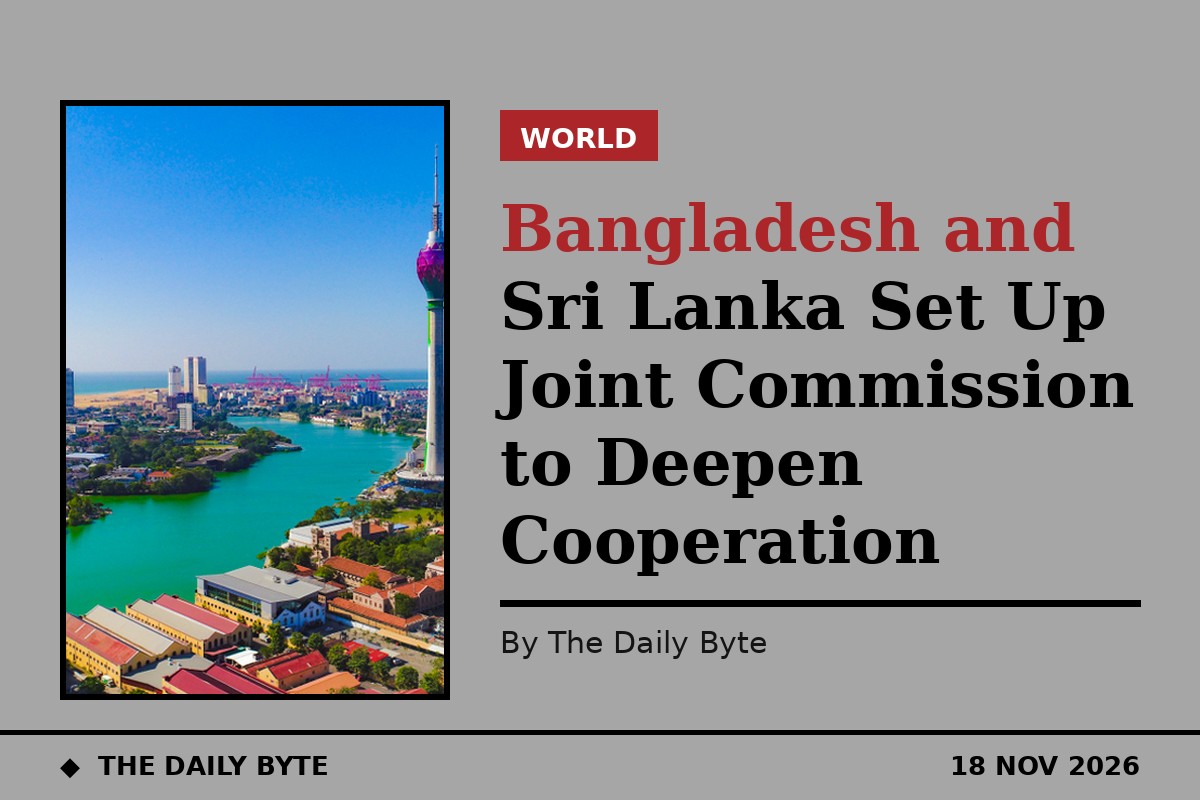
Bangladesh and Sri Lanka have agreed to establish a Joint Consultative Commission for Comprehensive Cooperation, signing a memorandum of understanding (MoU) in Colombo on Tuesday 18 November 2026. The agreement creates a formal mechanism for regular diplomatic engagement between the two countries at foreign minister level.
The MoU was signed after a bilateral meeting between Bangladesh State Minister for Foreign Affairs Humaiun Kobir and Sri Lankan Foreign Minister Vijitha Herath, according to a foreign ministry press release reported by The Business Standard. The two ministers signed the agreement on behalf of their respective foreign ministries.
What the new commission will do
The commission will provide a platform for bilateral meetings at the level of foreign ministers, giving the two countries a regular forum to review existing cooperation and explore new opportunities to strengthen relations. The agreement elevates political consultations between the two countries to foreign minister level, according to Sri Lankan cabinet reporting carried by Serendib News, which said the proposal had been approved by the Cabinet of Ministers and cleared by the Attorney General.
During their meeting at Sri Lanka's Ministry of Foreign Affairs, Kobir and Herath discussed recent political developments and the economic challenges faced by their respective governments, and exchanged views on initiatives under way in both countries to address those challenges. The ministers also expressed satisfaction over the exchange of high-level visits between Bangladesh and Sri Lanka, recognising their importance in strengthening mutual understanding and cooperation.
A busy day of diplomacy in Colombo
The signing took place during Kobir's official visit to Sri Lanka, which also included meetings with Sri Lanka's president and prime minister. On the same day, Sri Lankan President Anura Kumara Dissanayake accepted an invitation from Bangladesh Prime Minister Tarique Rahman to pay a state visit to Bangladesh in early 2027, according to a press release reported by The Business Standard. Kobir handed over the invitation letter during a meeting at the Presidential Secretariat in Colombo.
Kobir also met Sri Lankan Prime Minister Harini Amarasuriya on 18 November, with the two sides discussing trade, renewable energy and environmental cooperation, and Kobir inviting Amarasuriya to visit Bangladesh. The flurry of meetings underlines how both governments are using the visit to widen cooperation beyond diplomacy into trade, energy and the environment.
Why the commission matters
Bangladesh and Sri Lanka are both South Asian neighbours with shared interests in trade, shipping, labour migration and regional stability, but their bilateral engagement has often run through ad hoc visits and lower-level consultations. A standing commission at foreign minister level gives that relationship a fixed structure, with scheduled reviews of cooperation across sectors rather than one-off announcements.
The two countries last held a round of foreign office consultations in Colombo in November 2025, with the next round due to take place in Dhaka. The new commission builds on that process by adding a ministerial tier above the officials' consultations, which should make it easier to settle issues that need political decisions.
Frequently asked questions
What did Bangladesh and Sri Lanka agree on 18 November 2026? To establish a Joint Consultative Commission for Comprehensive Cooperation, formalised through an MoU signed in Colombo by the two countries' foreign ministries.
Who signed the agreement? Bangladesh State Minister for Foreign Affairs Humaiun Kobir and Sri Lankan Foreign Minister Vijitha Herath.
What will the commission do? It will hold bilateral meetings at foreign minister level to review existing cooperation and explore new opportunities across areas of mutual interest.
Sources: The Business Standard, reporting a Bangladesh foreign ministry press release; Serendib News, reporting the Sri Lankan Cabinet's approval of the MoU.


