BofA Sees Three Fed Hikes to 4.75% by March 2027
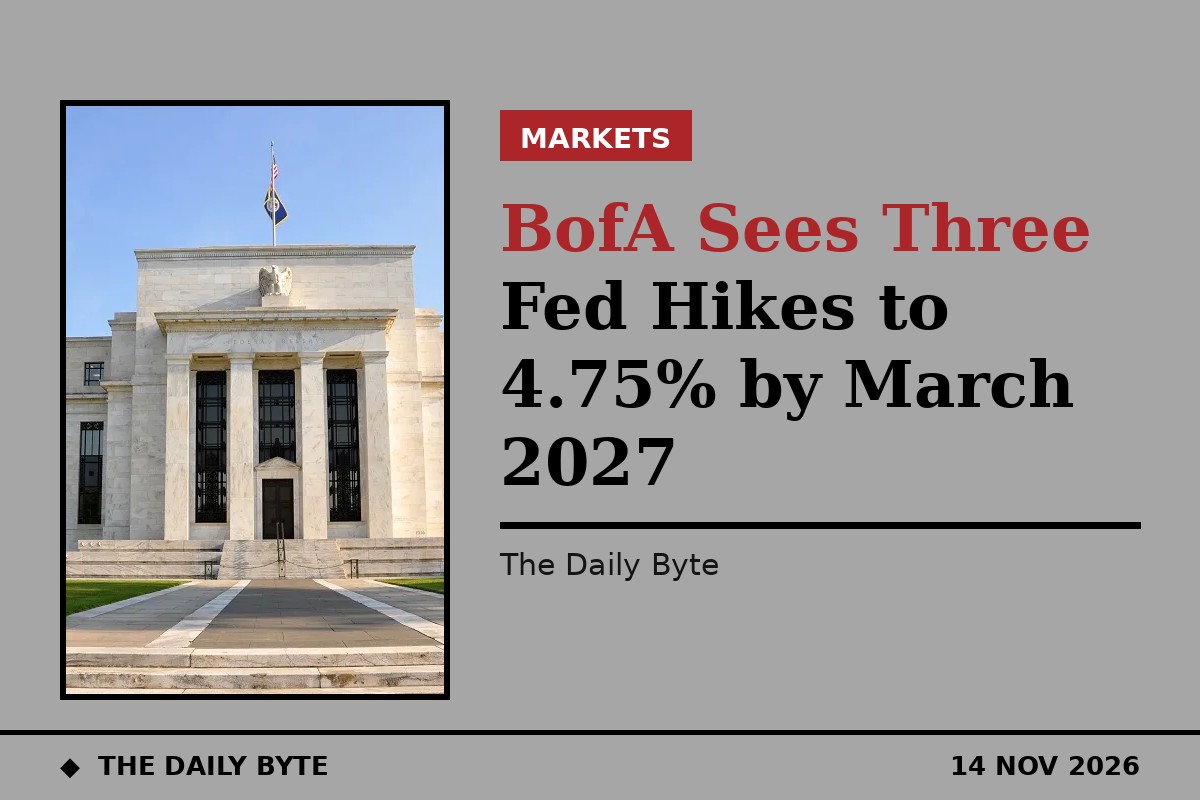
Bank of America now expects the US Federal Reserve to raise interest rates three times in the coming months, adding a January 2027 increase to its forecast after a run of hotter-than-expected inflation data. The bank’s economists see quarter-point rises in December 2026, January 2027 and March 2027, which would lift the federal funds rate from its current 3.75% to 4.00% range to a peak of 4.50% to 4.75%.
The revised call, published on Friday 13 November, replaces Bank of America’s previous forecast of two increases, one in December and one in March, stopping at 4.25% to 4.50%. It makes the bank one of the more hawkish voices on Wall Street, and it follows a week in which Federal Reserve officials have spoken with growing urgency about inflation.
BofA economist Aditya Bhave said the risks around the new forecast were balanced in both directions. If economic data slow, or if financial conditions tighten sharply, the Fed could delay or skip the final increase, he said.
Hot inflation behind the change
Inflation data drove the revision. October’s consumer price index rose 0.4% at the headline level and 0.3% on a core basis, topping market expectations for a third consecutive month. Bank of America said the price gains were broad-based, and it estimated core personal consumption expenditures inflation, the Fed’s preferred gauge, at around 3.3% year on year.
Wholesale prices told a similar story. The producer price index rose 0.3% in October but 6.5% over the previous 12 months, the largest annual increase since November 2022, according to the Bureau of Labor Statistics. Goods prices rose 10.2% over the year, their biggest gain in four years.
Markets have moved the same way. Traders are now pricing in 25-basis-point rises in December, January and March, whereas only December and March had previously been expected, according to Biggo Finance. Santander expects increases in December and March, while Bank of America has now built all three meetings into its forecast.
Fed officials turn hawkish
Fed officials have spent the week locking in expectations of a December rise and opening the door to more. New York Fed President John Williams said inflation remained far too high, Chicago Fed President Austan Goolsbee called the latest data “borderline disturbing” and said the Fed was not on a path back to its 2% target, and Dallas Fed President Lorie Logan said rises may need to come faster than previously expected.
Governor Christopher Waller has said a half-point increase in December should be considered if October core inflation came in at 0.3% or higher, which it did. On Friday, Vice Chair Philip Jefferson added his voice, saying that with the economy growing and the labour market stabilised, he was taking his policy cues from inflation, a remark that suggests he may support further rises to bring it under control.
What markets expect next
The Federal Open Market Committee holds its next meeting on 8 and 9 December. At its October meeting it voted 10 to 2 to hold rates at 3.75% to 4.00%, following a quarter-point increase in September, its first rise since July 2023. Two officials dissented in October because they wanted an immediate increase.
Attention now turns to the minutes of that October meeting, due next week. Bank of America expects the record to show deeper internal divisions than the 10 to 2 vote suggested, and the debate has already moved beyond December to whether the Fed will deliver the first back-to-back increases since 2023 in January, according to Crypto Briefing.
For borrowers and investors, the message from the week is clear: after months in which markets expected rates to fall, the argument in Washington has flipped. The question is no longer whether the Fed will raise rates again, but how many times, and how fast.


